Real talk on pregnancy, breastfeeding, and life with your newborn.
Becoming a mother, whether it's your first time or your third, comes with more questions than anyone prepares you for. Will I know what to do? Is this normal? Am I doing enough? If you're pregnant, newly postpartum, or somewhere in the exhausting, beautiful middle of it, you're not alone in wondering.
The nights blur together. Your body feels unfamiliar in ways no one fully warned you about. Somebody hands you a baby and expects you to just know what to do — and somehow, most days, you figure it out anyway. Slowly, the exhausted middle-of-the-night moments start to feel less frightening and a little more like yours.
The tiny grip that changes everything
You don't have to do this alone
Every way to feed your baby is the right one
Even the quiet moments count
This is a space for the parts of new motherhood nobody puts on a registry card: the worry, the healing, the small wins nobody sees, the help you didn't know how to ask for. No judgment, no overwhelm, just honest, practical guidance for the questions that actually keep you up at night — and the people who show up for you while you figure it out.
Why We Have to Talk About This
We feel like we have to bring this up, because no mother should have to go through it in silence. Of everything that catches new mothers off guard in the first weeks of breastfeeding, one physical struggle comes up more than any other, far more often than anyone prepares you for.
As many as 96% of breastfeeding mothers experience sore, painful nipples, especially in that first week, and roughly one in three go on to develop actual cracked, broken skin within the first month. This isn't a rare complication. It is closer to the default experience, and yet it is almost never talked about before it happens.
96%
of breastfeeding mothers report sore or painful nipples, most often in the first week, before the skin and the latch have had time to adjust to each other.
It happens because nothing about this is broken, it is simply new. Skin that has never done this before is being asked to do it eight to twelve times a day, right as milk is coming in and engorgement is making everything feel more sensitive. The pain itself is common and explainable, but the isolation around it doesn't have to be. Every mother deserves to know, before it happens, that this is coming, that it is not a sign anything is wrong, and that there are real, gentle ways to get through it.
Mentioned in this article
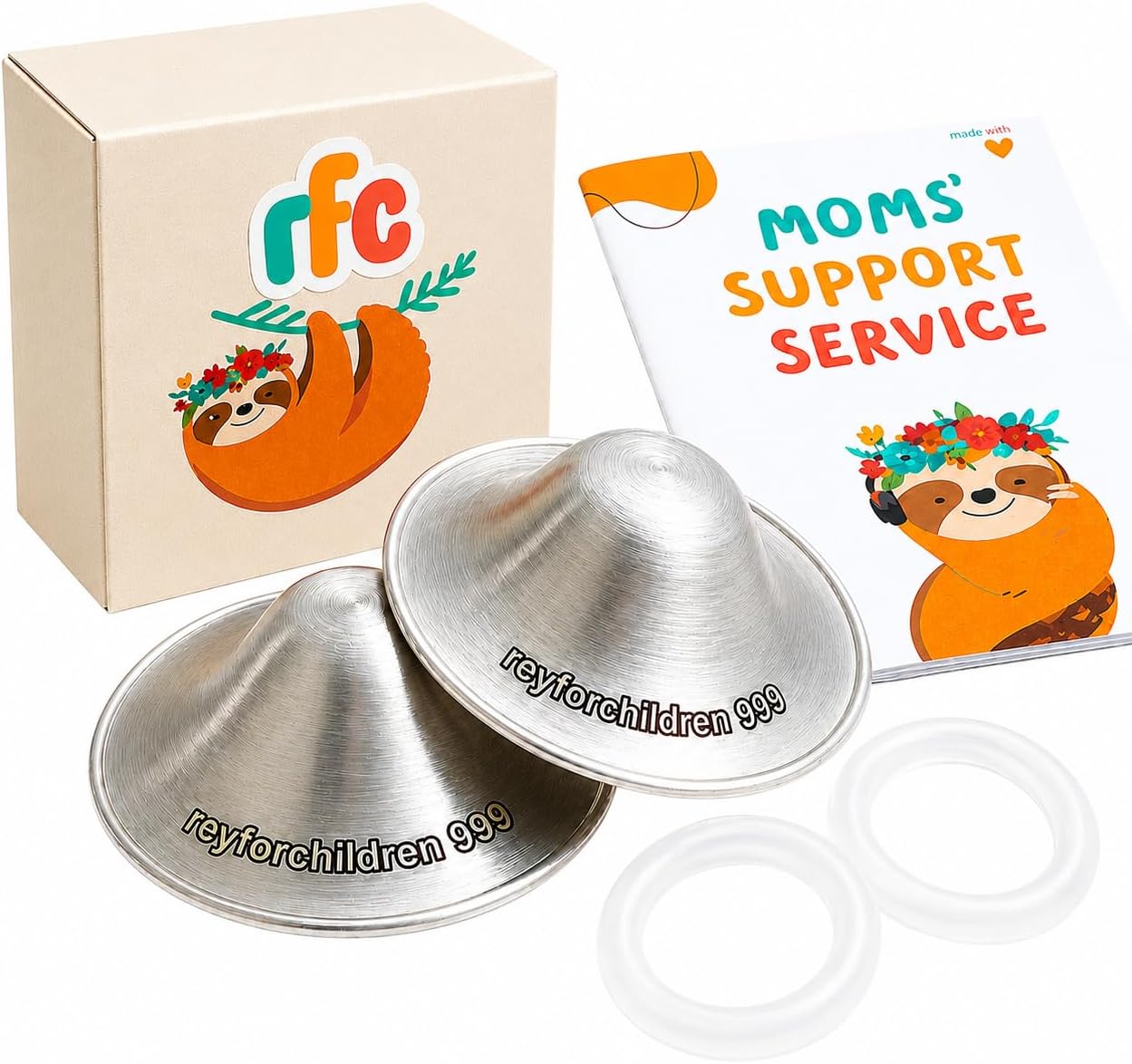
RFC Silver Nursing Cups
Pure silver nursing cups worn between feeds — no creams, no wiping before nursing, just quiet relief while your skin adjusts.
Breastfeeding & Nursing · July 3, 2026 · 6 min read
Written by The New Mom Journal Editorial Team · Updated July 20, 2026
Sore Nipples in the First Week: What's Normal and What's Not
Almost every new mother feels it somewhere between the second and fifth feeding: a raw, tender ache that makes the next latch something to brace for. If that's where you are right now, you're not doing anything wrong — your body and your baby are both still learning.
Some tenderness in the first week is normal. Your nipples have never been asked to do this before, and a few days of adjustment is expected even with a good latch. What isn't normal is pain that makes you dread feeding, or skin that cracks, bleeds, or blisters.
9/10
new mothers report some nipple tenderness in the first two weeks of breastfeeding. For most, it fades on its own well before the one-month mark.
What a normal latch feels like
A comfortable latch should feel like tugging, not pinching. If the pain is sharp and lasts through the whole feed, it's worth checking your baby's position before anything else — most early pain traces back to a latch that's shallow rather than deep.
A comfortable latch should feel like tugging, not pinching.
Mentioned in this article
RFC Silver Nursing Cups
Pure 925 silver cups worn between feeds — no creams, no wiping before nursing, just quiet relief while your skin adjusts.
Fix the latch first. A lactation consultant can watch one feed and catch what's hard to see in the mirror.
Let them air-dry. Trapped moisture slows healing more than almost anything else.
Protect the skin between feeds. Whatever you use, the goal is the same — give the skin a chance to recover before the next latch.
Even on the hardest days, this is why you're doing it.
By the end of the first two weeks, most soreness fades on its own as both of you get the hang of it. If it's getting worse instead of better, or you notice cracking or bleeding, that's the point to call a lactation consultant rather than wait it out.
Ready to feel better between feeds?
RFC Silver Nursing Cups
A one-time purchase that lasts through every feeding stage — from the first sore week to weaning.
Breastfeeding & Nursing · July 3, 2026 · 7 min read
Written by The New Mom Journal Editorial Team · Updated July 20, 2026
Sore Nipples in the First Week: What's Normal and What's Not
Almost every new mother feels it somewhere between the second and fifth feeding: a raw, tender ache that makes the next latch something to brace for. If that is where you are right now, you are not doing anything wrong, your body and your baby are both still learning a skill neither of you has practiced before.
Some tenderness in the first week is normal. Your nipples have never been asked to do this before, and a few days of adjustment is expected even with a good latch. What is not normal is pain that makes you dread feeding, or skin that cracks, bleeds, or blisters.
What a normal latch feels like
A comfortable latch should feel like tugging, not pinching. If the pain is sharp and lasts through the whole feed, it is worth checking your baby's position before anything else, since most early pain traces back to a latch that is shallow rather than deep. A deep latch means your baby's mouth covers not just the nipple but a good portion of the areola underneath it, so the nipple sits far back in the mouth, away from the hard palate where friction does the most damage.
Signs of a shallow latch include clicking sounds while nursing, dimpled or compressed cheeks, and a nipple that looks flattened or creased right after your baby unlatches. Signs of a deeper, more comfortable latch include rounded cheeks, audible swallowing, and a nipple that looks roughly the same shape after the feed as before it.
9/10
new mothers report some nipple tenderness in the first two weeks of breastfeeding. For most, it fades on its own well before the one-month mark.
Three things that actually help this week
Fix the latch first. A lactation consultant can watch one feed and catch what is hard to see in the mirror, and latch correction is consistently the most effective fix, more so than any cream or product applied afterward.
Favor moisture over drying out. Research on wound healing has actually reversed old advice here, skin that stays slightly moist heals faster and re-cracks less than skin left to air dry between feeds.
Protect the skin between feeds. Whatever you use, the goal is the same, give the skin a chance to recover before the next latch, without added friction from fabric or wiping.
A comfortable latch should feel like tugging, not pinching.
Mentioned in this article
RFC Silver Nursing Cups
Pure 925 silver cups worn between feeds, no creams, no wiping before nursing, just quiet relief while your skin adjusts.
For most mothers, the sharpest tenderness peaks around day three to five, right as milk transitions from colostrum to a larger volume, then eases steadily over the following week as both you and your baby get more efficient at the mechanics of nursing. By two to three weeks, the vast majority of mothers report feeding without pain at latch-on.
By the end of the first two weeks, most soreness fades on its own as both of you get the hang of it. If it is getting worse instead of better, or you notice cracking, bleeding, or a fever, that is the point to call a lactation consultant rather than wait it out, since those signs can sometimes point to a latch problem or, less commonly, an infection that benefits from earlier treatment.
Ready to feel better between feeds?
RFC Silver Nursing Cups
A one-time purchase that lasts through every feeding stage, from the first sore week to weaning.
Does breastfeeding position change how much it hurts?
Yes, noticeably. The cradle hold is the most familiar starting point and works well once you and your baby have some practice, but it gives you less control over the latch in the very first days. The cross-cradle hold, where you support your baby's head with the hand opposite the breast you are feeding from, tends to give first-time mothers more precision over positioning and is often what a lactation consultant will show you first. The football or clutch hold, tucking your baby under your arm like a football, can also make it easier to see and guide the latch, and it is especially useful after a c-section since it keeps your baby's weight off your incision. Side-lying is worth learning too, since it lets you rest while feeding overnight, though most mothers find it takes a bit more practice to get a deep latch in that position.
Mistakes that quietly make soreness worse
A few habits that feel protective can actually slow healing down. Compression bras and tight nursing pads press friction into skin that needs a break, and swapping in a fresh pad before the old one is fully dry can trap moisture against already-irritated tissue in the wrong way. Wiping the nipple with a washcloth or soap before every feed, done with the best intentions, strips away the same protective oils your skin needs to repair itself between latches.
Nipple shields are sometimes reached for early as a shortcut around pain, and while they have a place, bridging a very shallow latch or helping a premature baby who is not yet coordinated enough to nurse directly, using one without guidance can mask a latch problem instead of fixing it, which means the underlying cause of the pain never actually gets addressed. If a shield feels necessary past the first week or two, that is worth bringing to a lactation consultant rather than treating it as the long-term plan.
Switching sides too early or too late in a feed plays a role too. Watching your baby's suck-swallow rhythm slow down, rather than watching the clock, is a more reliable signal that it is time to offer the other side. Pulling a baby off mid-suck to switch on a fixed schedule is one of the more common, and most fixable, sources of unnecessary friction in those early weeks.
What lactation consultants check first
When a mother comes in for a pain consult, most lactation consultants do not start with the nipple itself, they start by watching a full feed from beginning to end. That single observation catches things a mirror never will: how your baby is positioned against your body, whether their head can turn freely to swallow, whether the latch changes as your baby gets tired partway through a feed. A large share of "mystery" pain traces back to something visible only in motion, not in a snapshot.
They will typically also check for tongue and lip mobility, feel for tension in your baby's jaw, and ask about your own nipple shape and any prior breast surgery, since all three change what a workable latch looks like for your particular anatomy. Bring a list of when the pain is worst, at latch-on, throughout the feed, or after unlatching, since the timing itself narrows down the likely cause before the consultant even watches you nurse.
Preventing pain before it starts, with your next baby or right now
If you are earlier in this process, or preparing for a second baby, a few habits lower the odds of significant soreness taking hold in the first place. Getting a latch checked proactively in the first 24 to 48 hours, rather than waiting for pain to show up, catches positioning issues before repeated feeds have a chance to cause real damage. Alternating breasts and positions across the day, rather than always starting on the same side in the same hold, distributes friction more evenly while skin is still adjusting. And treating any tenderness on day one as information rather than something to push through quietly tends to lead to earlier fixes and less cumulative damage over the first week.
Frequently asked questions
How long does breastfeeding nipple pain usually last?
For most mothers, the sharpest pain is limited to the first one to two weeks, easing steadily as latch technique and skin both adjust.
Is it normal for breastfeeding to hurt every single time?
Occasional tenderness at the very start of a feed can be normal early on, but pain that happens at every single feed, especially past the first couple of weeks, usually means something correctable is going on with latch or positioning.
Is it normal for one side to hurt more than the other?
Yes. Babies often have a preferred side or a slightly different latch on each breast, and asymmetry in soreness is common in the first couple of weeks. If one side is consistently much more painful, it is worth having a lactation consultant check that side specifically.
Can flat or inverted nipples make this worse?
They can make achieving a deep latch a little more challenging at first, but the large majority of mothers with flat or inverted nipples go on to breastfeed successfully. Nipples of this shape often draw out more as a baby nurses over the first couple of weeks, and a lactation consultant can show you techniques, like briefly stimulating the nipple before latching, that help.
Could this actually be tongue-tie?
It is possible. Tongue-tie affects roughly four to eleven percent of newborns and can cause exactly this kind of persistent, sharp nipple pain along with clicking sounds and slow weight gain. If pain is not improving despite a latch that looks correct, ask your pediatrician or a lactation consultant to check for it specifically.
When does breastfeeding pain typically stop being an issue at all?
For most mothers, meaningful pain resolves within the first two to three weeks as both latch technique and nipple skin adjust. Occasional tenderness at the very start of a feed can linger a bit longer, but it should never be sharp or last through the whole session past that window.
This article shares general information and real-world experience — it isn't medical advice and doesn't replace guidance from your doctor, midwife, or a certified lactation consultant. If something feels off with you or your baby, please reach out to a professional who knows your situation.
Breastfeeding & Nursing · June 12, 2026 · 6 min read
Written by The New Mom Journal Editorial Team · Updated July 20, 2026
How to Heal Cracked Nipples Fast, Without the Mess of Creams
Lanolin has been the default answer for cracked nipples for decades, but it is not the only option, and for a lot of mothers it is not even the most effective one. If the cream is sitting barely touched in a drawer because it is greasy, stains your bra, and has to be wiped off before every feed, you are not doing anything wrong.
What actually speeds healing has less to do with the specific product and more to do with the conditions you create between feeds. For years the standard advice was to let a crack air dry, on the theory that moisture invites bacteria. More recent research has actually reversed that thinking.
Why moist wound healing works better
Skin that stays slightly moist forms new cells faster and is measurably less likely to re-crack when your baby latches again, healing up to fifty percent faster than skin left to dry out between feeds. That is the same principle behind modern wound dressings used for other kinds of skin injuries, and it applies just as well to a cracked nipple.
Purified lanolin, often labeled HPA lanolin, remains one of the most studied options, and in clinical comparisons it has outperformed expressed breast milk alone for healing. Hydrogel pads work through a different mechanism, keeping the wound moist with a water and glycerin gel that also has a cooling effect, and some studies have found they relieve pain better than lanolin, though results across studies are mixed enough that neither is a guaranteed fix on its own.
48hrs
is roughly how long a minor crack takes to visibly close when it is properly protected between feeds, according to lactation consultants who track healing time.
What to try, and in what order
Get the latch checked first. Latch correction is consistently more effective than any cream or dressing applied afterward, since a crack that keeps getting re-injured at every feed will not heal no matter what you put on it between sessions.
Protect the skin between feeds. Whether that is lanolin, a hydrogel pad, or a silver cup, the goal is the same: keep the wound covered and undisturbed until it has time to close.
Avoid unnecessary wiping. Cleaning the nipple with a cloth before every latch removes the very moisture that helps it heal, and adds friction on top of it.
An alternative worth trying
RFC Silver Nursing Cups
Silver nursing cups sit over the nipple between feeds, keeping the area protected without any residue to wipe off before the next latch. A small clinical trial even found them to outperform lanolin and dry care for healing outcomes.
If a crack is not improving within a few days, spreads rather than closes, or you notice a white coating, unusual redness, or a fever, that is the point to loop in a lactation consultant or your doctor, since deep or non-healing cracks can sometimes signal a latch issue or an infection that benefits from earlier treatment rather than more time.
Could it be something more than a normal crack?
Persistent cracking despite a good latch is sometimes traced back to tongue-tie, which affects roughly four to eleven percent of newborns and restricts tongue movement enough to compress the nipple with every suck. Flat or inverted nipples can also make deep latching harder, though most mothers with this nipple shape breastfeed successfully once positioning is adjusted. A nipple shield, a thin silicone cover worn during feeds, is sometimes recommended by a lactation consultant as a temporary bridge while a crack heals or while a baby learns to latch more deeply, since it protects the wound without stopping nursing altogether.
Positioning changes that reduce friction
A more upright cross-cradle hold often gives more control over exactly where the nipple sits in your baby's mouth than a reclined position does, which matters most while a crack is healing. The football hold can also help you see the latch clearly and adjust before damage occurs, rather than after.
A simple daily routine while a crack is healing
Consistency matters more than any single product here. After each feed, resist the urge to immediately cover up, letting the nipple air-dry for a couple of minutes before reapplying whatever barrier you are using gives the skin a brief chance to settle before it is sealed again. Change breast pads as soon as they feel damp rather than waiting for a full feed cycle, since damp fabric sitting against broken skin is one of the more common reasons healing stalls.
In the shower, let water run over the area rather than scrubbing with soap, which strips natural oils and can sting an open crack unnecessarily. Pat dry rather than rub. If you are using a cream or ointment, a thin layer is genuinely enough, more product does not speed healing and often just means more to wipe away before the next feed.
What not to do, even if it sounds logical
A few instincts backfire here. Blow-drying the area on a cool setting to "dry it out faster" undoes the moist-healing benefit described above. Taping a bandage directly over a crack traps friction against the wound in a way loose, breathable coverage does not. And switching products every day or two to find one that works faster rarely helps, most nipple care products need a few consistent days to show whether they are actually making a difference, so give one approach a real trial before swapping to the next.
Ingredients and products worth avoiding while healing
Not everything marketed for nipple care is a good fit for broken skin. Products containing alcohol, menthol, or added fragrance can sting significantly on an open crack and sometimes slow healing by irritating already-compromised tissue. Petroleum-based products create a barrier but do not actively support moist wound healing the way purified lanolin or a hydrogel pad does, so they are a reasonable stopgap rather than a first choice. And anything requiring vigorous wiping off before a feed, thick, waxy balms in particular, adds friction back into the exact routine you are trying to protect, which is part of why cream-free options have become popular with mothers dealing with a stubborn crack.
Frequently asked questions
Can I use regular nipple cream instead of lanolin?
Plain, fragrance-free options are generally fine, but anything with added ingredients, fragrances, or preservatives should be wiped off before nursing, which defeats some of the convenience. Purified lanolin or a silver cup avoid that extra step entirely.
Why do my nipples crack again after they just healed?
Re-cracking almost always points back to an unresolved latch issue rather than the skin itself being unusually fragile, so it is worth a fresh latch check even if a previous one seemed fine.
Should I stop nursing on the cracked side until it heals?
Usually not. Continuing to nurse, with attention to latch, tends to heal faster than resting the breast entirely, since regular removal of milk also prevents engorgement and clogged ducts on that side. If pain is severe, pumping that side for a feed or two while treating the crack is a reasonable bridge.
Is bleeding from a crack dangerous for my baby?
A small amount of blood in a feed from a cracked nipple is not harmful to your baby and is fairly common. It is a sign to address the crack more actively, not an emergency, though persistent or heavy bleeding is worth a call to your doctor.
How do I know if it has turned into an infection?
Watch for a white or yellow coating on the nipple, spreading redness, worsening rather than improving pain, or flu-like symptoms such as fever and chills, which can point to a yeast infection or the start of mastitis. Any of these warrants a call to your doctor rather than more time.
This article shares general information and real-world experience — it isn't medical advice and doesn't replace guidance from your doctor, midwife, or a certified lactation consultant. If something feels off with you or your baby, please reach out to a professional who knows your situation.
Breastfeeding & Nursing · May 22, 2026 · 6 min read
Written by The New Mom Journal Editorial Team · Updated July 20, 2026
Is My Baby Getting Enough Milk? How to Actually Tell
You cannot see ounces moving from one body to another, and that is exactly what makes this the most common 2am worry of early breastfeeding. Unlike a bottle, there is no line on the side to check, so the doubt tends to creep in precisely when you are most tired and least able to reason it away.
The good news is that your baby is giving you data constantly, you just have to know where to look, and the signals are more reliable than they feel in the moment.
The signs that actually matter
Diapers are the most reliable tracker you have, and the pattern follows a predictable curve. Expect one to two wet diapers on day one, two to four by days two and three, four to six by day four, and six or more from day five onward, with pale, nearly colorless urine. Stools follow a similar pattern, dark and tarry on days one and two, shifting to greenish by day three or four, then yellow, loose, and seedy by day five, with at least three to four a day.
6+
wet diapers a day by day five is one of the clearest signs your baby is getting enough milk, alongside steady weight gain after the first week.
What weight gain should look like
Weight is the other big signal. Some loss in the first days is expected and normal, most babies are back to birth weight by two to three weeks, then gaining steadily at roughly five and a half to eight and a half ounces a week until about four months. Frequent feeding, generally eight to twelve times in twenty-four hours, paired with audible swallowing and a breast that feels softer after a feed, rounds out the picture of a baby who is getting what they need.
Comfort while you count diapers
RFC Silver Nursing Cups
Sore nipples can make you dread every feed at the exact moment your baby needs to nurse often. Silver nursing cups help skin recover between sessions, so frequent feeding stays manageable.
If diaper counts are consistently low for your baby's age, feeds seem to leave your baby unsettled rather than satisfied, or weight is not trending up by the two-week mark, that is worth a same-week check with your pediatrician or a lactation consultant, not a wait and see. Caught early, most feeding issues are very fixable, and getting an outside set of eyes on a single feed often answers the question faster than any amount of solo worrying at 2am.
What a lactation consultant checks that you cannot see at home
A feeding assessment typically includes watching your baby latch and suck, checking for audible swallowing, feeling how your breast changes before and after a feed, and sometimes a pre- and post-feed weight check on a specialized scale that can detect ounces transferred during a single session. This kind of direct observation catches subtle issues, a slightly shallow latch, a tongue-tie, weak suck strength, that are difficult to judge from counting diapers alone.
A simple way to actually track it
Trying to hold diaper counts and feed times in your head at 3am is a losing game, write them down instead. A basic notes app entry with the time of each feed, which side, and a quick wet or dirty diaper tally is enough, you do not need a specialized app or spreadsheet. What matters is being able to look back over twenty-four hours and see the pattern rather than relying on memory shaped by exhaustion, which tends to make the last hard feed feel like evidence of a bigger problem than it is.
Many mothers find it reassuring to keep this log for just the first two to three weeks, then stop once a rhythm feels established. If a pediatrician or lactation consultant does get involved, having even a few days of real data on hand makes that visit far more useful than trying to reconstruct the week from memory in the waiting room.
False alarms worth knowing about in advance
A few things commonly get mistaken for a supply problem when they are not one. Cluster feeding in the evenings, where a baby wants to nurse almost constantly for a few hours, is a normal pattern, not a sign your milk has dried up. Breasts that stop feeling full or engorged after the first few weeks are not a sign supply has dropped, that softening is your body calibrating to actual demand rather than overproducing, and it is expected. A baby who suddenly pulls off and fusses partway through a feed is often dealing with a fast letdown or gas, not refusing milk that is not there.
Knowing these patterns in advance does not replace watching diaper counts and weight, but it does mean fewer sleepless hours spent worrying about something that is, more often than not, simply your baby and body finding their rhythm together.
Building confidence in your own read of the situation
Most mothers describe a real turning point where the anxious, constant checking eases, not because the worry was wrong to have, but because a pattern of reliable diaper counts and steady weight gain over a couple of weeks builds genuine trust in what your body and baby are doing together. Each reassuring pediatrician visit adds to that evidence. It is worth actively noticing this shift when it happens, from "I have no idea if this is working" to "I can tell by the fourth diaper of the day", rather than staying on high alert indefinitely out of habit once the early evidence has already answered the question.
Frequently asked questions
How many ounces should a newborn eat per feeding?
In the first few days, half an ounce to an ounce per feed is typical, rising to two to three ounces by the end of the first couple of weeks for bottle-fed babies, breastfed babies self-regulate and do not need ounces tracked the same way.
Can a baby seem full but still be underfed?
Yes, particularly with a shallow latch, a baby can seem satisfied at the breast without transferring enough milk, which is exactly why diaper output and weight matter more than how content a baby appears.
My baby seems satisfied but is not gaining much weight. What does that mean?
A baby can appear content at the breast while still not transferring enough milk, particularly with a shallow latch or an anatomical issue like tongue-tie. Contentment alone is not a substitute for tracking diapers and weight, and this combination is worth a same-week evaluation.
Does pumped output tell me anything about my supply?
Not reliably. Babies are almost always more efficient at removing milk than a pump is, so pumping a small amount does not necessarily mean your baby is getting a small amount. Diaper counts and weight remain far better indicators than how much you can pump.
Can a growth spurt look like a supply problem?
Yes, and this is one of the most common mix-ups. During a growth spurt your baby may want to feed much more often for a few days, which can feel like your supply suddenly is not enough, when it is actually your baby temporarily asking for more, which your body then supplies.
Is it normal to worry about this with every baby, even a second or third?
Very much so. Each baby feeds a little differently, and many experienced mothers describe the same 2am doubt with a second or third baby as they did with their first.
This article shares general information and real-world experience — it isn't medical advice and doesn't replace guidance from your doctor, midwife, or a certified lactation consultant. If something feels off with you or your baby, please reach out to a professional who knows your situation.
Breastfeeding & Nursing · May 8, 2026 · 6 min read
Written by The New Mom Journal Editorial Team · Updated July 20, 2026
Cluster Feeding: Why Your Baby Won't Stop Eating (and What to Do)
Wanting to eat every 45 minutes for an entire evening is not a sign your milk is not enough. It is one of the most normal, and most exhausting, things a newborn does, and it tends to arrive with almost no warning right when you thought you understood your baby's rhythm.
Cluster feeding usually shows up around two to three weeks, and again around growth spurts, when babies nurse in tight, frequent bursts, often right when you were hoping for a break, most commonly in the evening hours.
Why it happens
Frequent nursing is your baby's way of telling your body to make more milk, and it works. Supply is regulated by demand: the more often milk is removed, the more your body is signaled to produce, and a few days of near-constant feeding is usually followed by your body catching up to the new demand. Growth spurts most commonly land around two to three weeks, six weeks, three months, and six months, and typically last just a few days, occasionally up to a week, before your baby settles back into a more familiar rhythm.
Cluster feeding evenings are easier with a second set of hands nearby.
What actually helps you get through it
What helps most is not fixing the cluster feeding, it is surviving it. Food and water within arm's reach before you sit down to nurse, a phone charger nearby, and permission to let everything else wait until tomorrow all make a real difference. A supportive chair or nursing pillow reduces the physical toll of long stretches in one position, and swapping who holds the baby during the calmer parts of the evening, if you have a partner or support person, can buy you a few minutes to reset.
It also helps simply to know the shape of what is happening: your baby is not overeating, misbehaving, or signaling a problem. They are doing exactly what a growing body is supposed to do, and the intensity itself is a sign the system is working as designed.
Built for the marathon days
RFC Silver Nursing Cups
On days when your baby barely comes off, your nipples do a lot of extra work. Silver cups worn between bursts help skin recover, even on the longest cluster-feeding evenings.
It almost always passes within a few days. If it stretches on for over a week with no let-up, your baby seems distressed rather than simply hungry, or you notice a drop in wet diapers alongside the constant feeding, mention it to your pediatrician so they can rule out anything beyond a normal growth spurt.
Watching for clogged ducts during marathon stretches
Long stretches of intense feeding on one side, or a sudden change in feeding pattern, can occasionally lead to a clogged duct, felt as a firm, sore, sometimes reddened lump in the breast, occasionally with a mild low-grade fever. Breastfeeding often, especially on the affected side, along with warm compresses before feeds and gentle massage toward the nipple during nursing, tends to clear a clog within a day or two. If warmth, redness, and fever intensify rather than ease, that can signal mastitis, which sometimes needs antibiotics, so it is worth calling your doctor rather than waiting it out.
Cluster feeding versus colic: how to tell the difference
The two get confused constantly because both can mean a fussy baby who wants your attention non-stop in the evening. The distinction is in what actually calms them. A cluster-feeding baby settles at the breast, feeds with a real suck-swallow rhythm, and eventually falls into a satisfied, loose-limbed sleep. A colicky baby often pulls away from the breast, arches their back, clenches their fists, and keeps crying even after a full feed, sometimes for hours at a stretch, typically starting around two to three weeks and peaking around six weeks. If feeding does not settle your baby at all and the crying follows a rigid daily pattern regardless of when they last ate, that pattern is worth describing to your pediatrician specifically, since it points toward colic rather than a feeding issue.
Getting through a cluster-feeding evening with other kids in the house
If you have an older child, cluster-feeding evenings are often when the guilt hits hardest, you are physically stuck on the couch just as everyone else needs dinner, baths, and bedtime. A few things genuinely help: set up a "nursing station" with snacks, screen time, or a favorite activity for your older child within sight of where you will be feeding, so you are still present even while stationary. Batch or delivery meals on days you suspect a growth spurt is coming, since cluster feeding tends to arrive in predictable windows once you have been through it once. And where possible, let a partner or support person handle the bedtime routine entirely on the hardest evenings, your job that night is feeding the baby, not everything else too.
Taking care of yourself through the marathon stretch
It is easy to disappear entirely into a baby's needs during a cluster-feeding evening and forget your own basic upkeep in the process. Keeping a refillable water bottle and easy, one-handed snacks within reach of your usual nursing spot means you are not choosing between your own hydration and staying seated through a long stretch. A short, five-minute reset after an intense evening, stepping outside, a hot shower once someone else can hold the baby, texting a friend, matters more for how sustainable the next cluster-feeding evening feels than it might seem in the moment. None of this needs to be elaborate self-care, just enough to keep your own tank from running fully empty on the hardest days.
Frequently asked questions
How long does cluster feeding usually last each time?
A single cluster-feeding stretch typically lasts a few hours in the evening, while the overall phase around a growth spurt usually resolves within three to seven days.
Does cluster feeding mean my baby is going through a growth spurt?
Often yes, especially around the two to three week, six week, and three month marks, though babies can also cluster feed on other days simply because they want extra comfort or closeness.
Should I offer both breasts during a single cluster feeding session?
Either approach is fine. Some mothers switch sides multiple times during a long cluster stretch, others let their baby fully finish one side before offering the other. Following your baby's cues, coming off on their own versus actively still sucking and swallowing, is a better guide than a fixed rule.
Is it safe to nurse lying down during an exhausting cluster-feeding night?
Side-lying nursing can be done safely if you are not under the influence of anything that impairs alertness and you follow safe sleep guidance for the space around your baby. Many mothers find it makes marathon nights meaningfully more sustainable.
Can cluster feeding cause my supply to actually increase permanently?
Yes, that is essentially the mechanism, more frequent removal signals your body to raise its baseline production, which is exactly why cluster feeding tends to cluster around growth spurts when a baby's needs have genuinely gone up.
How is cluster feeding different from a baby who just will not settle?
Cluster feeding involves active, effective nursing in short, frequent bursts, with audible swallowing and eventual satisfaction between sessions. A baby who will not settle despite repeated feeding attempts, especially with signs of pain or reflux, may be dealing with something other than a normal growth spurt and is worth mentioning to your pediatrician.
This article shares general information and real-world experience — it isn't medical advice and doesn't replace guidance from your doctor, midwife, or a certified lactation consultant. If something feels off with you or your baby, please reach out to a professional who knows your situation.
Written by The New Mom Journal Editorial Team · Updated July 20, 2026
Low Milk Supply: What's Normal Worry and What Needs Help
Most low-supply scares are your body regulating itself, not failing you. Breasts that used to feel firm and full can start to feel softer around six to eight weeks, once your milk production has matched itself to your baby's actual needs, and that shift alone sends a lot of mothers searching the internet at 3am.
Regulation versus an actual problem
Softer breasts, a shorter or less noticeable let-down, or pumping less than you used to are usually signs of regulation, not a real drop in what your baby is getting. In the earliest weeks your body tends to overproduce as it calibrates, and the settling that follows can feel alarming even though nothing has actually gone wrong.
2-3x
a day is a normal range for milk supply to feel like it fluctuates in the first few months, without any real drop in what your baby is actually getting.
What can actually cause low supply
When supply is genuinely low, there is usually an underlying cause: infrequent removal of milk, a shallow latch, tongue tie, or certain medical or hormonal factors. The signs that point to an actual issue are fewer wet diapers than expected for your baby's age, slow or flat weight gain, or a baby who seems hungry again immediately after a full feed, day after day, not just occasionally.
If you are considering herbal supplements like fenugreek or lactation cookies, the evidence for most of them is weak, some studies find no measurable effect, and fenugreek in particular has fallen out of favor after reports of it sometimes lowering supply rather than raising it. The best-supported way to increase supply remains removing milk more often, whether at the breast or by pumping, since production genuinely does respond to demand.
One less thing to manage
RFC Silver Nursing Cups
Sore nipples on top of supply worries make everything harder. Silver nursing cups take nipple pain off your plate so you can focus on what actually needs attention.
If the signs above are present, a lactation consultant can watch a feed, check for latch or tongue-tie issues, and help you build a plan, whether that means more frequent nursing, adjusting positioning, or adding a pumping session, before assuming supplementation is the only option. Talk to your doctor before trying any herbal supplement, since several can interact with medications or have effects that are not well studied.
Lifestyle factors that genuinely affect supply
Beyond feeding frequency, a handful of everyday factors can meaningfully influence supply: dehydration, inadequate calorie intake, certain hormonal birth control methods, smoking, and high stress can all suppress production somewhat. None of these mean a mother has "ruined" her supply, they are simply adjustable factors worth reviewing with a lactation consultant if supply concerns are persistent rather than occasional.
A supply routine you can actually sustain
The mothers who see the most consistent improvement are not the ones doing the most, they are the ones doing something small and repeatable every day. That usually looks like nursing or pumping at roughly the same handful of times daily rather than sporadically whenever there is a spare moment, adding one extra short session in the morning when supply is naturally highest, and protecting one uninterrupted stretch of sleep somewhere in each twenty-four hours, since sleep deprivation itself can blunt let-down. None of this needs to be perfect. A routine you can actually keep up for two weeks beats an intensive plan you abandon after three days.
Hydration and calories matter more than any specific food. Aim to drink to thirst rather than forcing large volumes of water, and make sure you are eating enough overall, chronic under-eating in the postpartum period is a more common and more fixable cause of low supply than most mothers realize, especially while also recovering from birth and running on broken sleep.
What actually moves the needle versus what is mostly folklore
Skin-to-skin time before a feed, warm compresses just before nursing or pumping, and breast massage during a session all have some supporting evidence for helping with let-down and drainage, and they cost nothing to try. Oatmeal, brewer's yeast, and dark leafy greens are commonly recommended, and while the research behind them as galactagogues is thin, they are otherwise a normal part of a healthy postpartum diet, so there is little downside to including them. Where mothers most often get misled is on products promising a guaranteed supply increase with no real evidence behind them, if a claim sounds too dramatic for something you drink or eat, it is worth being skeptical rather than spending scarce energy chasing it.
Getting a lactation consultant and pump covered by insurance
Under the Affordable Care Act, most US health insurance plans are required to cover lactation counseling and a breast pump at no additional cost, though the specific process, in-network providers, pump brand options, and reimbursement versus direct supply, varies by insurer. Calling your insurance provider directly and asking specifically about "lactation consultant coverage" and "breast pump benefit" tends to get a clearer answer than searching your plan documents alone. If your plan pushes back on covering additional lactation visits beyond a first session, a note from your pediatrician documenting ongoing feeding concerns can sometimes unlock further covered visits, this is worth pursuing before paying out of pocket if cost is part of what is keeping you from getting help sooner.
Frequently asked questions
How quickly can low milk supply be fixed?
Many mothers see improvement within three to five days of increasing feeding or pumping frequency, though a full response can take up to two weeks of consistent effort.
Does pumping after every feed help increase supply?
It can, since it adds extra removal on top of nursing, but it also adds real fatigue, most lactation consultants suggest targeted sessions like power pumping over pumping after every single feed indefinitely.
Do lactation cookies or teas actually work?
The evidence is weak. Recent studies on lactation cookies specifically found no measurable increase in milk production, and while some mothers report feeling like certain foods or teas help, there is no reliable research showing consistent results across a broader population.
Is fenugreek safe to try?
Talk to your doctor before starting it. Fenugreek has fallen out of favor with some lactation professionals after reports that it can sometimes decrease supply rather than increase it, and it can interact with certain medications.
Can stress alone lower my supply?
High, sustained stress can interfere with the let-down reflex and, over time, with overall production, largely through its effect on the hormones involved in milk release. This is one more reason that support in the early weeks is not a luxury, it has a real physiological effect on breastfeeding itself.
If I supplement with formula once, will my supply drop permanently?
An occasional bottle is unlikely to meaningfully affect long-term supply, particularly if you continue nursing or pumping regularly otherwise. Supply is most sensitive to sustained changes in how often milk is removed over days and weeks, not a single missed session.
This article shares general information and real-world experience — it isn't medical advice and doesn't replace guidance from your doctor, midwife, or a certified lactation consultant. If something feels off with you or your baby, please reach out to a professional who knows your situation.
Written by The New Mom Journal Editorial Team · Updated July 20, 2026
Power Pumping 101: Does It Really Boost Your Supply?
Power pumping mimics the cluster feeding a baby naturally does during a growth spurt, telling your body to make more milk by removing it more often over a short, concentrated window rather than spread evenly across the day.
The schedule lactation consultants actually recommend
A typical session looks like twenty minutes of pumping, ten minutes of rest, ten minutes of pumping, ten minutes of rest, then a final ten minutes of pumping, done once a day for about five to seven days. The rest periods matter as much as the pumping itself, they are what allows your body to register the repeated demand as a pattern worth responding to, rather than a single unusual event.
~1hr
is roughly the total time a single power pumping session takes, done once daily for about five to seven days to see a supply response.
What it can and cannot do
It is not a quick fix, and it will not work miracles overnight. What it can do is give your body a clear, repeated signal during a specific window, like before returning to work, ahead of a trip, or during a growth spurt when demand has genuinely increased. Most lactation consultants suggest giving it a full week before judging whether it has made a difference, since supply changes are rarely visible after just one or two sessions.
What it cannot do is fix a latch problem, resolve a tongue-tie issue, or replace a lactation consultant's help if something structural is going on with feeding or supply. If power pumping is not moving the needle after a week, that is a sign to look for an underlying cause rather than pumping harder.
For the pumping sessions in between
RFC Silver Nursing Cups
Skin needs recovery time whether milk is removed by baby or by pump. Silver cups soothe and protect between sessions on heavy pumping days.
Most lactation consultants suggest choosing a consistent time of day, often first thing in the morning when supply is naturally highest, and sticking with it for the full week rather than pumping at random times. Staying hydrated, eating enough calories, and getting what rest you can all support the response, since power pumping asks your body to do more work, not less.
Getting the flange size right before you start
More mothers give up on power pumping because of an ill-fitting flange than because the technique itself does not work. If your nipple rubs against the tunnel walls during pumping, or if a ring of white or discolored skin forms right at the base of the nipple after a session, the flange is too small. If too much areola gets pulled in with each cycle, it is likely too large. Most pump manufacturers offer several flange sizes beyond what ships in the box, and sizing up or down even a millimeter or two can turn a painful, low-output session into a comfortable, effective one. This is worth sorting out before committing to a full week of daily sessions, since a bad fit compounds fast when you are pumping this frequently.
Mistakes that quietly undercut the results
A few habits reduce how well power pumping works even when the schedule itself is followed correctly. Pumping on a suction setting that is higher than comfortable does not remove milk any faster and mostly just adds nipple irritation, comfort at a slightly lower setting for a longer cycle generally outperforms cranking it to maximum. Skipping the rest periods to save time defeats the purpose, since the pattern of demand and pause is what signals your body, not the total suction time alone. And starting the week already exhausted or under-fed makes the whole routine harder to sustain, if possible, pick a week where you can also protect a bit of extra rest and food, not just pumping time.
What realistic success actually looks like
Power pumping rarely produces a dramatic, obvious jump in output mid-session, the response is usually gradual and shows up more clearly over the following days than during the hour itself. A realistic marker of success is a modest, steady increase in pumped or nursed volume by the end of the week, not a sudden doubling on day two. If output has not moved at all after a full week of consistent sessions, that is meaningful information, it suggests the limiting factor is something power pumping alone cannot fix, like flange fit, an underlying latch issue, or a hormonal factor, and it is a reasonable point to loop in a lactation consultant rather than repeating the same week again hoping for a different result.
Frequently asked questions
How soon after birth can I start power pumping?
It is generally used once breastfeeding is established, typically after the first few weeks, rather than in the very early days when supply is still naturally calibrating on its own.
Is power pumping the same as exclusive pumping?
No, power pumping is a short, targeted technique to boost supply, while exclusive pumping means feeding a baby entirely with pumped milk instead of nursing directly, the two are unrelated concepts that happen to both involve a pump.
Can I power pump and breastfeed on the same day?
Yes, many mothers do this specifically around a single daily session added on top of normal nursing, rather than replacing any feeds.
What if I do not see any difference after a week?
That is a reasonable point to stop and consider other factors, such as latch quality, pump fit and suction settings, or an underlying medical cause, with the help of a lactation consultant, rather than continuing to power pump indefinitely without a plan.
Is power pumping safe to do every day long-term?
It is generally used as a short, targeted intervention, about a week at a time, rather than an ongoing daily practice, since the goal is to reset supply to a new baseline, not to keep signaling for more indefinitely.
Does the specific pump matter for this to work?
A double electric pump with a properly fitted flange size makes a real difference in both comfort and how effectively milk is removed, which in turn affects how well the technique works. An ill-fitting flange can cause pain and reduce output regardless of the schedule you follow.
This article shares general information and real-world experience — it isn't medical advice and doesn't replace guidance from your doctor, midwife, or a certified lactation consultant. If something feels off with you or your baby, please reach out to a professional who knows your situation.
Breastfeeding & Nursing · Mar 27, 2026 · 6 min read
Written by The New Mom Journal Editorial Team · Updated July 20, 2026
Nursing in Public Without the Anxiety: A Practical Guide
A latch you trust changes everything about leaving the house. The anxiety around nursing in public is rarely about the nursing itself, it is about not knowing whether this particular latch, in this particular chair, is going to go smoothly in front of other people.
What actually makes it easier
Practicing at home in front of a mirror, in the outfit you are likely to wear out, removes most of the guesswork before you are ever in public. A layered outfit, a baby carrier for hands-free settling, and picking a first outing that is short and familiar, like a coffee shop instead of a crowded event, all lower the stakes considerably. Many mothers find that the first few times are the hardest, and it becomes almost unremarkable after that.
Your legal protections
Legally, in the United States, you are protected to breastfeed in any public or private location where you are otherwise allowed to be, this has been true in all fifty states, Washington D.C., and Puerto Rico since 2018, when Idaho and Utah were the last states to pass explicit protections. In thirty-one states, breastfeeding laws specifically exempt nursing parents from public indecency laws, meaning no one can legally claim it is inappropriate for you to nurse without a cover.
One less variable to think about
RFC Silver Nursing Cups
Knowing your nipples are not sore mid-feed means one less thing to worry about when you are already out the door.
Start small. A short trip to a quiet cafe builds confidence faster than a crowded event on your first attempt.
Wear what works. Nursing tops or a simple two-layer system, tank top under a looser shirt, tend to feel more discreet than fumbling with buttons.
Give yourself permission to leave. Knowing you can step outside or to a car if a feed does not go smoothly removes a lot of pressure in advance.
The rest is just practice, and it gets easier every single time you do it.
Handling comments or stares
Most people genuinely do not notice or do not care, but an occasional comment does happen. Having a short, calm response ready in advance, or simply choosing not to engage at all, tends to feel less jarring in the moment than trying to come up with something on the spot. You are not obligated to justify or explain a completely legal, protected activity to anyone.
Gear that actually earns its place in your bag
You do not need much, but a few things reliably make outings smoother. A two-way nursing top or dress removes the fumbling that a regular shirt or dress requires, since access is built into the design rather than improvised in the moment. A muslin blanket does double duty as a light cover, a burp cloth, or shade over a car seat, more versatile than a dedicated nursing cover for most mothers. And a small pouch with a spare nursing pad, a snack, and a diaper or two means you are not caught unprepared and rushing home mid-outing over something minor.
Where mothers often over-pack is bringing a full diaper bag's worth of gear for a thirty-minute coffee run. Scaling what you bring to the length and predictability of the outing keeps the whole process lighter, both literally and mentally.
It gets easier faster than it feels like it will
Almost every mother who has nursed in public describes the same arc: the first time feels enormous, the fifth time is routine, and by the twentieth time it barely registers as a decision at all. The anxiety tends to front-load itself entirely into the anticipation, the actual feed is almost always uneventful. If the nerves are still there after a handful of tries, that is not a sign something is wrong with you, some mothers simply need more reps than others, and that is completely normal too.
Nursing away from home: flights, road trips, and unfamiliar places
Longer outings add a few extra logistics worth planning for. On flights, you are legally permitted to breastfeed, and pre-boarding is often available if you ask at the gate, giving you time to settle before the aisle fills up. On road trips, nursing in a parked car with the seat reclined is a common, comfortable option many mothers rely on for longer drives, just as protected as anywhere else you are legally allowed to be. In an unfamiliar city, apps and directories that map nursing rooms in malls, airports, and museums can shortcut the search for a quiet spot, though remember you are not limited to using them, any public or private space you are otherwise allowed in works too, dedicated rooms are simply an option, not a requirement.
Frequently asked questions
What states require businesses to accommodate breastfeeding?
All 50 states now legally protect breastfeeding in public, so no state requires a business to specifically accommodate it beyond simply not being able to stop you from nursing where you are otherwise allowed to be.
Do I need a nursing cover to breastfeed in public?
No, using a cover is entirely a personal preference, not a legal or practical requirement, plenty of mothers nurse comfortably and discreetly without one.
Do I legally have to use a cover?
No. Nursing covers are a personal preference, not a legal requirement anywhere in the United States, you are protected to breastfeed with or without one in any location you are otherwise allowed to be.
What if a business asks me to stop or move?
In every US state, this is not something a business can legally require, since breastfeeding is protected in any public or private space you have a right to be in. You can calmly cite your state's protection or simply continue.
How do I nurse discreetly with a squirmy older baby?
As babies get older and more distractible, a light layer draped loosely, rather than fully covering, plus positioning your baby to face your body, tends to work better than trying to fully conceal a wriggling baby under a cover they may pull off anyway.
Is it harder to nurse in public with a fast let-down?
It can add a small logistical wrinkle, a nursing pad and a quick towel on hand help manage any leaking or spray at the start of a feed, but it does not change your right to nurse anywhere, and it becomes easier to anticipate with practice.
This article shares general information and real-world experience — it isn't medical advice and doesn't replace guidance from your doctor, midwife, or a certified lactation consultant. If something feels off with you or your baby, please reach out to a professional who knows your situation.
Breastfeeding & Nursing · Mar 13, 2026 · 6 min read
Written by The New Mom Journal Editorial Team · Updated July 20, 2026
Bottle, Breast, or Both: There's No Wrong Way to Feed Your Baby
However your baby eats, the goal was always the same: a fed, held, loved baby. Somewhere along the way, feeding method turned into a referendum on how much you love your child, and that was never a fair trade.
What actually matters for a baby's development
Whether it is exclusively at the breast, exclusively bottle, or some combination that shifts week to week, babies thrive on consistency, warmth, and responsiveness during feeds, not on the specific delivery method. Combination feeding, mixing breastfeeding with pumped milk or formula, is in fact the most common way American parents feed their babies, with CDC data putting some formula use by six months at around three quarters of families.
1 in 2
breastfeeding mothers in the US introduce some bottle feeding, whether pumped milk or formula, within the first few months.
Protecting supply if you are combining methods
If you are adding formula or bottles alongside nursing, the first four to six weeks are the most important window for establishing supply, so introducing supplementation earlier than that can affect how much milk your body makes long-term. Offering the breast first, then topping off with a bottle if needed, keeps stimulation up while still making sure your baby is satisfied. Swapping one nursing session at a time, rather than several at once, and waiting three to five days before dropping the next, gives your body room to adjust without engorgement or a supply crash.
For however you're feeding right now
RFC Silver Nursing Cups
For the sessions still spent at the breast, silver nursing cups help sore skin heal between feeds, whatever your overall feeding plan looks like.
Combination feeding in particular gets unfairly judged from both directions, breastfeeding purists and formula advocates alike, when in practice it is often the exact adjustment that keeps a feeding relationship sustainable for months longer than it otherwise would have been. The only feeding plan that is wrong is the one making you miserable when a workable alternative was available. Everything else is just logistics, and logistics can always be adjusted.
What actually matters when introducing a bottle
If you plan to combine breast and bottle, waiting until breastfeeding is well established, generally three to four weeks, before introducing a bottle helps avoid nipple confusion for many babies, though this varies and some families successfully introduce earlier out of necessity. Paced bottle feeding, holding the bottle horizontally and letting your baby control the pace with pauses, mimics breastfeeding's natural rhythm and can make switching between the two more seamless.
Choosing a bottle and nipple flow that actually helps
Nipple flow rate matters more than brand. A newborn-flow nipple that releases milk slowly, similar to the effort of nursing, tends to make the transition between breast and bottle smoother than a faster flow that lets a baby finish in a fraction of the time with much less effort. If a baby who nurses well suddenly seems to prefer the bottle and fusses at the breast, flow rate is one of the first things worth checking before assuming it is a deeper preference. Wide-based nipples that encourage a broader mouth opening also tend to mimic a breastfeeding latch more closely than narrow, traditional shapes.
It is rarely necessary to buy several different bottle brands hoping one will be "the one." Most babies adapt to a reasonable, correctly-flowing bottle within a few tries, and troubleshooting flow rate and pacing technique solves more feeding resistance than switching brands does.
Building a rhythm that fits your actual life
There is no universal ratio of breast to bottle that is "correct," the right mix is whatever lets you keep feeding your baby in a way that is sustainable for your body, your schedule, and your mental health. Some families nurse every session and pump occasionally for a backup bottle. Others nurse mornings and evenings and bottle-feed, breast milk or formula, during the day. Both are complete, valid feeding plans. What tends to work best is deciding on a rough plan in advance rather than reacting meal to meal, since a baby who knows roughly what to expect, and a parent who is not renegotiating the plan every single feed, both do better with some predictability.
Thinking through the practical costs of each option
Cost is a legitimate part of this decision and rarely discussed openly. Formula runs a meaningful monthly cost that adds up over a year, while exclusive pumping trades that cost for a pump, bottles, and storage supplies, plus the time cost of pumping sessions on top of feeding time. Combination feeding often lands in the middle on both fronts. None of these costs make one method more "worth it" morally, they are simply real logistical inputs worth factoring in alongside comfort, supply, and what actually fits your household's schedule, rather than treated as an unspoken variable you are not allowed to consider.
Frequently asked questions
Is formula as good as breast milk?
Formula is a complete, safe, and nutritionally adequate way to feed a baby, and pediatricians support it fully, breast milk has some additional immune properties formula cannot replicate, but a formula-fed baby is not missing anything essential for healthy growth.
Can switching between breast and bottle confuse a baby?
Some babies show a brief preference after bottle introduction, often related to flow speed rather than true confusion, and most adapt to both with a little consistency and paced bottle feeding technique.
Will my baby refuse the breast if they get used to a bottle?
Some babies do show a temporary preference, often because bottle flow can be faster and require less effort, but many babies move easily between both once the pattern is established, especially with paced bottle feeding technique.
Does formula digest differently than breast milk?
Formula tends to take slightly longer to digest, which is part of why formula-fed babies sometimes go a bit longer between feeds. Both are nutritionally adequate ways to feed a baby, and pediatricians support formula as a complete, safe option.
Is combination feeding harder on supply than I think?
It can be, if formula replaces nursing sessions rather than supplementing them, particularly in the first four to six weeks while supply is still establishing. Offering the breast first and topping off with a bottle, rather than replacing a session entirely, protects supply better if maintaining it matters to you.
How do I stop feeling guilty about combination feeding?
Recognizing that combination feeding is the most common feeding pattern among American families, not a fallback or a failure, tends to help. A baby fed by any safe, consistent method is getting exactly what they need.
This article shares general information and real-world experience — it isn't medical advice and doesn't replace guidance from your doctor, midwife, or a certified lactation consultant. If something feels off with you or your baby, please reach out to a professional who knows your situation.
Pregnancy & Prep · May 15, 2026 · 5 min read
Written by The New Mom Journal Editorial Team · Updated July 20, 2026
Colostrum: The Tiny Amount That Does So Much
It looks like almost nothing, a few drops of thick, golden liquid, and new mothers are often surprised, even a little worried, that this is all that is coming out in the first days. It can feel like proof that something is not working, when it is actually working exactly as designed.
Why the small amount is exactly right
A newborn's stomach on day one is roughly the size of a marble, holding only about five to seven milliliters, growing to the size of a ping pong ball by day three. Colostrum comes in small, concentrated amounts because that is precisely what a stomach that size needs, mothers typically produce somewhere between one and four teaspoons a day in the first few days, and that is enough.
1-4 tsp
is the typical total amount of colostrum produced per day in the first few days, packed with antibodies rather than volume.
What colostrum actually does
It is dense with antibodies and white blood cells that help fight off harmful microorganisms, giving your baby a dose of passive immunity before their own immune system has had time to develop. It also has a natural laxative effect that helps clear meconium, your baby's first, tarry stool, which in turn can help reduce the risk of newborn jaundice. On top of that, it helps stabilize blood sugar in the hours after birth and is easy to digest while your baby is still learning to coordinate sucking, swallowing, and breathing all at once.
For the first tender days
RFC Silver Nursing Cups
The first latches are a learning curve for both of you. Silver nursing cups can be worn between those early sessions to soothe skin while colostrum does its work.
Around day two to five, colostrum gradually gives way to a larger volume of transitional milk, and then mature milk, exactly on the timeline your baby needs. Many mothers notice their breasts feeling fuller and firmer around day three, a sign that this transition is underway. Frequent nursing in these early days, even when it feels like nothing much is coming out, is exactly what tells your body to move that transition along on schedule.
How colostrum compares to later milk
Colostrum is thicker, more yellow or golden in color, and far more concentrated in protein, antibodies, and immune factors than the milk that follows it, even though it looks like less volume. As it transitions into mature milk over the following days, the composition shifts toward more fat and lactose to fuel your baby's rapidly increasing energy needs as they grow.
Hand expressing in those first hours
Because colostrum comes in such small amounts, a pump often cannot draw it out effectively in the very first hours, hand expression tends to work better for such a small volume. The technique is simple: place your thumb and fingers about an inch back from the base of the nipple, press gently straight back toward your chest, then compress and release in a rhythm, rolling forward slightly as you do. Nurses and lactation consultants in the hospital can walk you through this in person if you ask, and most mothers find it easier to learn by watching than by reading instructions alone. Collecting even small drops on a spoon or in a small syringe to feed your baby, if a direct latch is not yet happening for some reason, is a completely normal bridge in the first day or two.
A few myths worth clearing up
A common worry is that a baby crying or rooting constantly in the first day means colostrum alone is not enough, when in fact this is largely how newborns are wired to behave regardless of feeding, and frequent time at the breast is exactly what is supposed to happen during this window. Another myth is that formula needs to be offered right away if colostrum looks scarce, in the vast majority of healthy, full-term babies, colostrum alone is sufficient nutrition until milk transitions in, and supplementing without a medical reason can actually interfere with that transition. If your care team does recommend supplementing for a specific medical reason, like significant weight loss or low blood sugar, that guidance is about your baby's individual situation, not a sign that colostrum in general fails to do its job.
Colostrum for premature or NICU babies
For babies born early or admitted to the NICU, colostrum takes on extra importance, its concentrated antibodies and easy digestibility are especially valuable for an immature digestive and immune system. NICU staff often specifically encourage hand expressing and collecting even small amounts of colostrum to give by syringe or feeding tube if a baby cannot yet nurse directly, and every drop genuinely counts at this stage. If your baby is in the NICU, ask the nursing staff or a lactation consultant on the unit about hospital-grade pumping support and colostrum collection specifically, most NICUs have dedicated protocols and equipment for exactly this situation.
Frequently asked questions
What color should colostrum be?
Colostrum is typically yellow or golden, sometimes clear to pale in later pregnancy, the color itself varies between mothers and is not a sign of anything being wrong either way.
Can I express colostrum during pregnancy?
Some care providers support hand-expressing small amounts in the last few weeks for mothers with specific medical reasons, always under a provider's guidance rather than as a routine practice for every pregnancy.
Can I start collecting colostrum before birth?
Some care providers support antenatal hand expression of colostrum in the last few weeks of pregnancy for mothers with certain medical indications, stored for use after birth. This should only be done with your provider's guidance, since it is not appropriate or necessary for every pregnancy.
Why does my baby seem hungry even on just colostrum?
A newborn's stomach is tiny, so frequent feeding is expected and normal even though the volume per feed looks small. Frequent nursing in these early days is also exactly what tells your body to bring in a larger volume of milk on schedule.
Is it normal for colostrum to look different from one day to the next?
Yes, color and thickness can shift daily as your body transitions from colostrum toward mature milk, usually starting around day two and continuing through about day five.
Does a c-section delay colostrum or milk coming in?
It can, sometimes by a day or so, particularly if there was significant blood loss or the first feed was delayed. Frequent early nursing or pumping still helps bring milk in on the most typical timeline possible even after a surgical birth.
This article shares general information and real-world experience — it isn't medical advice and doesn't replace guidance from your doctor, midwife, or a certified lactation consultant. If something feels off with you or your baby, please reach out to a professional who knows your situation.
Pregnancy & Prep · Apr 17, 2026 · 6 min read
Written by The New Mom Journal Editorial Team · Updated July 20, 2026
Building Your Postpartum Support Team Before Baby Arrives
The help you will need after birth does not show up on its own, it has to be arranged in advance, ideally before you are too exhausted to make a single phone call. Most new parents underestimate how much logistical and emotional support the first weeks actually require.
Who actually belongs on the list
A postpartum support team is broader than most people plan for: a lactation consultant's number saved in your phone before you need it, one or two friends who have offered to bring meals on a rotating schedule, a partner or family member briefed on what help actually looks like day to day, and ideally, a postpartum doula or a pediatrician's after-hours line already programmed in.
The people who show up matter as much as the plan itself.
Why specificity matters more than good intentions
Specificity matters more than good intentions. "Let me know if you need anything" rarely gets used, because asking for help in the moment takes energy you will not have. "I will drop off dinner Tuesday" almost always gets used, because the decision has already been made for you. Setting up a simple meal train, a shared calendar for visitors, or even a group chat where people can volunteer for specific tasks takes the coordination burden off you entirely.
Part of the plan, not an afterthought
RFC Silver Nursing Cups
Add a small breastfeeding care kit, including silver nursing cups, to the list of things ready before baby arrives, so early nipple care isn't a last-minute scramble.
Build the list before your due date, not after. The version of you three weeks postpartum will not have the bandwidth to organize what the version of you today can put in place in a single afternoon. Even a short list, a lactation consultant, two people committed to meals, and one person who knows they are on call for a late-night text, makes a measurable difference in how supported the first month actually feels.
A simple framework for the first six weeks
Many postpartum doulas suggest thinking in terms of three layers of support: physical help, meals, cleaning, laundry, so you can rest; feeding help, a lactation consultant on call and a partner who understands positioning; and emotional support, at least one person you can be completely honest with about how hard a day was, without needing to perform being fine. Covering all three, rather than just the most obvious one, tends to matter more than the total number of people involved.
Setting up logistics so no one has to ask twice
A shared meal train sign-up, there are several free ones built specifically for this, removes the back-and-forth of texting to coordinate who is bringing what and when. Listing dietary restrictions and a rough drop-off window up front means fewer clarifying messages later, when answering texts is the last thing you have energy for. The same logic applies to a shared visitor calendar, so grandparents and friends are not all arriving on the same overwhelming afternoon, and to a simple group text or shared note where people can claim specific tasks, a grocery run, a dog walk, an hour of holding the baby, without needing you to assign them individually.
None of this needs to be elaborate. The goal is simply to move coordination off your plate before you need the help, so that accepting it later does not require any extra effort in the moment.
Talking to your partner before birth, not during
One of the most valuable conversations to have in the third trimester is also one of the easiest to skip: who is actually doing what in the first six weeks. Night wake-ups, diaper changes, who handles the pediatrician calls, who manages the meal train, and how chores get split all feel obvious in theory and turn into friction in practice when no one has said them out loud. Writing even a rough division down, and agreeing in advance that it will need to flex once the baby actually arrives, tends to prevent the low-grade resentment that builds when one partner assumes the other already knows the plan.
Finding a lactation consultant before you need one urgently
Searching for a lactation consultant for the first time while sore, exhausted, and worried is far harder than doing it calmly in advance. Ask your OB, midwife, or the hospital where you plan to deliver for a referral list before your due date, and check whether your insurance covers visits, since coverage requirements mean many plans do at no extra cost. International Board Certified Lactation Consultants, IBCLCs, hold the most rigorous credential in the field, though hospital-based lactation nurses and community-based consultants can also be excellent resources depending on availability in your area. Having a name and number saved before birth means one less search to do during the hardest week.
Frequently asked questions
What is a postpartum doula and do I need one?
A postpartum doula provides non-medical practical and emotional support after birth, meal help, light household tasks, feeding guidance, and is optional, valuable especially for families without nearby hands-on help.
How do I ask family for help without feeling like a burden?
Framing requests as specific, time-limited tasks, rather than open-ended asks, tends to feel less burdensome for everyone and is far more likely to actually get done.
What should I actually ask visitors to do?
Concrete, small tasks work best: bring a specific meal on a specific day, hold the baby while you shower, take a load of laundry home and return it folded. Open-ended offers rarely translate into action once you are living the exhausted reality of the first weeks.
Do I need a postpartum doula, or is that overkill?
It depends entirely on what other support you have. A postpartum doula can be especially valuable for families without nearby relatives, those recovering from a difficult birth, or parents managing multiples, but plenty of families build an equally solid support system from friends, family, and paid help like a cleaner or meal delivery.
How far in advance should I set this up?
Ideally by the third trimester. Meal trains, lactation consultant contacts, and conversations with your partner about division of labor are much easier to organize calmly before birth than to improvise afterward.
What if my support system is genuinely thin?
Paid help, a postpartum doula for even a few shifts, a meal delivery service, a cleaning service for the first month, can fill real gaps if friends and family are not nearby. It is also worth telling your OB or midwife about a thin support network in advance, since they may have local resources or programs to point you toward.
This article shares general information and real-world experience — it isn't medical advice and doesn't replace guidance from your doctor, midwife, or a certified lactation consultant. If something feels off with you or your baby, please reach out to a professional who knows your situation.
Pregnancy & Prep · Mar 6, 2026 · 7 min read
Written by The New Mom Journal Editorial Team · Updated July 20, 2026
What to Actually Put on Your Baby Registry (And What to Skip)
Most registries end up longer than they need to be, built from what looked exciting in a store rather than what parents actually reach for at 3am. The average new family ends up with fifty to seventy individual baby items, but most find they only reach for a fraction of that list regularly once the baby actually arrives.
What gets used, and what gathers dust
Basics like a safe, approved sleep space, a properly fitted car seat, a handful of simple swaddles, and enough onesies in each size to cover a few days between laundry loads cover the true essentials. Beyond that, the list gets used a lot less than the registry checklists suggest, elaborate outfits, most bath products, and most nursery decor tend to sit unused for weeks.
50-70
items is the average number of things new parents buy for a baby, according to parent surveys, though most find they only reach for a fraction regularly.
The category almost everyone forgets
Feeding and nipple care items are consistently under-registered, and consistently the most missed in the first weeks, since they only become urgent once you are already home, sore, and not in a position to run to the store. A basic nursing pillow, a few nursing bras, and something for sore nipples belong on the list from the start, not added later in a moment of discomfort.
The registry item people forget
RFC Silver Nursing Cups
Silver nursing cups rarely make it onto a first-time registry, and rarely get skipped twice. Add them alongside the basics, not as an afterthought.
A shorter, more considered list, focused on what a baby and a recovering body actually need in the first month, will serve you better than a long one built to impress at a shower. Ask a friend who had a baby in the last year what they actually used daily, rather than what looked good in the registry checklist, and you will usually end up with a much more honest, much shorter list.
A category-by-category starting point
Sleep: a safety-approved crib or bassinet and a few fitted sheets. Feeding: nursing bras, a nursing pillow, bottles if you plan to use them, and nipple care from day one rather than added later. Diapering: a changing pad, a reasonable first-size diaper stock, though sizes change fast so avoid buying too many of one size. Clothing: five to seven onesies and sleepers per size, since newborns move through sizes quickly and outfits get soiled often. Transport: one properly installed, correctly sized car seat, which is non-negotiable for leaving the hospital.
Building the actual list without losing hours to it
Most registry platforms let you add items from any website, not just their own store, which means you do not have to limit the list to whatever one retailer carries. A practical approach is building it in two passes: a first pass adding anything that seems useful, then a second pass a week later removing anything you cannot picture using in a normal week at home. That second pass is where most of the trimming happens, and doing it with a few days of distance tends to produce a much more honest list than trying to finalize everything in one sitting.
It also helps to register slightly ahead of when you think you need to. Registries often unlock coupons or completion discounts that are worth using on anything left over closer to the due date, and starting early gives friends and family more time to actually purchase from it before a shower rather than everyone grabbing from the same few remaining items at the last minute.
What experienced parents most often say they regret buying
Ask enough second-time parents and the same handful of regrets come up repeatedly: a wipe warmer that gets used for a week then abandoned, a large baby bathtub that takes up permanent bathroom real estate, an overflowing collection of stuffed animals a newborn cannot yet interact with, and multiple "cute" outfits in sizes a baby outgrows before ever wearing them. None of these are wrong to want, but they are consistently the items that end up donated with tags still on, which is exactly why a shorter, needs-first registry tends to serve new families better than a longer, more aspirational one.
Handling duplicate gifts and returns gracefully
Registries rarely go perfectly, expect at least a couple of duplicate gifts or well-meaning purchases from outside the list entirely. Most retailers extend return windows for baby registry items well beyond the standard policy, often ninety days or more, specifically because gifts trickle in over weeks around a shower and birth. Keeping a simple running list of who gave what as gifts arrive makes both thank-you notes and any needed returns far less overwhelming later, rather than trying to reconstruct it from memory during the newborn haze. A brief, kind note when redirecting a duplicate, "we ended up with two of these, would love to exchange for X instead", is a completely normal and accepted part of the registry process, not something to feel awkward about.
Frequently asked questions
What is the most important item on a baby registry?
A properly installed, correctly sized car seat is the one non-negotiable item, most hospitals will not let you leave without one properly fitted for your baby.
Should I register for newborn size or 0 to 3 months clothing?
A small stock of true newborn size plus a larger supply of 0 to 3 months tends to work well, since many babies move out of newborn size within two to four weeks.
Do I really need all the gadgets registries suggest?
Almost never. Bottle warmers, wipe warmers, and most "must-have" gadgets marketed heavily on registry checklists go unused by a large share of parents. A handful of true daily-use items serves most families better than a long list of specialty gear.
What is worth spending more on, and what is fine to buy cheap?
Car seats and cribs should meet current safety standards regardless of price, this is not the place to cut corners. Clothing, muslin blankets, and most nursery decor are reasonable places to save, since babies outgrow or outlast interest in them quickly.
Should I register for postpartum recovery items for myself?
Yes, and most first-time parents forget to. Postpartum pads, a peri bottle, comfortable nursing-friendly clothing, and nipple care items are just as worth registering for as anything for the baby, since your own recovery needs support too.
How many newborn-size items should I actually buy?
Fewer than you would think. Many babies move out of true newborn size within two to four weeks, so a small stock, a few onesies and sleepers, rather than a full wardrobe, tends to be the more practical choice.
This article shares general information and real-world experience — it isn't medical advice and doesn't replace guidance from your doctor, midwife, or a certified lactation consultant. If something feels off with you or your baby, please reach out to a professional who knows your situation.
Pregnancy & Prep · June 27, 2026 · 5 min read
Written by The New Mom Journal Editorial Team · Updated July 20, 2026
Hospital Bag Checklist for Breastfeeding Moms
Most hospital bag checklists are written for the birth itself, and forget that the days right after are when a breastfeeding mother needs the most support. By the time you are packing, most of your attention has gone to what happens in the delivery room, not the three days you will actually spend recovering afterward.
What most lists forget
Pack for the version of you that will be sore, tired, and learning to nurse for the first time, not just the version giving birth: a nursing-friendly robe or gown that opens easily, snacks that do not need a fridge or microwave, and something for sore nipples before you even know you will need it, since the soreness tends to arrive faster than most people expect.
Pack it before you need it
RFC Silver Nursing Cups
Silver nursing cups are small enough to slip into a hospital bag and start using from the very first sore latch, no prescription or pharmacy run required.
A phone charger with a long cord, since outlets are rarely near the bed, your own pillow in a distinct pillowcase so it does not get lost in hospital linens, and going-home clothes one size larger than pre-pregnancy round out the list of things people forget until they are already there wishing they had packed them. A few hair ties, lip balm, and a change of clothes for a partner also tend to get left off first-time lists.
What you can safely leave at home
The hospital will supply basic diapers, wipes, and pads for the first days, so there is no need to bring your own supply of those. Overpacking for the baby is one of the most common first-time mistakes, when the real gap is almost always in what you packed for yourself. A going-home outfit and one blanket for the baby is genuinely enough.
Packing for a possible c-section too
Even with a planned vaginal delivery, it is worth packing as though a c-section is possible, since a meaningful share of births end up surgical unexpectedly. That means high-waisted, soft postpartum underwear that will not sit on an incision, and loose, easy-open tops that do not require lifting your arms overhead in the days right after surgery.
A three-bag way to organize it
Splitting the packing into three smaller bags rather than one giant suitcase makes the actual hospital stay easier to navigate. A labor bag holds what you need during delivery itself: a robe, hair ties, a birth plan copy, a phone charger with a long cord. A postpartum bag, the one that matters most for the days after, holds nursing-friendly tops, high-waisted underwear, your own pillow, snacks, and nipple care ready from the first sore feed. A going-home bag holds one outfit for you, one for the baby, and the car seat instructions, kept separate so you are not digging through the whole suitcase on discharge day. Many mothers pack the postpartum bag last and end up wishing they had packed it first, since it is the one that gets used the most and the longest.
Items postpartum recovery checklists commonly leave out
Beyond feeding supplies, a handful of recovery items get left off far too often: a peri bottle for the first days of using the bathroom comfortably, which some hospitals provide but not all, your own pair of loose, non-slip socks since hospital-issued ones can be thin, a small pack of your preferred pain relief if you have a specific brand preference beyond what is offered, and lip balm and a hair tie, small but genuinely missed during long hours in a delivery room. None of these are dramatic additions, but each one is the kind of thing that is mildly annoying to be without at 2am and easy to toss in a bag in advance.
Packing for twins or a multiples birth
Everything above still applies, doubled logistics call for a few adjustments. Pack two of anything baby-specific, going-home outfits, blankets, hats, since hospitals typically do not supply duplicate sets. Bring extra nursing pads and consider packing supplies for both breast and bottle feeding even if you plan to primarily nurse, since establishing feeding with two babies at once is more physically demanding and some families find a combination approach more sustainable, at least at first. A second phone charger and, if possible, a second support person's contact info on hand for extra hands during simultaneous feeds or diaper changes also tends to matter more with multiples than with a single baby.
Frequently asked questions
When should I pack my hospital bag?
Most care providers suggest having it ready by 36 weeks, since labor can start earlier than your due date.
What should I NOT pack in my hospital bag?
Large supplies of diapers, wipes, or formula are unnecessary, since hospitals provide these during your stay, save the suitcase space for your own comfort items instead.
Do I need to bring my own pillow really?
It is optional but genuinely appreciated by many mothers, hospital pillows are often thin and firm, and your own pillow, especially one used for side-lying nursing at home, can make early feeds noticeably more comfortable. Use a distinct pillowcase so it does not get mixed up with hospital linens.
What should my partner or support person pack?
A change of clothes, snacks, a phone charger, and something to pass the time during a potentially long labor are the basics most people forget until they are already there. Comfortable shoes matter too, since hospital stays involve more walking than people expect.
Should I bring my own nipple cream or care items?
Yes. Hospitals typically stock the basics but not necessarily the specific products you have researched or prefer, and having your own on hand from the very first sore latch avoids a delay in addressing it.
How early should the bag actually be packed?
Most care providers suggest having it ready by 36 weeks, since labor can begin earlier than the due date and a rushed, last-minute pack tends to leave out exactly the small comfort items that matter most in the moment.
This article shares general information and real-world experience — it isn't medical advice and doesn't replace guidance from your doctor, midwife, or a certified lactation consultant. If something feels off with you or your baby, please reach out to a professional who knows your situation.
Pregnancy & Prep · May 29, 2026 · 8 min read
Written by The New Mom Journal Editorial Team · Updated July 20, 2026
The First 72 Hours of Breastfeeding: A Survival Guide
The first three days of breastfeeding are, by a wide margin, the steepest learning curve you will face with your baby, and almost nobody tells you that in advance. Everything from positioning to timing to your own recovery is happening at once, for the first time, with no practice runs.
Hour by hour, roughly
In the first hours after birth, colostrum is all that is available, and that is exactly enough for a stomach the size of a marble. Skin-to-skin contact in this window helps regulate your baby's temperature, heart rate, and blood sugar, while also encouraging early feeding cues. By day two, engorgement can begin to set in as milk starts transitioning, making a latch that felt fine on day one suddenly feel different as your breasts fill and firm up.
8-12
feeds a day is normal for a newborn in the first 72 hours, often in unpredictable, tightly spaced clusters rather than a neat schedule.
Day two and three
By day three, many mothers notice their milk has come in, breasts feeling fuller and firmer, sometimes uncomfortably so, right as your baby is also getting more efficient at nursing and starting to transfer more milk per feed. This is also typically when the newborn's stomach capacity grows from the size of a marble to roughly a ping pong ball, allowing for slightly longer stretches between feeds, though still frequent by adult standards.
Expect feeding sessions that do not follow a predictable clock in these early days. Cluster feeding, particularly in the evening, is common even in the first 72 hours, as babies work to establish supply and mothers work to recognize hunger cues they have never had to read before.
For the steepest part of the curve
RFC Silver Nursing Cups
The first 72 hours ask more of your nipples than any other stretch of breastfeeding. Silver nursing cups worn between feeds help skin adjust to the sudden, frequent demand.
None of this is a sign you are doing it wrong. It is the normal, uncomfortable process of two bodies learning to work together, and it gets measurably easier by the end of week one for the vast majority of mothers. If something feels off, persistent pain that does not ease within a feed, a baby who seems unable to latch at all, or signs of dehydration, do not wait out the 72 hours alone, ask a nurse, lactation consultant, or pediatrician on staff before you are discharged, while expert help is still just down the hall.
What your own recovery looks like at the same time
While your baby is learning to feed, your own body is doing significant work too. Uterine cramping, sometimes called afterpains, is common in the first 72 hours as your uterus begins contracting back down, and it is often more noticeable with each subsequent baby. Vaginal soreness or a healing perineal tear, or incision pain after a c-section, layer on top of the sleep deprivation and hormonal shifts already happening, which is part of why this window feels so intense on every front at once.
Getting the most out of hospital support while it is available
The hours before discharge are the easiest time in your entire breastfeeding journey to get hands-on help, use them. Ask specifically for a lactation consultant to watch a full feed, not just check in verbally, and do not hesitate to page one more than once if the first visit did not fully answer your questions. Nurses on a postpartum floor see thousands of feeds and are often a faster resource than waiting for a scheduled lactation consultation, ask whoever is on shift to watch a latch if something feels uncertain, even at 3am. Write down what worked, which position, which side, what your baby's cues looked like right before they were ready to feed, since it is genuinely hard to remember these details once you are home and running on even less sleep.
A realistic hour-by-hour way to think about it
Rather than tracking the clock exactly, it helps to think in three loose phases. Hours zero to twelve: focus on skin-to-skin and simply getting a first latch, however imperfect, since this is about starting the process, not perfecting it. Hours twelve to forty-eight: expect frequent, sometimes clustered feeds as colostrum does its work, and treat every feed as practice rather than a test you can fail. Hours forty-eight to seventy-two: watch for the signs milk is transitioning, fuller breasts, more audible swallowing, more wet diapers, and use any remaining hospital time to get a second or third set of expert eyes on your latch before you are on your own at home.
What a partner can actually do in these first 72 hours
A partner cannot nurse for you, but their role in these hours matters more than it might seem. Handling every diaper change, tracking feeds and wet diapers on a simple note so you do not have to hold that in your head, and physically bringing your baby to you for each feed so you can stay resting between them all meaningfully lighten the load. Advocating for you with hospital staff, asking a nurse to send in a lactation consultant, requesting pain medication on schedule rather than waiting for you to ask, frees up energy you do not have to spare in these first exhausting days. Small, concrete tasks handed off completely, rather than vague offers to help, tend to matter most during exactly this window.
Frequently asked questions
Is it normal to not produce much milk in the first 72 hours?
Yes, colostrum, not full milk volume, is what your body produces in these early hours, and it is exactly the right amount for a newborn's tiny stomach.
When should I call the hospital or doctor in the first 72 hours?
Heavy bleeding, a fever, severe headache, or a baby with very few wet diapers and extreme sleepiness at feeds all warrant an immediate call rather than waiting for a scheduled visit.
Is it normal to feel completely overwhelmed in the first 72 hours?
Extremely normal. You are recovering physically, adjusting hormonally, and learning an entirely new skill simultaneously, with very little sleep. Feeling overwhelmed in this window is close to universal, not a sign anything is wrong.
How often should skin-to-skin contact happen in these early days?
As often as is practical. Skin-to-skin in the first hours and repeated through the following days helps regulate your baby's temperature and heart rate, encourages feeding cues, and has been shown to support easier early breastfeeding for many mother-baby pairs.
When should I expect my milk to fully come in?
Typically between day two and five, with day three being common, marked by breasts feeling noticeably fuller and firmer than the colostrum-only days before it.
What is genuinely an emergency in the first 72 hours versus normal discomfort?
Heavy bleeding soaking a pad within an hour, a fever, severe headache with vision changes, or a baby with very few wet diapers and extreme sleepiness at feeds are signs to call your care team right away rather than waiting for a scheduled follow-up.
This article shares general information and real-world experience — it isn't medical advice and doesn't replace guidance from your doctor, midwife, or a certified lactation consultant. If something feels off with you or your baby, please reach out to a professional who knows your situation.
Newborn Care · June 19, 2026 · 7 min read
Written by The New Mom Journal Editorial Team · Updated July 20, 2026
10 Things Nobody Tells You About Nursing a Newborn
Cluster feeding, cracked skin, and the 3am doubt spiral rarely make it into the pamphlets you are handed before you leave the hospital. Here is the honest version, the parts other lists tend to leave out.
The parts nobody mentions
Your baby will sometimes nurse for comfort, not hunger, and that is not a problem to fix, it is a normal part of how babies self-soothe and bond. Let-down can feel like a tingling rush, or nothing noticeable at all, and both are completely normal, the sensation varies enormously between mothers and even between feeds. Growth spurts arrive with almost no warning and can double how often your baby wants to feed for a few days, most commonly around two to three weeks, six weeks, and three months.
The exhausting parts and the tender parts often happen in the same five minutes.
More things worth knowing
Your supply will not run out from nursing too much, more removal signals more production, not less. Nipples can look different right after a feed, elongated or slightly compressed, and that alone is not a sign of a bad latch, it usually returns to a normal shape within a minute or two. Feeding cues appear long before crying, rooting, lip smacking, hands to mouth, and if you catch a feed at that stage rather than waiting for tears, it tends to go more smoothly for both of you.
And the doubt spiral at 3am, wondering if you are doing any of this right, is almost universal, not a sign something is uniquely wrong with you or your baby. Nearly every mother describes that exact feeling in the first weeks.
One honest addition to the list
RFC Silver Nursing Cups
Nobody tells you how sore the first weeks can be either. Silver nursing cups are a quiet, low-effort way to give your skin a break between the feeds nobody warned you about.
The learning curve is real, and it is temporary. Almost everything on this list gets easier, or simply stops mattering, by the time your baby is a few months old. The version of nursing that feels overwhelming in week one rarely resembles what it looks like by week eight.
A few more that rarely make the list
Clogged ducts and mastitis are more common than most first-time mothers expect, a firm, sore, sometimes reddened lump that responds well to frequent nursing, warm compresses, and gentle massage, but that can escalate to fever and flu-like symptoms if ignored. Milk can also let down unexpectedly, at the sound of any baby crying, during a warm shower, or with no obvious trigger at all, which catches most mothers off guard the first time it happens. And breast size and shape genuinely can change during breastfeeding, sometimes larger, sometimes smaller than either pregnancy or pre-pregnancy, which is a normal, if rarely discussed, part of the process.
Things even second and third-time mothers still get surprised by
Experience with one baby does not always transfer cleanly to the next, and that catches a lot of mothers off guard. A second baby can have a completely different latch, appetite, and feeding rhythm than the first, meaning the routine you finally mastered does not necessarily apply again. Tandem nursing an older toddler alongside a newborn, if that is part of your plan, brings its own learning curve around scheduling and supply that first-time breastfeeding never prepared you for. And the emotional weight of splitting attention between children while still learning a new baby's cues is rarely mentioned, even though it is one of the more common sources of guilt among mothers nursing a second or third child.
What actually made a difference for mothers who got through it
Across the accounts lactation consultants hear most often, a few themes repeat: lowering the bar for what a "good" day looks like in the first month, accepting help with literally anything that is not feeding the baby, and finding even one other person, in person or online, who is in the same stage at the same time. Isolation tends to make every part of the early weeks feel harder than it actually is, and mothers who found even a small support circle consistently describe the adjustment as more manageable, not because the physical challenges were different, but because they were not facing them entirely alone.
Nursing while you yourself are sick
Nobody mentions this one enough: you will very likely catch a cold, stomach bug, or worse while nursing a newborn, and for the vast majority of common illnesses, continuing to breastfeed is not only safe but actively helpful, your body passes protective antibodies to your baby through your milk. Most over-the-counter cold and pain medications have breastfeeding-compatible options, though it is worth a quick check with your pharmacist or doctor for anything you have not used before. The main adjustments are practical: resting more aggressively than you might otherwise allow yourself, washing hands frequently, and asking for extra help so you are not simultaneously nursing around the clock and running on zero reserves while unwell.
Frequently asked questions
Why does my newborn cry every evening at the same time?
This is the witching hour, a predictable stretch of evening fussiness driven by an overloaded nervous system and natural evening cluster feeding, it typically fades by around twelve weeks.
Is it normal for a newborn to want to nurse constantly?
Yes, frequent nursing, including cluster feeding, is a normal and expected part of the newborn stage and is how supply gets established and matched to a baby's needs.
Is it normal for my baby to pull off and relatch repeatedly?
Yes, especially in the first weeks. Babies are still coordinating suck, swallow, and breathe all at once, and adjusting position mid-feed is common and not usually a sign of a problem.
Why does my baby sometimes seem to prefer one breast?
A slight difference in milk flow, nipple shape, or simply positioning comfort on one side often explains a preference, and it usually evens out over the following weeks as both you and your baby adjust.
Is it true that stress can affect let-down in the moment?
Yes, acute stress or anxiety can briefly delay let-down, which is part of why a calm environment, or at least a few slow breaths before starting a feed, genuinely helps some mothers nurse more comfortably.
How long before nursing starts to feel more natural?
Most mothers describe a real shift by six to eight weeks, where the constant conscious effort of the early days starts to feel more automatic. That does not mean challenges stop entirely, but the baseline difficulty tends to drop substantially by then.
This article shares general information and real-world experience — it isn't medical advice and doesn't replace guidance from your doctor, midwife, or a certified lactation consultant. If something feels off with you or your baby, please reach out to a professional who knows your situation.
Newborn Care · May 1, 2026 · 6 min read
Written by The New Mom Journal Editorial Team · Updated July 20, 2026
Newborn Weight Loss: When It's Normal and When to Worry
Newborn weight loss in the first days of life is nearly universal, and for most families, nobody warns them this is coming before it happens on the scale at the first pediatrician visit.
The numbers pediatricians actually watch
A weight loss of up to seven percent is considered normal for breastfed babies, occasionally stretching to as much as ten percent before it turns around, typically bottoming out around day two to four as milk transitions from colostrum to a higher volume. Formula-fed babies tend to lose slightly less, often closer to five percent, simply because formula intake is more consistent from the very first feed.
≤7%
birth weight loss is the typical range pediatricians expect in breastfed newborns before weight gain begins, usually by day three or four.
What the follow-up visits are checking for
Most babies are back to their birth weight by two to three weeks. What doctors watch for is loss beyond ten percent, or no clear upward trend by the one-week mark, either of which usually prompts a closer feeding evaluation rather than immediate concern. Clear signs worth a call sooner include fewer than six wet diapers a day after day five, a baby who seems too sleepy to feed well, or no visible weight regain by the two-week checkup.
Supporting frequent feeds
RFC Silver Nursing Cups
Getting weight gain back on track often means more frequent nursing. Silver nursing cups help nipples keep up with that increased demand.
Rather than tracking the scale daily at home, which can create anxiety without much added information, watching wet diapers, stool patterns, and overall feeding behavior gives a clearer, less stressful read on whether things are moving in the right direction between official weigh-ins. A baby who feeds eight to twelve times a day, swallows audibly, and produces the expected number of wet and dirty diapers is very likely gaining exactly as expected, even if the home scale is not something you have access to.
Other early growth milestones worth knowing
After the initial dip, most newborns gain roughly one ounce a day through the first few months, doubling their birth weight by around four months and tripling it by their first birthday. Growth is not perfectly linear week to week, so a slower week followed by a catch-up is common and not automatically a concern, especially around growth spurt windows at two to three weeks, six weeks, and three months when feeding patterns temporarily shift.
Understanding percentile charts without spiraling over them
A percentile on a growth chart tells you how your baby compares to a reference population, not whether your baby is healthy. A baby steadily tracking along the 10th percentile is generally just as healthy as one tracking along the 90th, what pediatricians watch most closely is the trend over time, not the specific number at any single visit. A sudden drop across two or more percentile lines is more meaningful than sitting consistently on a lower line, and that trend-based view is exactly why regular well-visits matter more than any one weigh-in, including ones done at home.
If a follow-up visit does flag slow gain
Being asked to come back sooner than the standard schedule is common and does not automatically mean something is seriously wrong, it usually means your pediatrician wants closer tracking while a feeding adjustment takes effect. A typical plan might include a lactation consultation to rule out a latch or tongue-tie issue, more frequent feeding or an added pumping session to boost intake, and a weight recheck within a few days to a week rather than waiting for the next standard visit. Most babies flagged for a closer follow-up catch up well once the underlying feeding issue, if there is one, is identified and addressed.
Weight tracking for premature or low-birth-weight babies
Babies born early or at a lower birth weight are typically tracked against a different, more individualized curve than the standard newborn timeline, and their pediatrician or a NICU follow-up team usually adjusts expectations for age based on due date rather than birth date, sometimes called "corrected age." A slower initial trajectory is expected and closely monitored rather than alarming on its own, since these babies often need more calories per pound to catch up and may need fortified breast milk or specialized formula temporarily to support that. If your baby was born early, ask your pediatrician directly what growth curve and corrected-age timeline they are using, since applying standard full-term expectations to a premature baby's chart can cause unnecessary worry.
Frequently asked questions
How much weight should a newborn lose after birth?
Up to seven percent is typical for breastfed babies, occasionally up to ten percent, with weight gain resuming by day three or four in most cases.
When should a newborn be back to birth weight?
Most babies return to their birth weight by two to three weeks of age, this is one of the main things checked at early follow-up visits.
Do formula-fed and breastfed babies lose weight differently?
Slightly. Formula-fed newborns often lose a bit less initially, commonly around five percent versus seven to ten percent for breastfed babies, largely because formula intake tends to be more consistent from the very first feed while breastfeeding and milk supply are both still establishing.
Should I buy a scale to weigh my baby at home?
Most pediatricians do not recommend it. Home scales vary in accuracy, and daily weighing tends to create anxiety without meaningfully changing what you would do differently. Wet diapers and feeding behavior are more useful day-to-day indicators between official visits.
What happens at the follow-up visit if weight loss is still a concern?
Your pediatrician will typically reassess feeding, check for latch or tongue-tie issues, and may recommend closer follow-up, additional lactation support, or in some cases temporary supplementation while the underlying cause is addressed.
Can jaundice be related to weight loss in the same window?
Yes, the two are connected. Adequate feeding helps clear bilirubin through stooling, so a baby who is not feeding enough may show both slower weight gain and more pronounced jaundice, which is one reason pediatricians track both closely in the first week.
This article shares general information and real-world experience — it isn't medical advice and doesn't replace guidance from your doctor, midwife, or a certified lactation consultant. If something feels off with you or your baby, please reach out to a professional who knows your situation.
Newborn Care · Apr 3, 2026 · 5 min read
Written by The New Mom Journal Editorial Team · Updated July 20, 2026
Why Your Newborn Won't Sleep Unless You're Holding Them
It is not a habit you are creating, and it is not something you are doing wrong. For nine months, your baby slept to the sound of your heartbeat, constant motion, and total physical contact. A flat, silent crib, no matter how comfortable it looks, is a genuinely big adjustment.
What is actually happening biologically
Human newborns arrive more neurologically underdeveloped than most other mammals, unable even to hold up their own heads, and they are wired to seek closeness because it once meant survival. Newborns startle easily when set down because of the Moro reflex, an involuntary response that can wake a sleeping baby the instant physical contact is lost, making them feel briefly as though they are falling. Being held simply removes that trigger entirely. Under about four months, babies also lack the neurological development to self-settle regardless of how gently they are put down, this is not something that can be trained earlier through any particular method.
For the nights you're touched out
RFC Silver Nursing Cups
On the nights your baby only settles being held, sore nipples make an already tiring stretch harder. Silver cups help skin recover in the pockets of rest you do get.
Swaddling, white noise, and warming the sleep space before a transfer all mimic parts of what your arms were providing, containment, sound, and warmth, and can extend independent sleep time as your baby's nervous system gradually matures. Physical closeness during contact naps also releases oxytocin in both of you, which is part of why it feels good even when it is exhausting, not just a coincidence of comfort.
This stage does not last
This stage is temporary. Most babies grow noticeably more tolerant of being put down over the first few months as the startle reflex fades and sleep cycles mature past the newborn stage. There is no need to force independence earlier than your baby's nervous system is ready for it, the fourth trimester asks a lot of both of you, and holding your baby through it is not something to fix.
What to try, roughly in order of effort
Swaddling snugly, using white noise at a steady volume, and holding your baby for ten to twenty minutes after they fall asleep before attempting a transfer, keeping them tilted rather than laid flat during the move, all reduce the odds of an immediate wake-up. Warming the sleep surface briefly with a heating pad removed before laying your baby down can also help ease the temperature shock of the transfer.
The transfer, broken down into steps
How you move your baby from arms to crib matters almost as much as how long you wait beforehand. Keep your baby curled and tilted to one side during the move rather than laying them flat all at once, the sudden flat position and open space under their back is often what triggers the startle reflex. Lower your baby feet-first, letting the bottom touch down before the head and shoulders, and keep one hand resting gently on their chest for a few seconds after they are down before slowly withdrawing it. If they stir, a few seconds of stillness with your hand still in place, rather than immediately picking them back up, sometimes lets them settle back down on their own.
Sharing the load so it does not fall on one person
Contact naps are physically demanding to sustain alone for weeks on end, and splitting the load, even imperfectly, tends to matter more for parental wellbeing than finding the perfect transfer technique. A carrier or wrap frees up a partner's hands for the same closeness a newborn needs without requiring anyone to sit still on a couch for hours. Trading off in shifts, one adult handling contact naps in the morning, another in the afternoon, if that is available to you, prevents any one person from being permanently stuck under a sleeping baby. If you are parenting solo through this stretch, a carrier for daytime naps and accepting that nighttime will simply require more physical contact for now, rather than fighting it, tends to be the more sustainable approach.
Gear that can genuinely help, and gear that mostly does not
A firm, well-fitted bassinet placed directly beside your bed shortens the physical distance of a transfer, which alone reduces jostling enough to matter for some babies. A supportive, ergonomic carrier that keeps a newborn in a natural hip position extends contact time without straining your own back over weeks of heavy use. Motion or vibration-based sleep products marketed specifically as newborn "must-haves" have a much shakier track record, some babies respond well, many do not, and current safe sleep guidance is specific about which products are appropriate for unsupervised sleep versus supervised soothing only, so check safety guidance for any product before relying on it during unattended sleep.
Frequently asked questions
At what age can babies sleep without being held?
Many families notice a real shift between three and four months as the startle reflex fades and sleep cycles mature, though it varies by baby.
Is it safe to sleep with my baby on my chest?
Only if you are awake and alert, planned contact naps with a sleeping baby on an unmonitored, unsafe surface like a couch carry real risk, safe sleep guidelines still apply.
Is contact napping safe?
It can be, if the adult holding the baby is awake, alert, and not under the influence of anything impairing, following safe sleep guidance otherwise. Contact naps become riskier specifically when the holding adult also falls asleep in an unsafe position, like a couch or recliner.
Will holding my baby this much spoil them?
No credible research supports this. In the first months, responding to a baby's need for contact builds security rather than dependency, and most babies naturally tolerate more independent time as their nervous system matures over the following months.
At what age does this usually get easier?
Many families notice a real shift somewhere between three and four months, as the Moro reflex fades and sleep cycles mature, though it varies meaningfully by baby and is not a fixed deadline.
Does babywearing help during the day if not at night?
Yes, many parents use a carrier during the day specifically to get a break for both hands while still meeting a baby's need for closeness, reserving crib or bassinet attempts for the more controlled environment of a nighttime routine.
This article shares general information and real-world experience — it isn't medical advice and doesn't replace guidance from your doctor, midwife, or a certified lactation consultant. If something feels off with you or your baby, please reach out to a professional who knows your situation.
Newborn Care · Feb 27, 2026 · 6 min read
Written by The New Mom Journal Editorial Team · Updated July 20, 2026
The Witching Hour: Why Evenings Are the Hardest Part of the Day
Evenings are hardest for a reason that has nothing to do with anything you did wrong. The witching hour, that stretch of intense fussiness typically between 5pm and 11pm, usually starts around two weeks of age and tends to ease by around twelve weeks, peaking for most families around the six-week mark.
Why it happens
By late afternoon, a newborn's nervous system has absorbed a full day of sights, sounds, and new sensations and is simply maxed out, much the same way an adult feels frayed after a long, overstimulating day. Many babies also naturally cluster feed in the evening, tanking up on shorter, more frequent feeds before settling into their longest stretch of nighttime sleep, which adds to the fussiness during exactly this window.
2-12 wks
is the typical window for the witching hour, usually peaking around six weeks before easing on its own.
Strategies that actually help
Dim the lights earlier. Reducing stimulation before the fussiness typically starts can soften its intensity.
Try babywearing. The motion and closeness of being worn calms many overstimulated babies faster than being set down.
Start the evening routine early. Beginning bath time or calming activities before your baby typically becomes fussy can shift the whole evening.
Manage your own state too. Babies pick up on caregiver stress, staying as calm as you can, even if it feels forced, tends to help your baby settle faster.
For the evening's extra feeds
RFC Silver Nursing Cups
Evening cluster feeds ask a lot of sore skin. Silver nursing cups worn through the fussy stretch help nipples hold up through the extra sessions.
You cannot fully prevent the witching hour in most babies, since it is a normal part of an immature nervous system finding its footing, but you can reduce its intensity and duration with the strategies above. It is temporary, predictable, and experienced by the vast majority of families. Most find it fades on its own well before the three-month mark, often without any single trick being responsible.
A simple evening routine to build around
Many families find success shifting the whole evening earlier: dim lights and reduce noise by late afternoon, offer a feed before your baby seems desperately hungry, and move bath or a calming wind-down routine up rather than waiting until the usual fussy window has already started. Starting the sequence before the storm, rather than reacting once it begins, tends to blunt its intensity more than any single soothing technique used mid-meltdown.
Getting through it without a second set of hands
If you are managing the witching hour solo, a few adjustments make it more sustainable. Prep dinner, or anything requiring your hands, earlier in the day so the evening window is not competing with other demands. A carrier or wrap lets you move around and get small tasks done while still providing the closeness that helps your baby settle, which a bouncer or swing alone often cannot replicate during this particular stretch. And it is worth lowering the bar entirely for what the evening needs to look like, a baby fed, safe, and held through a hard hour is a successful evening, regardless of whether dishes get done or the house stays tidy.
Things that tend to make it worse, even with good intentions
Introducing something new during the hardest window, a new soothing product, a new sound machine, a new routine, makes it harder to tell what is actually helping, try new strategies during a calmer part of the day instead. Constantly switching between soothing techniques mid-fuss, bouncing, then swaying, then walking, all within a minute or two, can overstimulate a baby further rather than calm them, giving one approach a few genuine minutes before switching tends to work better. And comparing your baby's evenings to a friend's easier baby, or to what social media makes newborn life look like, mostly just adds guilt on top of an already tiring stretch, every baby's nervous system settles on its own timeline.
Tracking whether it is actually improving week to week
In the middle of a hard evening, it can feel like nothing is changing, which is part of why a brief, honest weekly check-in with yourself, or a partner, helps more than it might seem. Noting roughly how long the fussy window lasted and how intense it felt, even a quick one-line note a few times a week, makes gradual improvement visible in a way memory alone tends to erase during exhausting weeks. Most families can look back at three or four weeks of these notes and see real, if slow, progress, shorter windows, faster settling, fewer inconsolable stretches, even while it felt static day to day in the moment.
Frequently asked questions
What age does the witching hour start and end?
It typically begins around two weeks of age, peaks around six weeks, and fades by roughly twelve weeks for most babies.
Is witching hour the same as colic?
They can look similar, but colic is defined as crying more than three hours a day, three days a week, for three weeks, and is generally more intense and harder to soothe than typical evening fussiness.
Could the witching hour actually be colic?
They can look similar, but colic is typically defined as crying for more than three hours a day, more than three days a week, for more than three weeks, and tends to be more intense and harder to soothe than typical evening fussiness. If crying seems inconsolable and prolonged well beyond a predictable evening window, mention it to your pediatrician.
Does what I eat affect my baby's evening fussiness if I am breastfeeding?
For most babies, no clear link exists, though a small number of babies do react to specific foods like dairy in a mother's diet. If fussiness is severe and paired with other symptoms like blood in stool or significant reflux, it is worth discussing with your pediatrician rather than eliminating foods on your own first.
Is it okay to just let my baby cry for a few minutes during this hour?
In the newborn stage, responding to crying is generally recommended rather than a structured wait, since young infants are not developmentally able to self-soothe. A few minutes while you finish an urgent task is not harmful, but this window is not the stage for sleep training approaches aimed at older babies.
Does the witching hour come back later in the first year?
Occasionally, in a milder form during later developmental leaps or teething, but the intense, near-daily version tied to an immature nervous system is specific to the newborn period and reliably fades by around three months for most babies.
This article shares general information and real-world experience — it isn't medical advice and doesn't replace guidance from your doctor, midwife, or a certified lactation consultant. If something feels off with you or your baby, please reach out to a professional who knows your situation.
Newborn Care · Feb 13, 2026 · 7 min read
Written by The New Mom Journal Editorial Team · Updated July 20, 2026
Feeding Schedules for Newborns: What to Expect Week by Week
A rough map is more useful than a rigid newborn feeding schedule for a stage of life that rarely follows one. Feeding patterns shift almost weekly in the first months, and expecting a fixed baby feeding schedule too early usually just adds pressure without changing your baby's actual readiness.
A loose week-by-week guide
In the first two weeks, expect eight to twelve feeds a day, often clustered rather than evenly spaced, roughly every two to three hours around the clock. By four to six weeks, spacing tends to stretch slightly toward every three hours, though growth spurts around two to three weeks and again around six weeks can briefly reverse that and bring feeds closer together for a few days.
8-12
feeds per day is typical in the newborn stage, gradually spacing out as your baby grows and stomach capacity increases.
Two to three months and beyond
By around two to three months, many babies settle into feeding every three to four hours, five to six times a day, and some begin sleeping longer stretches at night, which naturally shifts more of their feeding into the daytime hours. Another growth spurt commonly appears right around the three-month mark too, briefly increasing hunger and frequency again before settling back down.
"Predictable" for a newborn still means flexible by adult standards, a baby who normally feeds every three hours might occasionally want to feed after ninety minutes, and that alone is not a sign anything is wrong.
Consistency for the skin, not just the schedule
RFC Silver Nursing Cups
Whatever the feeding rhythm looks like this week, silver nursing cups give sore nipples the same protection between every session.
Following your baby's cues rather than the clock, especially in the first six weeks, tends to work better than forcing a schedule your baby is not developmentally ready for yet. Watching for hunger cues, rooting, hands to mouth, increased alertness, rather than waiting for a specific number of hours to pass, is a more reliable guide during this stage than any printed chart, including this one.
Signs a growth spurt is behind a sudden schedule shift
Increased hunger is the most consistent early sign, your baby wants to feed more often, seems unsatisfied after a normally sufficient feed, or wakes earlier than usual. Fussiness, more clinginess, and temporary sleep changes, either more or less than usual, often accompany it. These episodes typically last just a few days, occasionally up to a week, before settling back into the prior rhythm.
A loose structure that works better than a strict schedule
Many pediatric sleep and feeding consultants suggest an eat-play-sleep pattern rather than a fixed clock: feed your baby on waking, follow with some awake time appropriate to their age, then let them sleep, rather than feeding right before sleep every time. This loose structure helps avoid your baby associating feeding with falling asleep as the only way to settle, which can matter later for sleep, while still following hunger cues rather than a strict timer within each cycle. It is a rhythm, not a rulebook, and it bends easily around cluster feeding, growth spurts, and the inevitable days that do not go according to any plan.
Tracking feeds without turning it into a second job
A simple log, time, side or amount, and roughly how long, kept for the first few weeks helps you spot your baby's actual pattern faster than trying to remember it, especially useful information to bring to a pediatrician if feeding questions come up. Once a rhythm feels established, usually by four to six weeks, most families find they no longer need to track closely and can go by feel instead. If logging every feed starts to feel like more stress than help, that is a sign to loosen up, not a sign you are failing to stay organized enough.
Coordinating a schedule with daycare or another caregiver
Once someone else is feeding your baby some of the time, whether daycare, a nanny, or a family member, sharing your baby's rough rhythm in writing, typical feed times, amount if bottle-fed, cues to watch for, saves a lot of back-and-forth guessing on both ends. Most daycares track feeds themselves and will share their own log with you, which is worth comparing against what you see at home for a fuller picture, since a baby's rhythm at daycare with more stimulation around them can differ slightly from a quiet day at home. Expect the schedule to need small adjustments during the first week or two of a new caregiving arrangement while your baby adapts to a different environment, rather than assuming the home routine will transfer over perfectly on day one.
Frequently asked questions
How often should a newborn eat in the first month?
Roughly every two to three hours, or eight to twelve times in 24 hours, though clustering and irregular gaps are completely normal.
When do babies start going longer between feeds?
Many babies begin stretching feeding intervals slightly around four to six weeks, with more noticeable spacing by two to three months.
Should I wake my newborn to feed on a schedule?
In the first few weeks, most pediatricians recommend waking a baby who has gone longer than about four hours without feeding, particularly if weight gain is still being established, but check with your own pediatrician for guidance specific to your baby.
When do most babies start dropping night feeds?
This varies widely, but many babies begin consolidating sleep and dropping at least one overnight feed somewhere between two and four months, once they are gaining weight well and have more stomach capacity to go longer between feeds.
Is it a problem if my baby's schedule looks nothing like the charts?
Not inherently. These guides describe common patterns, not requirements, and plenty of thriving babies feed on a rhythm that looks quite different from any published chart, particularly in the first two months.
Does bottle feeding lead to a more predictable schedule than nursing?
Sometimes, since bottle volumes are visible and more consistent by nature, but many bottle-fed babies still feed somewhat irregularly in the newborn stage, since appetite and stomach capacity are still developing regardless of feeding method.
This article shares general information and real-world experience — it isn't medical advice and doesn't replace guidance from your doctor, midwife, or a certified lactation consultant. If something feels off with you or your baby, please reach out to a professional who knows your situation.
Newborn Care · Jan 23, 2026 · 5 min read
Written by The New Mom Journal Editorial Team · Updated July 20, 2026
Decoding Your Newborn's Hunger Cues Before the Crying Starts
Crying is a late signal, not an early one. By the time your baby is crying, they have usually already moved through several quieter cues asking to be fed, and by that point they may be stressed enough that a proper latch takes more effort for both of you.
The signs that come first
Rooting, turning the head toward a hand or cheek stroke as an automatic reflex, is one of the earliest and most reliable hunger cues. Lip smacking, sucking on hands or fists, and soft sucking sounds typically follow shortly after. As hunger builds, babies often become more alert and active, moving more, opening their eyes wider, and generally seeming to search for something.
The quiet cues are easy to miss in the middle of a busy day.
Why responding early actually matters
Responding at these earlier stages tends to make feeds go more smoothly, since a baby who has not yet escalated to crying latches more easily and settles faster once feeding begins. A baby who is already crying from hunger has often moved past a calm, receptive state into one of mild distress, which can make achieving a comfortable, deep latch noticeably harder in the moment.
Catching cues, calmly
RFC Silver Nursing Cups
A comfortable latch starts with a calm baby. Healed, soothed nipples make it easier to respond quickly the moment those early cues appear.
Over the first few weeks, most parents get noticeably faster at spotting these signals, turning what once felt unpredictable into a much more readable pattern. What looks identical to an outside observer, a hand near the mouth, a small stir, starts to carry clear meaning once you have watched your own baby's particular version of it enough times.
Cues that mean the opposite: signs of fullness
Just as hunger has a language before crying, fullness has its own signals: slowing or stopping sucking, turning away from the breast or bottle, relaxed hands instead of clenched fists, and a generally calm, drowsy demeanor. Learning to recognize satisfaction cues alongside hunger cues helps you avoid both underfeeding and unnecessarily topping off a baby who has already had enough.
When cues are harder to read
Some babies genuinely give quieter or less typical signals, and it is not a sign you are missing something obvious. Premature or late-preterm babies often show more subtle, lower-energy cues and tire more easily before finishing a feed, sometimes needing gentle encouragement to stay engaged. Babies with tongue-tie or other latch difficulties may root and search normally but struggle once they actually attempt to feed, which can look confusing from the outside. And a baby recovering from jaundice or with low blood sugar can be unusually sleepy and show fewer active hunger cues even while genuinely needing to eat, which is one reason pediatricians pay close attention to feeding frequency specifically in babies being monitored for either condition.
Reading cues outside the quiet of your living room
Cues are easiest to catch in a calm, quiet setting, and noticeably harder in a carrier, a car seat, or a noisy family gathering. When you are out and about, checking in more proactively, offering a feed at a reasonable interval rather than waiting for a clear signal you might not catch in the noise, tends to work better than trying to spot subtle cues in a distracting environment. Babywearing has an advantage here: being close enough to feel small movements and hear soft sounds often makes cues easier to catch on the go than a stroller or car seat would.
Teaching other caregivers to read the same cues
A grandparent, partner, or daycare provider who has not spent as many hours studying your baby's specific signals may miss cues you catch instinctively, not from lack of care, but from lack of repetition. Walking a new caregiver through what to watch for in person, rooting, hands to mouth, that particular squirm your baby does, works far better than a verbal description alone, since these cues are genuinely easier to demonstrate than explain. It is also worth telling a new caregiver explicitly that crying is a late signal, not the first one, so they know to check for earlier cues rather than waiting for obvious distress before offering a feed.
Frequently asked questions
What are the first signs a baby is hungry?
Rooting, turning toward a hand or cheek touch, is typically the earliest cue, followed by lip smacking and hands moving to the mouth.
How long after hunger cues start will a baby cry?
This varies, but escalation to crying can happen within just a few minutes if early cues go unanswered, which is why responding promptly tends to make feeds go more smoothly.
Do hunger cues look different at night than during the day?
The signals themselves, rooting, hand-to-mouth, lip smacking, are the same, but grogginess can make them subtler at night, sometimes limited to soft stirring or slight fussing rather than more obvious daytime movement.
Can a pacifier mask real hunger cues?
It can, since sucking on a pacifier may temporarily quiet rooting or hand-to-mouth behavior without addressing actual hunger. Watching overall feeding frequency and weight gain alongside pacifier use helps make sure hunger is not being missed.
Is it possible to overfeed a newborn by responding to every cue?
Breastfed babies self-regulate intake quite well, making overfeeding uncommon. Bottle-fed babies are somewhat more prone to it since a bottle can be easier to keep taking past fullness, which is part of why paced bottle feeding, watching for fullness cues rather than finishing a set amount, is often recommended.
How quickly do these cues escalate to crying if missed?
It varies by baby and by how hungry they already are, but early cues can escalate within just a few minutes if not responded to, which is part of why catching them early makes such a practical difference for smoother feeds.
This article shares general information and real-world experience — it isn't medical advice and doesn't replace guidance from your doctor, midwife, or a certified lactation consultant. If something feels off with you or your baby, please reach out to a professional who knows your situation.
Postpartum Recovery · June 5, 2026 · 5 min read
Written by The New Mom Journal Editorial Team · Updated July 20, 2026
The Emotional Whiplash of Week Two, and Why It's So Common
Nobody warns you that the hardest day is not day one. It is the day everyone stops checking in, the visitors slow down, the flowers start to wilt, and you are left alone with a new baby and a body that still feels unfamiliar.
Why week two hits so hard
The initial adrenaline of birth and homecoming has worn off by then, hormone levels are shifting sharply as estrogen and progesterone drop from their pregnancy peaks, and sleep debt has had time to genuinely accumulate. It is also the well-documented window for the baby blues to peak, typically appearing two to three days after birth and clearing within about two weeks, distinct from postpartum depression but still genuinely hard to move through.
~80%
of new mothers experience some baby blues, typically peaking around day four to five and easing within about two weeks.
Baby blues versus something that needs more support
Feeling weepy, overwhelmed, or unexpectedly flat in week two does not mean something is wrong with you, crying easily, irritability, restlessness, and trouble concentrating are all part of the typical baby blues picture, and importantly, they do not usually stop you from functioning or caring for your baby day to day.
One small thing that can help
RFC Silver Nursing Cups
On the days everything feels like too much, sore nipples do not need to be one more thing to manage. Silver nursing cups quietly take that off the list.
If the low feeling stretches well past two weeks, deepens rather than lifts, comes with a sense of hopelessness or detachment from your baby, or comes with thoughts that frighten you, that is the point to talk to your doctor. Baby blues and postpartum depression are genuinely different conditions, separated mainly by severity and how long they last, and both deserve real support, not just waiting it out. The National Maternal Mental Health Hotline, 1-833-852-6262, is available around the clock if you need somewhere to start.
What your body is doing at the same time
Week two typically overlaps with real physical healing too, afterpains easing, a perineal tear or c-section incision still tender, and hormone levels dropping sharply from their pregnancy peak. Physical exhaustion and emotional turbulence tend to amplify each other during this window, which is part of why week two can feel so disproportionately hard compared to the relatively hopeful, adrenaline-filled first couple of days.
Small things that genuinely help during this week
Nothing fixes hormonal whiplash outright, but a few small habits soften it. Getting outside for even ten minutes of daylight, even just sitting on a porch, has a real, if modest, effect on mood regulation during this window. Eating something more substantial than snacks grabbed one-handed matters more than it sounds like it should, low blood sugar compounds emotional volatility. And naming the feeling out loud to one person, "today was a hard day," without needing to explain or justify it further, tends to lighten the weight of it more than pushing through silently does.
What actually helps from a partner or support person
The visitors who show up with a specific offer, taking the baby for twenty minutes so you can shower alone, doing a grocery run without being asked, tend to help far more than well-meaning check-ins that require you to articulate what you need while already depleted. If you have a partner, this is a good week for them to take over one full task entirely, all nighttime diaper changes, all meal planning, rather than vaguely "helping more," since a fully owned task requires no coordination from you at all. Simply being told "this is temporary and you are doing fine" by someone you trust, repeated as many times as it needs to be, is also a small thing that measurably helps many mothers get through this particular week.
Warning signs worth distinguishing from normal adjustment
Most of week two's emotional turbulence is baby blues, temporary, fluctuating, and still allowing you to function and care for your baby, even on a hard day. It is worth knowing the specific signs that point toward something needing more support: sadness or numbness that does not lift at all rather than coming and going, difficulty bonding with or feeling connected to your baby, thoughts of harming yourself or your baby, or a persistent sense that you cannot go on this way. Any of these, even just one, is worth an immediate call to your doctor or the National Maternal Mental Health Hotline at 1-833-852-6262, rather than waiting to see if the two-week window resolves it on its own.
Frequently asked questions
How long do baby blues last after birth?
Typically two to three days after birth through about two weeks, if low feelings persist well beyond that window, it is worth discussing with your doctor.
Is it normal to cry a lot in the second week postpartum?
Yes, this is one of the most common windows for baby blues to peak, driven by hormonal shifts, exhaustion, and the fading of early adrenaline.
Why did I feel fine on day two but fall apart on day ten?
Early adrenaline and excitement often mask exhaustion in the very first days, then fade right as hormone levels drop and visitor support tapers off, a combination that commonly produces a delayed low point rather than an immediate one.
Is it normal to cry for no clear reason?
Very much so, this is one of the hallmark features of baby blues, crying that seems to come from nowhere, unrelated to anything specific, and it typically resolves within about two weeks on its own.
Does having support at home change how hard week two feels?
It genuinely helps, but does not eliminate the hormonal and physical factors driving this window, even well-supported mothers commonly experience some version of this dip, it is not solely a function of how much help is available.
What is the actual difference between feeling sad and needing help?
Baby blues involve low moments that still allow you to function and care for your baby, easing within two weeks. If sadness is constant rather than intermittent, prevents you from caring for yourself or your baby, or extends well past two weeks, that crosses into territory worth discussing with your doctor.
This article shares general information and real-world experience — it isn't medical advice and doesn't replace guidance from your doctor, midwife, or a certified lactation consultant. If something feels off with you or your baby, please reach out to a professional who knows your situation.
Postpartum Recovery · Apr 30, 2026 · 6 min read
Written by The New Mom Journal Editorial Team · Updated July 20, 2026
Mom Guilt Is Almost Universal, Here's Why It Shows Up
It shows up over things that were never really choices to begin with, going back to work, needing a break, a feeding method that did not go as planned, a nap you took while the laundry piled up, and it shows up almost universally. Research consistently finds that the vast majority of mothers experience some form of guilt on a weekly, if not daily, basis.
Where it actually comes from
Research on maternal guilt points to a pattern psychologists call performance-over-presence thinking, measuring yourself by how much you did rather than the quality of the time you actually gave. Common sources include time spent away from a child, feeding challenges, worries about a baby's wellbeing, and even physical complaints like exhaustion, as though needing rest were itself something to feel bad about.
The paradox researchers keep finding
Interestingly, the mothers who worry most about whether they are doing enough tend to be the ones already doing a great deal right. Guilt, in this light, is often a sign of care rather than a sign of failure, though it rarely feels that way from the inside. Social media tends to make this worse, constantly serving curated glimpses of other families that make ordinary, imperfect days feel like evidence of falling short.
Permission to make one thing easier
RFC Silver Nursing Cups
You do not need to earn relief. Silver nursing cups exist to make one small part of these early months a little less hard, no guilt required.
Naming the guilt out loud, to a partner, a friend, or a therapist, tends to loosen its hold more than trying to reason your way out of it alone in your head. So does actively lowering the bar for what a "good day" looks like, a fed baby and a mother who is still standing at the end of it counts as a genuine win, whatever the to-do list still says.
How guilt shows up differently depending on the decision
Guilt around returning to work often centers on time away, guilt around formula or combination feeding often centers on comparison to breastfeeding ideals, and guilt around simply resting often centers on a sense that a "good mother" should always be doing something productive. Recognizing which flavor of guilt you are experiencing can make it easier to challenge the specific unrealistic standard behind it, rather than treating it as one vague, undifferentiated feeling.
A simple way to talk back to the thought
Therapists who work with new mothers often teach a version of the same technique: when a guilty thought shows up, name it specifically, then ask whether you would judge a friend as harshly for the same thing. "I fed my baby formula today" rarely sounds like a failure when it is a friend's story rather than your own internal narration. Writing the thought down, rather than letting it loop silently, also creates just enough distance to examine whether the standard behind it is realistic or borrowed from somewhere that was never actually about your specific baby, your specific body, or your specific circumstances.
Guilt around feeding choices, specifically
Feeding decisions carry an outsized share of mom guilt, in either direction, guilt about not breastfeeding long enough, guilt about pain making nursing harder than expected, guilt about needing to combination feed or stop earlier than originally planned. It is worth separating the decision from the discomfort that sometimes drives it: choosing to protect your own physical and mental health, including addressing nipple pain rather than pushing through it silently, is not a lesser form of mothering, it is what lets feeding, in whatever form it takes, remain sustainable for both of you.
Guilt around sleep and childcare decisions
Feeding is not the only decision that triggers this pattern. Choosing to sleep train, or choosing not to, starting daycare earlier than planned, or leaning on a nanny, grandparent, or babysitter more than originally imagined all tend to carry the same undertone of "a better mother would not need this." They would not. Every one of these choices is a normal, reasonable response to a real family's actual constraints and needs, not a compromise on how much you love your child. The same reframing that helps with feeding guilt, naming the unrealistic standard out loud and asking whether you would judge a friend this harshly, works just as well here.
Frequently asked questions
Why do I feel guilty about things that are not even my fault?
Mom guilt often attaches to circumstances outside your control, like needing to work or a birth or feeding plan that changed, precisely because the underlying standards being measured against were never realistic to begin with.
Does mom guilt ever completely go away?
For many parents it softens considerably rather than vanishing entirely, becoming less frequent and less intense as confidence grows over the following months and years.
Is mom guilt different from postpartum depression?
Yes. Mom guilt is a common emotional response to perceived shortcomings, uncomfortable but not typically a clinical condition, while postpartum depression is a persistent, pervasive low mood that interferes with daily functioning and often needs professional treatment. The two can coexist, but they are not the same thing.
Do fathers or partners experience an equivalent guilt?
Some do, though research and cultural conversation around it are much less developed than for mothers, partly because societal expectations around caregiving have historically been placed more heavily on mothers.
Does guilt ever fully go away?
For many parents it softens rather than disappears entirely, showing up less often and less intensely as confidence grows and as the unrealistic standards driving it are actively challenged over time.
What is one small practical way to interrupt a guilt spiral in the moment?
Naming the specific unrealistic standard out loud, "I am comparing myself to a version of motherhood that does not actually exist," tends to create just enough distance to loosen its grip, even if only briefly.
This article shares general information and real-world experience — it isn't medical advice and doesn't replace guidance from your doctor, midwife, or a certified lactation consultant. If something feels off with you or your baby, please reach out to a professional who knows your situation.
Postpartum Recovery · Mar 20, 2026 · 6 min read
Written by The New Mom Journal Editorial Team · Updated July 20, 2026
Postpartum Insomnia: Why You Can't Sleep Even When the Baby Does
Exhausted and wide awake at 3am is a very real, very common contradiction, and it has a physiological explanation, not just a psychological one. Plenty of new mothers describe lying in bed, desperate for sleep, unable to actually fall into it even when the baby finally is.
What is actually happening in your body
After birth, progesterone and estrogen, hormones that help you relax and fall asleep, drop sharply and suddenly. At the same time, the postpartum brain shifts into a state of hypervigilance, an evolutionary setting tuned to notice your baby's smallest sound, a survival mechanism that once protected vulnerable infants but now keeps your nervous system on alert even when you desperately want to power down.
Wired but exhausted is a real, physiological state, not a personal failing.
The "wired but exhausted" feeling
That combination produces the wired but exhausted feeling so many new mothers describe: a body that is genuinely depleted, paired with a brain still operating as though it needs to stay on alert. Physical discomfort from recovery, a healing incision, engorgement, or general soreness, can compound the problem, making it hard to find a position that actually allows for rest even when the opportunity is there.
For the wide-awake hours
RFC Silver Nursing Cups
If you are up anyway, sore nipples should not add to the list. Silver nursing cups help skin heal through the disrupted nights, not just the daytime feeds.
Poor postpartum sleep is linked to a meaningfully higher risk of postpartum depression and anxiety, which makes persistent insomnia worth mentioning to your doctor rather than assuming it is simply the unavoidable price of having a newborn. Sleeping when the baby sleeps is well-meaning advice, but it does not address hypervigilance itself, and if lying awake despite exhaustion continues for weeks, that is a physiological pattern worth naming out loud to someone who can help.
What can actually help, beyond "sleep when the baby sleeps"
That advice, while well-meaning, does not address hypervigilance itself. What tends to help more: a wind-down routine even when sleep opportunities are unpredictable, dimming lights and screens in the hour before you attempt to rest, and briefly writing down anticipatory worries before lying down, so your brain has somewhere to put them other than looping through the night. If anxiety is the dominant driver, treating that directly, sometimes with short-term therapy or medication, addresses the root cause more effectively than sleep hygiene tweaks alone.
Building a sleep plan that survives an unpredictable night
A rigid bedtime routine tends to fall apart fast against a newborn's schedule, a looser, portable version works better. That might mean keeping the same three or four steps, dim lights, a specific short playlist or white noise, a few minutes of stillness before attempting sleep, regardless of what time they actually happen. Splitting the night into shifts with a partner, even unevenly, so each of you gets one longer uninterrupted stretch rather than both of you fragmenting sleep all night, tends to produce more real rest than an equal but constantly broken split. If you are parenting solo overnight, protecting even one predictable two to three hour stretch, with a plan for who or what handles an early wake-up, matters more than trying to get a full uninterrupted night that is not realistic yet.
When it crosses into something worth treating directly
Occasional wired nights are one thing, insomnia that persists most nights for several weeks, especially alongside racing thoughts, dread, or a sense of impending danger, is worth naming specifically to your doctor rather than filing under normal new-parent exhaustion. Postpartum insomnia, anxiety, and depression frequently overlap and can worsen each other in a loop, poor sleep heightens anxiety, anxiety further disrupts sleep, which is exactly why treating the sleep issue in isolation sometimes is not enough, and a fuller conversation about mood and anxiety may be the more effective starting point.
What you eat and drink also plays a role
Caffeine timing matters more than most new mothers realize during this stretch, its effects linger for hours, and a cup consumed to survive an afternoon slump can still be measurably affecting your ability to fall asleep well into the evening. Cutting off caffeine by early afternoon, rather than reaching for it whenever exhaustion hits, tends to help even when it feels counterintuitive to skip an obvious energy boost. A heavy meal or a lot of screen time right before attempting to sleep can also work against an already hypervigilant nervous system, a lighter evening routine, physically and digitally, gives your body one less thing working against the sleep you are trying to get.
Frequently asked questions
Is postpartum insomnia a real medical condition?
Yes, it is a recognized pattern driven by hormonal shifts and postpartum hypervigilance, and persistent cases are worth discussing with a doctor rather than dismissing as ordinary new-parent tiredness.
What is the difference between postpartum insomnia and just being sleep deprived?
Sleep deprivation means not enough opportunity to sleep, insomnia means being unable to sleep even when the opportunity and exhaustion are both there, the two often coexist but are not the same thing.
How long does postpartum insomnia typically last?
For many mothers it eases somewhat as hormone levels stabilize over the following months, but it can persist longer if underlying anxiety is not addressed, which is why persistent cases are worth raising with a doctor rather than assuming it will resolve entirely on its own.
Is it safe to take a sleep aid while breastfeeding?
Some options are considered compatible with breastfeeding and some are not, so this is a conversation to have directly with your doctor rather than self-selecting an over-the-counter option, since compatibility varies significantly by medication.
Does this mean something is wrong with me as a mother?
No. Hypervigilance is a normal, even protective, postpartum brain state, not a personal or parenting failure, even though it is exhausting to live inside.
Can partners help with this specifically, beyond taking night shifts?
Yes, reassurance that they are alert to the baby during a designated stretch, and specifically checking in on how you slept rather than only how the baby slept, can meaningfully reduce the vigilance driving the insomnia, even without changing the actual sleep schedule.
This article shares general information and real-world experience — it isn't medical advice and doesn't replace guidance from your doctor, midwife, or a certified lactation consultant. If something feels off with you or your baby, please reach out to a professional who knows your situation.
Postpartum Recovery · Feb 20, 2026 · 7 min read
Written by The New Mom Journal Editorial Team · Updated July 20, 2026
The Signs of Postpartum Anxiety Nobody Talks About
The racing thoughts nobody warns you might come with the baby are more common than most people realize, and they look meaningfully different from the sadness usually associated with postpartum struggles.
What it can actually feel like
Postpartum anxiety often shows up as constant, hard-to-switch-off worry, a racing heart, a tight chest, or intrusive thoughts about something happening to the baby, thoughts that are distressing precisely because they are unwanted, not because they reflect any real desire. Hypervigilance, trouble handing the baby to someone else, or avoiding situations that once felt easy are common behavioral signs too.
1 in 2
mothers with postpartum depression also experience a co-occurring anxiety disorder, according to research on perinatal mental health.
Anxiety versus OCD versus something more serious
Postpartum anxiety involves worry and intrusive thoughts without compulsive behaviors, while postpartum OCD adds repetitive checking, reassurance-seeking, or mental rituals aimed at easing the distress those thoughts create. Both are different from postpartum psychosis, a rare condition affecting roughly one to two in a thousand births, marked by a genuine detachment from reality, delusions, or hallucinations, rather than distressing thoughts the person recognizes as irrational. Unlike depression, which tends to feel heavy, slow, and flat, anxiety feels fast, tense, and restless.
Support for the physical, while you address the rest
RFC Silver Nursing Cups
Physical relief will not fix anxiety, but it can remove one source of tension. Silver nursing cups quietly handle nipple soreness while you focus on getting the support you need.
These thoughts do not mean you want to harm your baby, and postpartum anxiety is genuinely treatable. If they are persistent, distressing, or interfering with daily life, telling your doctor is the fastest route to real relief, not a sign of failure for mentioning it. If you ever reach a mental health crisis or have thoughts of harming yourself, call or text 988 immediately.
What actually helps, beyond "just relax"
Effective treatment often combines short-term therapy, particularly approaches like cognitive behavioral therapy that address anxious thought patterns directly, with medication when needed, many of which are considered compatible with breastfeeding under a doctor's guidance. Practical grounding techniques, naming five things you can see or feel in the moment, slow controlled breathing, can help in an acute spike, though they work best alongside, not instead of, professional support for anything persistent.
Factors that raise the odds, without being anyone's fault
Certain circumstances are associated with a higher likelihood of postpartum anxiety: a personal or family history of anxiety or depression, a difficult or traumatic birth experience, a baby with health complications or a NICU stay, limited social support, and significant sleep deprivation. None of these cause anxiety in a simple, direct way, and plenty of mothers with several risk factors never develop it while others with none do. Knowing your own risk factors is useful mainly so you can watch for early symptoms with less confusion about where they are coming from, not as a way to predict or blame yourself in advance.
What to actually say to your doctor
Many mothers hesitate to bring this up because they are not sure how to describe it, or worry it will sound alarming. A simple, direct opening works well: "I've been having racing, hard-to-stop worry" or "I'm having thoughts about the baby that scare me and I can't turn them off" gives a doctor exactly what they need to start helping, without requiring you to have a diagnosis in mind first. Bringing a specific example, when it happens most, how long it has been going on, what it stops you from doing, helps your provider assess severity faster than a general "I've been anxious" alone.
When anxiety centers specifically on feeding
Some mothers experience anxiety that clusters tightly around breastfeeding itself, intrusive worry about milk supply even with clear evidence it is fine, dread before every single feed, or panic if a session does not go smoothly. This is a real, specific pattern some perinatal mental health specialists work with directly, and it is not something you are expected to reason your way out of alone, especially if physical discomfort like nipple pain is also part of what is feeding the dread. Naming feeding anxiety specifically to your doctor or a lactation consultant, rather than describing it only as general stress, helps direct you toward support that addresses both the emotional and physical sides of what is happening.
Frequently asked questions
Can postpartum anxiety start weeks or months after birth?
Yes, onset is not limited to the first days or weeks, new or worsening anxiety symptoms anytime in the first year still warrant the same attention as earlier onset.
Is postpartum anxiety treatable without medication?
Therapy, particularly cognitive behavioral approaches, helps many mothers significantly on its own, medication is an option alongside therapy when needed, not the only path to relief.
How is this different from just being a naturally anxious new parent?
Some worry is universal and adaptive for new parents. Postpartum anxiety crosses into a clinical concern when worry is constant, disproportionate to actual risk, physically distressing, or interferes with daily functioning, sleep, eating, or caring for yourself, rather than being an occasional, manageable concern.
Will this affect my baby if I do not get help?
Untreated anxiety can affect bonding and your own quality of life, which is exactly why getting support benefits both of you, not just you. Treatment tends to improve the parent-infant relationship rather than the reverse.
Can postpartum anxiety appear months after birth, not just right away?
Yes, onset can occur anytime within the first year, it is not limited strictly to the first weeks, so new or worsening symptoms later in the first year still warrant the same attention as earlier onset would.
What is the fastest way to get help if I recognize these symptoms in myself?
Start with your OB, midwife, or primary care doctor, who can refer you to specialized perinatal mental health support, or contact the National Maternal Mental Health Hotline at 1-833-852-6262 for immediate guidance and resources.
This article shares general information and real-world experience — it isn't medical advice and doesn't replace guidance from your doctor, midwife, or a certified lactation consultant. If something feels off with you or your baby, please reach out to a professional who knows your situation.
Postpartum Recovery · Feb 6, 2026 · 6 min read
Written by The New Mom Journal Editorial Team · Updated July 20, 2026
Gentle Weaning: How to Know When You're Both Ready
There is no perfect time to stop, only the time that is right for the two of you, and that timeline looks completely different in every family. Some mothers plan a stopping point in advance, others let it happen gradually without ever picking a date.
Signs it might be time
A baby showing more interest in solid food, nursing more briefly before turning away, or skipping sessions on their own are all natural signs of readiness, often appearing anywhere between nine and eighteen months, though every baby's pace differs. The American Academy of Pediatrics notes that breastfeeding can continue as long as both mother and baby are comfortable continuing, there is no upper age limit that makes continuing wrong.
Weaning is an ending and a beginning, often at the same time.
Why gradual beats sudden
Gradual is almost always gentler than sudden, both for supply comfort and for the emotional adjustment on both sides. Dropping one session at a time, starting with the one your baby seems least attached to, and replacing it with a bottle, cup, snack, or simply a cuddle and a walk, tends to go more smoothly than stopping all at once. A "don't offer, don't refuse" approach, where you stop initiating a particular session but still nurse if your baby asks, works well for many families easing out of one feed at a time.
Comfort through the transition
RFC Silver Nursing Cups
Fewer sessions can mean uneven supply and tender skin during weaning. Silver nursing cups help nipples adjust as feeds space out.
Try to avoid starting a full wean during another major transition, like a return to work or a big move, since stacking changes tends to make both harder than they need to be on their own. If you need or want to wean faster than your baby seems ready for, going slowly is still worth prioritizing, sudden weaning can be physically uncomfortable for you and emotionally difficult for your baby in ways that a more gradual approach avoids.
Managing the physical side of weaning
As sessions drop, breasts can feel fuller or slightly engorged for a few days until supply adjusts downward to match the new demand. Expressing just enough milk by hand or pump to relieve pressure, without fully emptying, helps ease this transitional discomfort without signaling your body to maintain full production. Cabbage leaves, cold compresses, and over-the-counter pain relief are commonly used comfort measures during this window as well.
What a gradual timeline can actually look like
A common approach spreads weaning over four to eight weeks: drop the session your baby seems least interested in first, usually a daytime feed rather than the first-thing-in-the-morning or before-bed sessions, which tend to be the most emotionally anchored for both of you. Wait three to five days before dropping the next one, giving your body time to adjust supply gradually and giving your baby time to adjust to the new routine without feeling several changes at once. Save the sessions your baby, or you, are most attached to for last, and know it is entirely reasonable to pause the process partway through and hold at a lower number of sessions for weeks or months before continuing, weaning does not have to be a straight line to zero on a fixed schedule.
The part of weaning nobody prepares you for emotionally
Even a wanted, well-timed wean can come with real grief, a sense of closing a chapter that was physically demanding but also deeply bonding, and it is common to feel both relief and sadness in the same week, sometimes the same day. This is not a sign you made the wrong choice. Marking the transition somehow, a specific last session you both know is the last, a small ritual, a new bedtime routine that replaces the old one, helps some mothers process the ending rather than having it fade out unnoticed and unacknowledged.
When weaning is medically necessary rather than a choice
Sometimes weaning is prompted by a needed medication that is not compatible with breastfeeding, a new pregnancy, or a health situation rather than a gradual, mutually-timed decision. This kind of weaning often has to move faster than the gradual approach described above, and it can carry its own particular grief precisely because the timing was not chosen. If you are in this situation, ask your doctor whether an even moderately paced taper is possible rather than an immediate full stop, since even a few extra days of gradual reduction generally still eases physical discomfort meaningfully, and be gentle with yourself about the emotional side, needing to stop for a real medical reason is not a smaller loss than choosing to stop on your own timeline.
Frequently asked questions
What is the best age to wean off breastfeeding?
There is no single best age, the American Academy of Pediatrics supports continuing as long as both mother and baby want to, with many families naturally weaning somewhere between nine and twenty-four months.
Does weaning suddenly hurt more than gradual weaning?
Yes, sudden weaning is more likely to cause engorgement, clogged ducts, and emotional difficulty for both mother and baby than a gradual, one-session-at-a-time approach.
Will weaning affect my mood?
Hormonal shifts during weaning can genuinely affect mood for some mothers, sometimes producing a temporary low period similar in feel to early postpartum hormone changes. This tends to ease as hormone levels stabilize over the following weeks.
Can I restart breastfeeding if I change my mind partway through?
In many cases yes, particularly if weaning was recent and partial rather than complete, through relactation, frequent nursing or pumping to rebuild supply, though success varies by how long weaning has progressed and individual response.
Is night weaning different from full weaning?
Yes, many families night wean, dropping overnight sessions specifically, well before fully weaning during the day, since night sessions are often the ones both parties are most ready to let go of first as a baby grows.
How do I handle a baby who protests a dropped session?
Offering extra comfort in another form right at that usual time, a cuddle, a walk, a favorite toy, at the moment nursing would have happened, tends to ease the transition better than simply removing the session with nothing to replace it.
This article shares general information and real-world experience — it isn't medical advice and doesn't replace guidance from your doctor, midwife, or a certified lactation consultant. If something feels off with you or your baby, please reach out to a professional who knows your situation.
Postpartum Recovery · Jan 16, 2026 · 7 min read
Written by The New Mom Journal Editorial Team · Updated July 20, 2026
Going Back to Work While Breastfeeding: A Realistic Timeline
A realistic look at pumping schedules, storage, and the guilt that comes free with both, since most guides gloss over how logistically demanding this transition actually is for the first few weeks.
What the law actually guarantees
In the US, the PUMP Act requires most employers to provide reasonable break time and a private space, not a bathroom, to pump for up to a year after birth. This built on protections already established by the Affordable Care Act in 2010, and the space must be shielded from view and free from intrusion by coworkers.
2-3x
daily pumping sessions, roughly every two to three hours, is the typical schedule that maintains supply during a standard workday.
Storage rules worth knowing before day one
Freshly pumped milk is good at room temperature for several hours, in the refrigerator for up to four days, and in a standard freezer for about six months, up to twelve if needed. Store it in two to four ounce portions, roughly one feeding at a time, label each container with the date, and keep it toward the back of the fridge or freezer rather than the door, where temperature swings are more frequent. Never refreeze milk once it has been thawed.
Practicing your pump and building a small freezer stash before your return date takes real pressure off the first week back, both logistically and emotionally, since there is less riding on any single pumping session going perfectly.
For the sessions in between shifts
RFC Silver Nursing Cups
Pumping at work is hard enough without sore nipples added in. Silver nursing cups slip into a pump bag and help skin recover between sessions on busy office days.
The guilt that shows up around this transition is extremely common, and largely disconnected from how it actually affects your baby. A fed baby and a mother managing a real return to work are both doing exactly fine, even on the days the pumping schedule falls apart and a session gets missed entirely.
Building a workable pumping routine before day one
Most working, pumping mothers settle into two to three sessions across an eight-hour day, roughly matching how often their baby feeds, each session taking fifteen to twenty minutes with a good double electric pump. Talking to your employer in advance about break timing and space, rather than figuring it out on your first day back, tends to reduce a significant amount of first-week stress.
The conversation worth having with your employer in advance
Raising your pumping needs before your return date, rather than on day one, gives HR or your manager time to actually solve for a private space and schedule, rather than improvising under pressure. A short, direct message works well: stating that you will need two to three fifteen to twenty minute breaks for pumping, asking where that can happen, and referencing the PUMP Act if a private, non-bathroom space is not already obvious. Coordinating with your baby's caregiver on the same timeline, so bottle feeding schedules roughly mirror your pumping schedule, also reduces the odds of a mismatched, stressful first week where you are engorged at work while your baby is hungry at daycare, or the reverse.
What the first week back actually tends to look like
Even with solid preparation, the first week is usually the hardest, logistically and emotionally, not because anything is going wrong but because everyone, you, your baby, and your milk supply, is adjusting to an entirely new rhythm at once. Pump output is often lower than expected in the first few days before settling, missed or shortened sessions happen amid work demands, and it is common to feel a fresh wave of the same guilt covered elsewhere on this site. Giving the transition two full weeks before judging whether the schedule is actually working tends to be more accurate than assessing it after day one or two, when almost everything still feels unfamiliar.
Choosing childcare with feeding needs in mind
When touring daycares or interviewing a nanny, it is worth asking specific feeding-related questions up front: how they handle bottle refusal, whether they follow paced bottle feeding technique, how milk is stored and labeled, and how they communicate feeding times and amounts back to you during the day. A caregiver who is comfortable and experienced with expressed breast milk specifically, not just formula, tends to make the transition smoother, since handling and warming breast milk correctly matters for both safety and your baby's acceptance of it. Bringing a written note on your baby's typical feeding pattern and any preferences, bottle temperature, pacing, position, on the first day helps a new caregiver get up to speed faster than leaving it to be discovered through trial and error.
Frequently asked questions
How many weeks of maternity leave is typical before returning to work while breastfeeding?
This varies widely by employer and by state, in the US there is no federal paid leave guarantee, though FMLA offers unpaid, job-protected leave for eligible employees for up to twelve weeks.
Can I keep breastfeeding once I am back at work full time?
Yes, many mothers combine pumping during work hours with direct nursing mornings, evenings, and weekends, successfully continuing well past the return-to-work date.
What if I cannot pump enough to match what my baby needs during the day?
This is common and does not mean your supply is failing, pumping output is often lower than what a baby directly removes at the breast, even when supply itself is completely adequate. Nursing directly during non-work hours often keeps overall supply steady even if daytime pumped volume looks modest by comparison.
How do I keep pumped milk safe during a commute?
An insulated cooler bag with ice packs keeps milk safely cold for the trip home, and it should go into the refrigerator or freezer as soon as you arrive, following the same storage windows as any other pumped milk.
Is it normal for supply to dip right after returning to work?
A temporary dip is common as your body adjusts to a new schedule and possibly fewer, more spaced-out sessions. Consistent pumping at the same times each day usually helps supply stabilize again within one to two weeks.
What are my rights if my employer does not provide a proper space?
Under the PUMP Act, most employers are legally required to provide reasonable break time and a private, non-bathroom space to pump for up to a year after birth. If this is not being honored, the Department of Labor's Wage and Hour Division is the resource to contact.
This article shares general information and real-world experience — it isn't medical advice and doesn't replace guidance from your doctor, midwife, or a certified lactation consultant. If something feels off with you or your baby, please reach out to a professional who knows your situation.
Breastfeeding & Nursing · August 18, 2026 · 7 min read
Written by The New Mom Journal Editorial Team · Updated August 18, 2026
Breast Milk Storage Guidelines: How Long Is It Actually Good For?
There is a very specific kind of standing-in-front-of-the-fridge moment that comes with pumping: a bag of milk in your hand, a date scrawled on the label, and no real idea whether it is still good. Guessing wrong feels like a bigger deal than it is, either wasting hard-earned milk out of caution or second-guessing something that was actually fine.
The real guidelines are more forgiving than most new parents expect, and once the three storage windows are clear, that fridge-door hesitation mostly goes away.
The three storage windows that actually matter
Freshly expressed milk kept at room temperature (up to about 77°F/25°C) is good for up to 4 hours, and can stretch to 6 hours in very clean conditions if it has to. In the back of the refrigerator, not the door, where temperature swings the most, it holds for up to 4 days. In a freezer, it keeps for up to 6 months at best quality, and is still considered safe up to 12 months in a deep freezer that stays reliably cold. Those are the numbers pediatric guidelines actually use, not the more cautious folklore many parents have heard secondhand.
4 days
is how long freshly pumped milk is good for in the back of the refrigerator, longer than most new parents assume, according to CDC and AAP storage guidance.
Containers and labeling that actually holds up
Glass or BPA-free plastic bottles with tight lids, or bags made specifically for milk storage, all work equally well, there is no evidence one outperforms the other for safety. What matters more is leaving a little room at the top before freezing, since milk expands, and labeling every container with the date expressed before it goes anywhere near the fridge or freezer, not after. A label written in the moment is accurate; a label added later from memory usually is not.
Thawing and warming without wrecking a feed
Thaw frozen milk gradually, either overnight in the refrigerator or by holding the container under cool, then gradually warmer, running water. Once thawed, use it within 24 hours and never refreeze it. Skip the microwave entirely, it heats unevenly and can create hot spots along with breaking down some of the milk's beneficial components; a bowl of warm water works better and is just as fast in practice.
Comfort between pumping sessions
RFC Silver Nursing Cups
Building a freezer stash usually means more sessions at the pump or breast, and more wear on already-tender skin. Silver nursing cups help nipples recover between sessions, so keeping up with storage does not have to come at the cost of comfort.
Why the date on the bag is not the only thing that matters
A storage window is a ceiling, not a guarantee, and milk can occasionally go off before it. Thawed milk that smells soapy is usually just a normal, harmless variation in how a particular parent's lipase enzyme breaks down fat, not spoilage, and it is generally still safe to feed. Milk that smells sour or rancid, closer to spoiled dairy, is the actual sign to discard it, regardless of what the label says. When the smell and the date disagree, trust the smell.
A simple system that survives a 3am fridge search
Storing milk in small, feeding-size portions (2 to 4 ounces) avoids thawing more than gets used, and freezing bags flat, then filing them upright like folders once solid, makes the oldest ones easy to find and grab first. A basic first-in-first-out habit, using the oldest milk before the newest, is really the only "system" needed, no app or spreadsheet required, just a freezer that is not a jumbled pile.
Common mistakes that quietly waste milk
Topping off an older container with a fresh, still-warm batch resets the clock on the whole thing to the oldest milk's original date, so cool fresh milk separately before combining. Milk left out on the counter "just for a few extra hours" past the 4 to 6 hour window is the single most common way good milk gets tossed unnecessarily late, not too early. And milk that thaws partway during a power outage or a forgotten freezer door is safe to refreeze only if it still contains ice crystals throughout, once it is fully liquid, treat it as thawed and use it within 24 hours instead.
Frequently asked questions
Can I mix milk pumped at different times into the same container?
Yes, as long as the milk being added has been cooled in the refrigerator first, not added warm straight from the pump. Once combined, the container follows the storage window of the oldest milk in it.
Is it safe to pack a bottle in a diaper bag without ice for a few hours?
The same room-temperature window applies, up to about 4 hours, longer only in cool conditions. An insulated cooler bag with an ice pack is a safer bet for anything longer than a quick outing.
Does the "sniff test" actually work for spoiled breast milk?
Yes, smell is a genuinely reliable check. A soapy or metallic smell from lipase activity is normal and safe, while a sour or rancid smell means it should be discarded, regardless of how long it has actually been stored.
Can I refreeze breast milk that has thawed?
Only if it still has visible ice crystals and has not fully thawed. Once it is completely liquid, it should be used within 24 hours and not refrozen.
Do glass and plastic containers store milk differently?
No meaningful difference for safety or storage duration. BPA-free plastic bottles or bags made for milk storage and glass containers with tight lids all work, leaving room for expansion before freezing matters more than the material.
How much milk should I actually store per bag?
Small, feeding-size portions of 2 to 4 ounces are easiest to work with, since they thaw quickly and reduce how much gets wasted if a baby does not finish a larger amount.
This article shares general information and real-world experience — it isn't medical advice and doesn't replace guidance from your doctor, midwife, or a certified lactation consultant. If something feels off with you or your baby, please reach out to a professional who knows your situation.
Breastfeeding & Nursing · July 20, 2026 · 8 min read
Written by The New Mom Journal Editorial Team · Updated July 20, 2026
Best Silver Nursing Cups in 2026: An Honest Comparison Guide
If you have gone looking for silver nursing cups, you have probably noticed there are more brands than you expected, and every one of them claims to be the best. Silverette, MoogCo, Willow, Momcozy, Koala Babycare, Go Mommy, and our own RFC cups all sell some version of the same idea, a small dome of silver worn over the nipple between feeds. The differences are real, but they are smaller and more specific than the marketing usually lets on.
This is a full disclosure guide from a brand that sells one of these products. We make RFC Silver Nursing Cups, and we think ours are a strong option, but the most useful thing we can do here is explain what the actual differences between brands are, so you can judge that for yourself instead of taking our word for it.
What the silver purity numbers actually mean
Nearly every brand advertises a purity grade, and this is the single most confusing part of shopping for these. Here is what the numbers mean in plain terms:
925 sterling silver is 92.5% silver, alloyed with other metals (usually copper) for added strength. This is the most common grade in jewelry and in several nursing cup brands, including Silverette and MoogCo's tri-laminate construction.
950 silver is 95% silver, a step up in purity from sterling, used by brands like Willow.
999 fine silver is 99.9% silver, about as pure as commercially available silver gets. It is softer and more malleable than sterling, which is why brands using it, including Momcozy and RFC, tend to favor rounded, hand-finished shapes over sharp-edged designs.
Tri-laminate (used by MoogCo and Koala Babycare) refers to a layered construction rather than a single purity grade, aiming to balance durability with a silver-rich surface.
99.9%
is the purity of fine silver, the grade RFC and Momcozy use. Most other well-known brands use 925 sterling silver (92.5% silver, alloyed with other metals).
There is no independent research proving one grade heals faster than another. Silver's natural antimicrobial properties have been used in wound care for a long time, and that reasoning is why the category exists at all, but the purity debate between brands is mostly about feel, malleability, and how the metal is worked, not a documented difference in outcomes.
How the well-known brands compare
Silverette is the original in this category, handcrafted in Italy since the 1990s and the best-selling option in Europe. It uses 925 sterling silver. Its long track record and the fact that many lactation consultants already know the name are its biggest advantages.
MoogCo uses a 925 tri-laminate construction and has built out detailed comparison content of its own, worth reading alongside this one.
Willow uses 950 silver, sitting between sterling and fine purity.
Momcozy uses 999 pure silver with a perforated design meant to improve airflow, and offers three size options.
Koala Babycare uses a tri-laminate silver build and has one of the largest user review bases in the category.
RFC (us) uses 999 pure silver, is nickel-free, and is hand-finished with rounded, folded edges specifically to avoid pressure points. It comes with a silicone fit ring, a cleaning cloth, a case, and a free breastfeeding e-book, and is sized in two options — one of the more complete kits in this comparison.
Mentioned in this article
RFC Silver Nursing Cups
999 pure silver, nickel-free, hand-finished edges, worn between feeds, no creams needed — ships with a free breastfeeding e-book.
Once you look past the purity numbers, a handful of practical questions matter more day to day:
Do you need multiple sizes? Breast and nipple size vary, and a cup that is too large can rub rather than protect. Brands offering more than one size (Momcozy, RFC) let you fit each side independently.
What is included? A carrying case matters if you are pumping at work or traveling. A cleaning cloth and a fit ring (to help the cup sit securely under a bra) are small details that save you buying separate accessories. RFC also includes a free breastfeeding e-book with every order, written to answer the practical questions that come up in the first weeks, which none of the other brands here currently offer.
Do the edges sit comfortably against your skin? Hand-finished, rounded edges make a real difference for comfort during long wear, regardless of purity grade.
Do you want a cream-free routine? All silver cups are designed to be worn without lanolin or other creams. If you currently rely on a cream, switching to any of these brands is a routine change worth planning for.
Where RFC fits in
We built RFC around 999 pure silver specifically because it let us keep the metal nickel-free without needing an alloy, and around hand-folded, rounded edges because that is the detail our own testers noticed most during long wear. We are not the original in this category, Silverette has been around the longest, and we are not the only brand using fine silver, Momcozy also does. What sets our kit apart is what comes with it: two sizes, a silicone fit ring, a cleaning cloth, a case, and a free breastfeeding e-book written to answer the practical questions new mothers actually have in the first weeks. Of the brands compared here, RFC is the only one currently pairing 999 purity with that level of nickel-free, hand-finished construction and a genuinely useful included resource rather than just the cups themselves.
Ready to feel better between feeds?
RFC Silver Nursing Cups
A one-time purchase that lasts through every feeding stage, from the first sore week to weaning — plus a free breastfeeding e-book included with every order.
In the interest of the same honesty this guide opened with: silver cups are not the right tool for every situation. If pain traces back to a latch problem, tongue-tie, or an active infection, a cup worn between feeds can make the gap between sessions more comfortable, but it will not fix the underlying cause, that still needs a lactation consultant or a doctor. Mothers with a known nickel allergy should double check purity and alloy content carefully, since not every brand on this list is nickel-free even at high silver purity. And if you already have a nipple care routine that is genuinely working well for you, lanolin, a hydrogel pad, simple air-drying, there is no requirement to switch, silver cups are one solid option among several, not the only correct answer.
Frequently asked questions
Is 999 silver better than 925 silver for nursing cups?
Neither grade is proven to heal faster than the other. 999 fine silver is softer and more malleable, which is why it is often hand-finished into rounded shapes. 925 sterling silver is harder and more scratch-resistant because of its added alloy. The choice mostly comes down to feel and how the cup is shaped, not a documented difference in results.
Do silver nursing cups actually work?
Many mothers report meaningful relief from wearing them between feeds, and silver's natural antimicrobial properties have a long history in wound care generally. They are not a substitute for fixing an underlying latch problem, which is the most common actual cause of nipple pain, so they work best alongside a good latch rather than instead of one.
How do I clean silver nursing cups?
Rinse with warm water daily and dry thoroughly, since trapped moisture is what causes tarnishing or staining, not the silver itself. A soft paste of baking soda and water can restore shine if a cup discolors over time. Avoid harsh chemical cleaners, which can be more abrasive than the silver needs.
Can I wear silver nursing cups while sleeping?
Most brands, including RFC, design these for wear between feeds, which for many mothers includes overnight. A well-fitted cup that sits securely under a soft, supportive bra should not shift much during sleep, but if a cup feels loose or is sliding, it is a sign that the fit or size needs adjusting.
Do I need a different size for each breast?
It is common for one breast to be slightly larger than the other, especially in the first weeks of breastfeeding. Brands that offer more than one size, including Momcozy and RFC, let you match each side independently rather than compromising with a single size for both.
How long do silver nursing cups last?
Silver does not wear out the way a disposable pad does, so most brands market these as a one-time purchase that lasts through breastfeeding and weaning, and often for a second child if stored properly in a case between uses.
What comes included with RFC Silver Nursing Cups?
Every RFC order includes the 999 pure silver cups in your chosen size, a silicone fit ring to help them sit securely under a bra, a cleaning cloth, a carrying case, and a free breastfeeding e-book covering practical first-weeks questions. It is one of the more complete kits among the brands compared in this guide.
Silverette vs. MoogCo: what's the real difference?
Both use 925 sterling silver, but the construction differs: Silverette is a solid sterling silver dome with decades of track record and wide recognition among lactation consultants, while MoogCo uses a tri-laminate build (a layered construction over a silver-rich surface) and leans on detailed side-by-side comparison content of its own. Neither has been shown to heal faster than the other, so the practical differences come down to brand history and price rather than performance.
How does RFC compare to Go Mommy silver nursing cups?
Go Mommy sells across several purity tiers (925 sterling, 999 fine, and 999 tri-laminate), all nickel-free, at a wide price range depending on the listing. RFC sticks to one tier, 999 fine silver, and pairs it with hand-folded rounded edges, two size options, and a kit that includes a fit ring, cleaning cloth, case, and a free breastfeeding e-book. If you want tier flexibility, Go Mommy offers more listings to choose from; if you want one consistent, fully-kitted option, that is where RFC is built to fit.
What's the difference between 925 and 950 silver nursing cups?
925 sterling silver is 92.5% silver (used by Silverette and MoogCo's base line), while 950 silver is 95% silver (used by Willow), a small step up in purity between sterling and 999 fine silver. In practice the gap between 925 and 950 is minor compared to the gap between either of them and 999 fine silver, which is soft enough to be hand-finished into rounded, seamless shapes rather than a stamped dome.
Is there a Silverette dupe worth buying?
"Dupe" is a loose way to describe the many similar-looking silver domes now on the market, since the basic shape is not patented. Budget brands like Boboduck and Nisxabebe undercut Silverette on price using 925 or tri-laminate silver, while RFC and Momcozy differentiate on 999 purity instead of just price. None of these are counterfeit Silverette products, they are independent brands competing in the same category, so the real question is which purity grade and included accessories matter to you, not which one is the "real" one.
Silverette vs. Momcozy vs. Willow: how do they compare?
Silverette uses 925 sterling silver and has the longest track record. Willow uses 950 silver, a step up in purity. Momcozy uses 999 fine silver in a perforated design meant to improve airflow, and is one of the few brands besides RFC to offer more than one size. All three are worn the same way, between feeds, without creams, so the choice mostly comes down to purity preference, sizing needs, and what is included in the box rather than a difference in how well they work.
Which silver nursing cup brand is actually best?
There is no single best brand, since none has been shown to heal faster than another, but there is usually a best fit for your situation. Silverette and Koala Babycare lead on sales volume and reviews if a long track record matters most to you. Momcozy and RFC are the two offering multiple sizes if fit is your priority. RFC is the one bundling a free breastfeeding e-book with every order if you want more than just the cups. Our full ranking by sales volume across all ten major brands is in our top-selling silver nursing cup brands guide.
This article shares general information and real-world experience — it isn't medical advice and doesn't replace guidance from your doctor, midwife, or a certified lactation consultant. If something feels off with you or your baby, please reach out to a professional who knows your situation.
Breastfeeding & Nursing · August 1, 2026 · 8 min read
Written by The New Mom Journal Editorial Team · Updated August 1, 2026
10 Best-Selling Silver Nursing Cup Brands on Amazon in 2026, Ranked
Type "silver nursing cups" into Amazon and you get well over a hundred results, most of them nearly identical looking silver domes with different brand names stamped on the box. We pulled the actual listing data, current prices, review counts, and units bought per month as shown on each product page, to put together a real ranking instead of a guess.
One disclosure up front: we make RFC Silver Nursing Cups, one of the smaller brands in this category. You will not find us in the top ten by sales volume, and we are not going to pretend otherwise. What we can offer is an honest look at who the bigger sellers actually are and where a newer, smaller brand like ours realistically fits next to them.
How this list is ranked
Ranking is based on a combination of "bought in past month" figures and total review counts as shown on each brand's main Amazon listing, checked directly against live product pages. Amazon does not publish exact unit sales, so "bought in past month" bands (for example, "5K+ bought in past month") are the closest public proxy available, and we have used them consistently rather than mixing in star rating, which measures satisfaction, not volume.
5,000+
units a month is the "bought in past month" figure shown on both the #1 and #2 listings below, tied for the highest of any silver nursing cup brand we checked.
The top 10, ranked
1. Silverette — The original in this category, handcrafted in Italy since the 1990s. Its main Amazon listing shows 4.5 stars from roughly 4,700 reviews and 5,000+ bought in the past month, tied for the top spot. It uses 925 sterling silver and typically runs $60–$80 depending on size. Reviewers consistently mention fast relief but also note the price and that the cups can bend if handled roughly.
2. Koala Babycare — The Original Silver Nursing Cups listing shows 4.6 stars from over 8,100 reviews, the single largest review base of any brand here, plus 5,000+ bought in the past month on its standard tri-laminate size. Prices range roughly $38–$60 across its tri-laminate and 100% silver lines. It is the closest competitor to Silverette on pure sales volume.
3. MoogCo — Founded in 2020, MoogCo markets itself as the original manufacturer behind its own line and shows 4.4 stars from around 4,600 reviews on its 925 sterling regular listing, with 400+ bought in the past month at the time we checked, plus additional smaller-volume listings in 999 and tri-laminate versions. Typical prices run $28–$32 after the discounts commonly shown on the listing.
4. Momcozy — A well-known breastfeeding accessories brand that also sells 999 pure silver cups with a perforated, "breathable" design. Its main listings show 4.3 stars from around 700 reviews each, with 1,000+ bought in the past month on its most popular size, and prices in the low $40s.
5. Boboduck — A budget-friendly option offering both 925 and trilaminate 999 silver. Its regular-size listing shows 4.4 stars from about 1,300 reviews and 2,000+ bought in the past month, with prices from roughly $22–$35 depending on the version.
6. Willow — Best known for retail availability outside Amazon as well as on it. Its 950 silver, two-pack listing shows 4.6 stars from 356 reviews and 1,000+ bought in the past month, priced around $42.
7. Nisxabebe — A lower-priced trilaminate 999 silver option, around $17–$23, showing 4.4 stars from roughly 700 reviews and 1,000+ bought in the past month. It is one of several budget-tier brands that have picked up real sales volume by undercutting the bigger names on price.
8. Go Mommy — Sells across several purity tiers (925 sterling, 999 fine, and 999 trilaminate), all nickel-free. Review counts vary widely by listing, from a newer trilaminate listing with just a handful of reviews to an older 925 listing with over 1,200, at prices from roughly $13 to $32.
9. Paruu — A smaller brand using 999 silver with included silicone nipple covers, marketed with an "IBCLC recommended" line. Its listing shows 4.4 stars from 96 reviews and 500+ bought in the past month, priced around $35.
10. Lansinoh — One of the largest breastfeeding brands overall, Lansinoh entered this specific category more recently with a 999 pure silver listing. It shows the highest rating of any brand on this list, 4.8 stars, though from a much smaller base of 38 reviews so far, at a premium price around $76.
Where we fit in
RFC Silver Nursing Cups
999 pure silver, nickel-free, hand-folded edges, two sizes, and a free breastfeeding e-book included — currently sitting at 4.2 stars from around 155 reviews at $21.98.
Honestly, not in the top ten by volume yet. We are a small brand, and the ten names above have years and, in Silverette's case, decades of head start. Our own listing currently sits at 4.2 stars from about 155 reviews at $21.98, which puts us below the bigger names on review count but at a lower price than most of the mid-tier and premium brands on this list.
What we can point to instead of scale is the kit itself. RFC cups are 999 pure silver, the same purity tier as Momcozy and Lansinoh rather than the 925 sterling used by Silverette, MoogCo's base line, and most Boboduck listings. They are nickel-free, hand-folded at the edges specifically to avoid pressure points, and come in two sizes so each side can be fitted independently, a feature only Momcozy also offers on this list. Every order also includes a silicone fit ring, a cleaning cloth, a case, and a free breastfeeding e-book, which as far as we can tell from checking these listings directly, none of the other nine brands currently bundle in.
What actually matters more than the brand name
Once you look past which logo is on the box, a handful of practical questions separate these listings more than the brand name does — we go deeper on purity grades and what is actually in the box in our honest silver nursing cup comparison guide:
Purity grade. 925 sterling (Silverette, MoogCo's base line, most Boboduck and Go Mommy listings) is harder and more scratch-resistant. 999 fine silver (Momcozy, RFC, Lansinoh, several Nisxabebe and Paruu listings) is softer and more malleable, which is why it is usually hand-finished into rounded shapes.
Size options. Most listings on this page come in one size per purchase. Only Momcozy and RFC offer two sizes to fit each breast independently, which matters since it is common for one side to run slightly larger than the other, especially in the first weeks.
What is actually in the box. A carrying case matters if you are pumping at work. A cleaning cloth and a fit ring save you buying separate accessories. Review counts across every brand on this list mention at least one of these being missing from cheaper listings.
Review count versus review quality. A brand with 8,000 reviews at 4.6 stars (Koala Babycare) and a brand with 100 reviews at 4.4 stars (Paruu) are both telling you something real, just at very different sample sizes. Read a handful of the actual 2 and 3 star reviews on any listing you are considering, not just the star average, since that is usually where fit and durability complaints show up.
If you are still comparing
RFC Silver Nursing Cups
999 pure silver, two sizes, a free breastfeeding e-book, and a lower price than most of the brands ranked above — worth a look before you check out.
Amazon prices, coupons, and "bought in past month" figures shift constantly, some of the listings above showed active limited-time discounts of 7–34% at the moment we checked, so exact prices may look different by the time you read this. The relative picture, purity grades, what is included, and roughly how established each brand is, tends to hold steady for longer than any individual price does, which is why we have focused this comparison there rather than on numbers that will be outdated within weeks.
Frequently asked questions
Which silver nursing cup brand sells the most on Amazon?
Based on "bought in past month" figures and review counts on live listings, Silverette and Koala Babycare are currently tied at the top, both showing 5,000+ units bought in the past month, with Koala Babycare holding the larger total review count of the two.
Is a more expensive silver nursing cup brand always better?
Not necessarily. Price differences across this list mostly reflect brand history, packaging, and included accessories rather than a documented difference in how well the silver itself works. Lansinoh, the priciest listing we checked, and several budget listings under $20 use comparable purity grades of silver.
What is actually different between all these brands if they are all silver?
Mainly purity grade (925 sterling versus 999 fine versus tri-laminate construction), size options, what accessories are included, and how long the brand has been established. The base idea, a silver dome worn over the nipple between feeds, is the same across every brand on this list.
Is RFC a good alternative to the bigger brands on this list?
We think so, particularly if you want 999 purity and two sizes without paying premium-brand prices, but we are a smaller, newer listing with fewer reviews than the brands ranked above us, and we would rather you know that going in than oversell our position in this market.
How often does this ranking change?
"Bought in past month" figures and prices shift regularly, so exact numbers will drift over time. We checked every figure in this article directly against live Amazon listings before publishing and will revisit it periodically, but treat individual prices as a snapshot rather than a permanent fact.
Do review counts tell the whole story?
No. A large review count mostly reflects how long a listing has been live and how much it has sold, not necessarily product quality on its own. A newer brand with fewer reviews can still be a good fit, it just has a smaller sample size behind its star rating.
This article shares general information and real-world experience — it isn't medical advice and doesn't replace guidance from your doctor, midwife, or a certified lactation consultant. Prices, review counts, and "bought in past month" figures reflect a snapshot of live Amazon listings at the time this was written and are subject to change. If something feels off with you or your baby, please reach out to a professional who knows your situation.
Breastfeeding & Nursing · August 1, 2026 · 7 min read
Written by The New Mom Journal Editorial Team · Updated August 1, 2026
Clogged Duct vs. Mastitis: How to Tell the Difference and What to Do
Sore, cracked nipples get most of the attention in breastfeeding advice, but a different kind of pain shows up for a lot of mothers too: a tender lump, or an ache that spreads and suddenly comes with a fever. That is a clogged duct or mastitis, and they are common enough that most breastfeeding mothers deal with one or the other at some point, but the two are not the same thing and do not always call for the same response.
What a clogged duct actually is
A clogged or plugged duct happens when milk backs up behind a narrowed or blocked section of a milk duct, usually from a feed that was skipped, a bra that pressed too tightly, or a position that did not fully drain one area of the breast. It shows up as a firm, tender lump, often only on one side, sometimes with mild redness over the spot, but generally without a fever or the flu-like feeling that comes with a more serious infection.
What mastitis actually is
Mastitis is inflammation of breast tissue, and it can develop from a clogged duct that was not cleared, though it can also start on its own. The signs are more intense and more systemic: a red, warm, often wedge-shaped area of the breast, pain that is harder to ignore, and, in a meaningful share of cases, a fever along with chills, body aches, and a flu-like exhaustion that comes on fairly quickly.
100.4°F
is the general fever threshold lactation consultants point to as a signal you have crossed from a simple clogged duct into something that is more likely mastitis and worth a same-day call to your doctor.
Side by side: the signs that actually distinguish them
Clogged duct: a firm, localized lump, tender to the touch, usually no fever, symptoms often start easing within a day or two with home care.
Mastitis: spreading redness and warmth, more intense pain, fever and chills, flu-like fatigue, symptoms that do not ease or that worsen over 24 hours despite home care.
Both: can happen on one side only, both are more likely when a feed is skipped, a growth spurt increases demand suddenly, or a bra or baby carrier presses on one spot for a long stretch.
Home care for a clogged duct
The core idea is drainage. Nurse or pump on the affected side more frequently, starting feeds on that side while your baby is most eager to latch deeply. Positioning your baby with their chin pointed toward the clogged area can help that section drain more effectively during a feed. A warm compress or warm shower for a few minutes right before nursing can help milk start flowing, and gentle stroking toward the nipple, not deep or aggressive massage, during the feed can help. Lactation guidance has actually shifted away from vigorous massage in recent years, since firm pressure on inflamed tissue can sometimes increase swelling rather than relieve it.
For the nipple pain that comes with it
RFC Silver Nursing Cups
Clearing a clogged duct means nursing more, not less, which can leave nipples more sore than usual in the meantime. Silver cups worn between those extra sessions give skin a chance to recover without adding a cream to wipe off.
Reach out the same day if you notice a fever of 100.4°F (38°C) or higher, redness that is spreading rather than staying in one spot, red streaking, pus or blood in your milk, or flu-like symptoms that come on quickly. Also call if a clogged duct has not started improving after 24 to 48 hours of consistent home care, since untreated mastitis can occasionally progress to a breast abscess, which needs different treatment. Mastitis is often, though not always, treated with antibiotics, and a course started early tends to resolve faster than one started after symptoms have been building for days.
Can you keep breastfeeding through it?
Yes, and in most cases you should. Continuing to nurse or pump on the affected side is part of how both a clogged duct and mastitis resolve, since keeping milk moving is what clears the blockage and reduces inflammation. The milk itself is safe for your baby even during an active case of mastitis. Stopping abruptly on that side tends to make engorgement and the underlying blockage worse, not better, so unless a doctor has told you otherwise for a specific reason, working through the discomfort with frequent, gentle drainage is the more effective path.
Reducing the odds it happens again
A few habits lower the chances of a repeat episode. Try not to let stretches between feeds or pumping sessions get too long, particularly overnight or during a growth spurt when demand spikes. A well-fitted, non-underwire bra avoids the localized pressure that often triggers a clog in the first place. Varying feeding positions across the day changes which ducts drain most fully, rather than always emptying the same section. And if you notice a tender spot starting to form, treating it that same day with warmer compresses and more frequent nursing on that side is far more effective than waiting to see if it resolves on its own.
What tends to get mistaken for one or the other
Normal engorgement, breasts feeling generally full and firm in the first couple of weeks as your milk supply establishes, is often confused with a clogged duct, but engorgement is usually symmetric on both sides and eases significantly after a feed, while a clog stays localized to one firm spot. A blocked nipple pore, sometimes called a milk blister, can also cause sharp, localized pain during a feed that resembles a clog but is actually a small plug right at the nipple surface, visible as a tiny white or yellow dot, and it often needs a slightly different approach, gentle exfoliation or a warm soak right at that spot, rather than the broader drainage techniques used for a deeper duct.
Frequently asked questions
How can I tell a clogged duct from mastitis?
A clogged duct is typically a firm, localized lump without a fever, while mastitis adds spreading redness, more intense pain, and often a fever with flu-like symptoms. If a fever develops or a lump is not improving after a day or two of home care, treat it as likely mastitis and call your doctor.
Do I need antibiotics for a clogged duct?
Usually not. A clogged duct on its own typically resolves with frequent nursing, warm compresses, and gentle drainage within a day or two. Antibiotics come into play if it progresses to mastitis with fever or spreading symptoms, and that decision should be made by your doctor.
Is it safe to keep nursing with mastitis?
Yes. Continuing to nurse or pump on the affected side helps clear the underlying blockage and is considered a normal part of recovery. Your milk remains safe for your baby during mastitis.
Can pumping too much cause a clogged duct?
Overpumping is less commonly a cause than underdraining, but an ill-fitting pump flange or inconsistent pumping schedule can both contribute. Skipped or delayed sessions and localized pressure from a bra or carrier are more frequent triggers than pumping too frequently.
How long does mastitis usually last with treatment?
Many mothers notice real improvement within 24 to 48 hours of starting antibiotics, if they are prescribed, combined with continued nursing and rest. Finishing the full course as directed, even after you feel better, matters for fully clearing the infection.
Can mastitis happen without a fever?
Yes, some cases present with localized redness and pain but no fever, particularly if caught early. A fever is a strong signal it is mastitis rather than a simple clog, but its absence does not rule mastitis out entirely, especially if redness is spreading.
This article shares general information and real-world experience — it isn't medical advice and doesn't replace guidance from your doctor, midwife, or a certified lactation consultant. If something feels off with you or your baby, please reach out to a professional who knows your situation.
Postpartum Recovery · August 1, 2026 · 8 min read
Written by The New Mom Journal Editorial Team · Updated August 1, 2026
C-Section Recovery: What to Expect Week by Week
Roughly one in three births in the United States happens by C-section, and yet most pregnancy planning still treats it as a footnote, a line in the hospital bag checklist about packing high-waisted underwear "just in case." If you know you are having a planned C-section, or you simply want to be prepared, here is what the recovery actually tends to look like, week by week, rather than the vague "it takes about six weeks" most people hear.
Days 0–3: still in the hospital
The first 24 hours are about basic functions coming back online. Most hospitals encourage you to sit up and take a first short walk within about 12 to 24 hours of surgery, even though it feels far too soon, since early movement measurably lowers the risk of blood clots and helps digestion restart. A catheter is typically removed within the first day once you can get up on your own. Pain is managed with a combination of medications, and the incision is checked daily by hospital staff. Most vaginal deliveries lead to discharge within 24 to 48 hours, C-section recovery in the hospital usually runs 2 to 4 days.
Week 1 at home: the hardest stretch
This is typically the most physically demanding week. The incision is still healing, movements like standing up from a chair, laughing, or coughing can pull uncomfortably, and most people are advised not to lift anything heavier than their baby, climb stairs more than once or twice a day if avoidable, or drive until cleared by their doctor. Pain medication on a schedule, not just when pain spikes, tends to keep you more comfortable than waiting until it is bad. Support around the house for meals, laundry, and anything involving lifting or bending genuinely changes how this week feels.
1 in 3
births in the U.S. are by C-section, yet incision care and recovery timelines get far less attention in most pregnancy prep than they deserve.
Week 2: pain eases, strange sensations begin
By the second week, sharp pain usually gives way to a duller soreness, and many people can move more freely, though bending, twisting, and any core engagement still needs care. It is common and normal for the area around the incision to feel numb, tingly, or oddly sensitive as nerves that were cut during surgery begin to regenerate, a sensation that can continue, gradually fading, for months. This is also, physically and emotionally, one of the harder weeks of the whole postpartum period generally, hormone levels are dropping sharply from their pregnancy peak at the same time your body is still healing from major surgery.
Nursing while your incision heals
RFC Silver Nursing Cups
A football hold or side-lying position keeps your baby's weight off your incision while nursing. If sore nipples pile on top of surgical recovery, silver cups worn between feeds give skin a break without a cream to wipe off first.
Most people notice a genuine shift here, walking longer distances, standing at the counter to cook, or holding the baby for a full feeding session without needing to sit down partway through. Driving is commonly cleared around the two-week mark by many providers, though this varies and should be confirmed at a follow-up rather than assumed, since it depends on how quickly you can comfortably and safely perform an emergency stop. Light household tasks tend to feel manageable, but heavier lifting and any core-focused exercise are still generally off the table until your six-week check.
Weeks 5–6: the postpartum checkup
The six-week visit is typically when a doctor examines the incision, confirms internal healing, and formally clears most restrictions, driving if not already cleared, exercise, and intercourse among them. The external incision is usually well healed by this point, though the scar itself will continue to soften and fade in color for months afterward. Many people describe this appointment as a real psychological milestone, official confirmation that the acute recovery phase is over, even though full-strength core function and energy levels often keep improving well past six weeks.
Red flags at any stage
Certain symptoms warrant a same-day call to your doctor regardless of how many weeks out you are: a fever of 100.4°F (38°C) or higher, increasing redness, warmth, or discharge from the incision, a wound that is opening rather than closing, pain that is getting worse instead of better, heavy bleeding that soaks a pad in under an hour, or swelling and pain in one calf, which can signal a blood clot and should be treated as urgent. Trust a sense that something is wrong over a timeline that says you should be further along by now, recovery pace genuinely varies and a same-day call costs you little if it turns out to be nothing.
Practical things that actually help
Hold a pillow over your incision when coughing, sneezing, or laughing, the counter-pressure meaningfully reduces the sharp pull those movements otherwise cause.
Stay ahead of stool softeners if prescribed or recommended, since straining is genuinely uncomfortable on a fresh abdominal incision, and constipation is common after surgery and pain medication both.
Wear loose, high-waisted clothing that sits above or well below the incision line rather than directly on it.
Line up help before you need it, meals, older-child care, household tasks, rather than trying to arrange support reactively once you are already overwhelmed in week one.
Move a little, often, rather than pushing through a long walk and then crashing. Several short walks a day tend to aid healing more than one ambitious one.
How this differs from vaginal birth recovery
Vaginal birth recovery centers on perineal healing and typically allows for a faster return to normal movement, while C-section recovery is abdominal surgery recovery layered on top of the same postpartum hormonal and physical changes every new mother goes through. That means the lifting restrictions, the slower return to core strength, and the incision care are additional, not instead of, the fatigue, bleeding, and emotional adjustment that follow any birth. It is common to feel frustrated comparing your own timeline to a friend's vaginal delivery recovery, but the two are genuinely not the same process.
Frequently asked questions
How long does a C-section incision take to fully heal?
The external incision is usually well closed within 6 weeks, but the deeper tissue layers continue strengthening for several months, and the scar itself keeps softening and fading in color for up to a year or more.
When can I drive after a C-section?
Many providers clear driving around two weeks, but this depends on how comfortably and quickly you can perform a sudden stop or turn, and off pain medication that impairs reaction time. Confirm at a follow-up rather than assuming based on a general timeline.
Is numbness around the scar normal?
Yes. Nerves cut during surgery take time to regenerate, and numbness, tingling, or odd sensitivity around the incision is common and can persist, gradually improving, for several months to a year.
When can I lift my other child after a C-section?
Most doctors advise against lifting anything heavier than your newborn for the first two weeks, and to reintroduce heavier lifting gradually after your six-week checkup rather than all at once. Sitting to hold or read with an older child, rather than lifting them, is a common workaround in the meantime.
Is C-section recovery harder than vaginal birth recovery?
They are different rather than directly comparable. C-section recovery adds abdominal surgery healing and lifting restrictions on top of the same postpartum changes every new mother experiences, while vaginal recovery centers on perineal healing and generally allows faster early mobility.
What incision symptoms mean I should call my doctor right away?
A fever of 100.4°F or higher, spreading redness or warmth, discharge or a wound reopening, worsening rather than improving pain, or calf swelling and pain are all reasons for a same-day call rather than waiting to see if it resolves.
This article shares general information and real-world experience — it isn't medical advice and doesn't replace guidance from your doctor, midwife, or a certified lactation consultant. If something feels off with you or your baby, please reach out to a professional who knows your situation.
Breastfeeding & Nursing · September 2, 2026 · 7 min read
Written by The New Mom Journal Editorial Team · Updated September 2, 2026
Breast Engorgement: Why It Happens and How to Get Real Relief
Somewhere around day three or four, a lot of new mothers wake up to breasts that feel nothing like they did the day before, hard, hot, heavy, and painful enough that even a T-shirt brushing against them is unwelcome. That is engorgement, and it catches a lot of people off guard because no one mentioned that milk actually "coming in" could feel like this. It is common, it is temporary, and there is a real difference between the things that genuinely help and the folk remedies that just feel like they are doing something.
What engorgement actually is, and why it happens
Engorgement happens when your breasts fill with milk faster than it is being removed, and blood flow and fluid in the surrounding tissue increase at the same time, which is what makes them feel swollen and firm rather than just full. It shows up most intensely in the first week, usually days three to five, when your milk transitions from colostrum to a much larger volume of mature milk, but it can also happen any time a feed is skipped, your baby suddenly sleeps through a stretch, or you start weaning and your body has not yet adjusted to less frequent removal.
Do cabbage leaves actually work?
This is one of the most searched engorgement remedies out there, and it deserves an honest answer rather than a myth or a dismissal. Chilled cabbage leaves, tucked inside your bra with a hole cut for the nipple, do genuinely feel soothing, but the research on why is thinner than the internet enthusiasm suggests. Studies comparing cabbage leaves to a plain cold compress have not found the cabbage itself to work meaningfully better, the relief seems to come mostly from the cold and the gentle, cool pressure, not from any compound unique to cabbage. That does not make it a bad option. It is cheap, it is easy, and plenty of mothers swear by it. Just do not expect a food-science miracle, and change the leaves once they wilt or warm, roughly every couple of hours.
24–48 hrs
is roughly how long uncomplicated engorgement takes to ease with consistent home care, frequent feeding, and the cold-after-warm-before routine below.
Warm before, cold after — the order matters
Lactation guidance has shifted a bit on this in recent years. A little warmth right before a feed, a warm washcloth for a minute or two, or letting warm water run over your chest in the shower, can help milk start flowing and make latching onto a rock-hard breast easier. But leaning on heat for long stretches, or using it after a feed, tends to increase blood flow and swelling rather than calm it. Cold, on the other hand, is for afterward: a cold compress, a bag of frozen peas wrapped in a thin towel, or those chilled cabbage leaves, applied for 15 to 20 minutes after nursing or pumping, to bring the swelling and pain back down.
One technique worth knowing that most people never hear about is reverse pressure softening: using gentle fingertip pressure in a ring around the base of the nipple for a minute or so before a feed, which moves some of the fluid back away from the areola and makes it noticeably easier for your baby to get a deep latch on tissue that would otherwise be too tight and swollen to grip.
Engorged breasts mean a harder latch, and harder latches mean sorer nipples
RFC Silver Nursing Cups
When tissue is tight and swollen, a deep latch is harder to get right, and nipples often take the brunt of it in those first engorged days. Silver cups worn between feeds give skin a chance to recover while you focus on getting the swelling itself under control.
Hand expression and pumping without making it worse
The instinct when you are this uncomfortable is to empty everything out, but fully draining an engorged breast by pump can actually signal your body to make even more milk, which sets up a rougher cycle over the next day or two. The better approach is to express or pump just enough to soften the areola and relieve the worst of the pressure, enough for your baby to latch comfortably or for the pain to ease, not until the breast feels completely empty. Hand expression is genuinely useful here too, it is gentler than a pump on tissue that is already tender, and it gives you more control over stopping right when the sharpest pressure has let up.
If engorgement shows up during weaning
Engorgement from weaning behaves a little differently than the day-three version, since your body has to gradually recalibrate to less demand rather than adjust to a sudden new supply. Dropping feeds slowly, one every few days rather than all at once, gives your body time to reduce production without the breasts filling up faster than they can be relieved. Cold compresses and cabbage leaves still help here, and expressing just a small amount for comfort, never a full pump, keeps the supply signal moving in the right direction. If you need to stop nursing quickly for a medical reason, talk to your doctor, there are safe ways to manage that are more controlled than white-knuckling through it.
When it is actually a clogged duct or something more
Plain engorgement is usually symmetric, both breasts feel full and firm, and it eases noticeably after a feed or pumping session. A firm, localized lump on one side that does not soften after nursing is more likely a clogged duct, and if that comes with a fever, spreading redness, or a sudden flu-like feeling, it has likely crossed into mastitis, which is a different problem that sometimes needs antibiotics. It is common for the two to overlap in the early days, engorgement itself can make you more prone to a clog simply because everything is fuller and under more pressure than usual.
When to call your doctor or a lactation consultant
Reach out if engorgement is so severe your baby cannot latch at all, even after reverse pressure softening and some hand expression, since a baby who cannot feed effectively needs support sooner rather than later. Also call if you develop a fever of 100.4°F (38°C) or higher, if one area becomes distinctly more painful or red than the rest, or if the swelling has not started improving after two full days of consistent home care. None of that means you are doing anything wrong, engorgement severity varies a lot between mothers and even between one baby and the next, and a lactation consultant can often solve a stubborn case in a single visit.
Frequently asked questions
How long does breast engorgement usually last?
With consistent feeding or pumping and the warm-before, cold-after routine, most uncomplicated engorgement noticeably improves within 24 to 48 hours. The initial postpartum engorgement around day three to five tends to be the most intense, easing as your supply and your baby's feeding pattern settle into a rhythm.
Do cabbage leaves really help with engorgement?
They can feel soothing, but research suggests the relief comes mainly from the cold itself rather than anything unique to cabbage. A plain cold compress works about as well. Cabbage leaves are still a cheap, easy option if you prefer them, just swap them out every couple of hours once they warm up.
Should I pump to relieve engorgement?
Express or pump just enough to soften the area and ease the pressure, not until the breast feels fully empty. Draining an engorged breast completely can signal your body to increase supply further, which tends to make the cycle worse rather than better.
Is heat or cold better for engorged breasts?
Both, but at different times. A little warmth right before a feed helps milk start flowing and softens tissue enough to latch. Cold afterward, for 15 to 20 minutes, brings swelling and pain back down. Relying on heat for long stretches or after feeds tends to increase swelling instead.
How is engorgement different from a clogged duct or mastitis?
Engorgement is usually symmetric across both breasts and eases after a feed. A clogged duct is a firm, localized lump on one side that does not soften with nursing. Mastitis adds fever, spreading redness, and flu-like symptoms on top of that. Engorgement can make you more prone to a clog since everything is under more pressure.
What if I get engorged while weaning?
Drop feeds gradually, one every few days rather than all at once, and use cold compresses plus small comfort-only expressing rather than a full pump. If you need to stop nursing quickly for a medical reason, talk to your doctor about a more controlled approach.
This article shares general information and real-world experience — it isn't medical advice and doesn't replace guidance from your doctor, midwife, or a certified lactation consultant. If something feels off with you or your baby, please reach out to a professional who knows your situation.
Breastfeeding & Nursing · September 3, 2026 · 7 min read
Written by The New Mom Journal Editorial Team · Updated September 3, 2026
Nipple Thrush: How to Tell If That's What's Really Going On
You did everything right — the latch looks good, a lactation consultant checked it twice, and the sharp first-week soreness was supposed to be over by now. But the pain hasn't budged, and it doesn't quite match what anyone described. If your nipples feel like they're burning well after your baby unlatches, or the ache reaches back into the breast itself, thrush might be the piece nobody mentioned.
What nipple thrush actually is
Nipple thrush is an overgrowth of candida, the same yeast behind oral thrush and diaper rash, on and sometimes just beneath the skin of the nipple and areola. It isn't caused by anything you did wrong. Candida lives on skin and in the body in small amounts all the time, and it tends to flare when the balance tips: after a course of antibiotics for you or your baby, when nipple skin is already cracked or broken from a rough start to breastfeeding, or when your baby has thrush in their mouth or a yeast diaper rash and passes it back to you at the next feed. It's also simply more common in warm, humid climates and on nipples that stay damp between feeds.
The pain pattern that sets it apart
Ordinary latch soreness usually eases within the first thirty seconds to a minute of a feed, and gets noticeably better week by week as your baby's latch matures. Thrush pain tends to behave differently. It often starts or worsens partway through a feed rather than right at latch-on, and — the detail most people don't expect — it can keep burning or stinging for thirty minutes to an hour after your baby is done nursing, sometimes described as a deep, radiating ache rather than surface soreness. Nipples can look shiny, flaky, or unusually pink, though some cases show almost no visible change at all, which is part of why thrush gets both over-diagnosed and missed.
1–2 weeks
is roughly how long nipple thrush takes to clear with consistent antifungal treatment on both mother and baby.
It's easy to confuse with something else
Two other things get mistaken for thrush constantly. A cracked or damaged nipple that hasn't fully healed yet can burn in a similar way, which is part of why thrush often shows up as a second problem layered on top of a first one, a fissure was simply the way in for the yeast. And a nipple that turns white, then blue, then red after a feed, with pain that spikes as the color returns, usually points to vasospasm (sometimes discussed under the umbrella of Raynaud's phenomenon of the nipple), a blood-vessel response to cold or compression rather than an infection at all, and antifungal cream does nothing for it. Getting the two apart matters: treating vasospasm like thrush just delays the actual fix, and treating thrush like vasospasm leaves an active infection untreated in both of you.
Damp skin is exactly what candida likes
RFC Silver Nursing Cups
Thrush thrives in warm, moist environments, which is part of why breast pads that trap dampness against already-irritated skin don't help. Silver cups keep air moving around healing nipples between feeds instead of holding wet fabric against them — they aren't a treatment for thrush itself, the antifungal your doctor prescribes is what actually clears the infection, but keeping skin dry in between is one less thing working against you while it heals.
Thrush is a two-way problem almost by definition, so before you assume it's only about your nipples, look at your baby's mouth for white patches on the tongue, gums, or inside the cheeks that don't wipe away easily, unlike a normal milk-film coating, which does. Also check for a yeast diaper rash: a bright red rash with distinct edges and small satellite spots just outside the main area. Neither has to be present for it still to be thrush on your side, but if either shows up, it confirms the picture and means your baby needs treatment at the same time you do, not after.
Getting an actual diagnosis
There's no simple swab test that reliably confirms nipple thrush the way a strep test confirms strep, so diagnosis is mostly clinical: a doctor, midwife, or IBCLC weighing your symptoms, timeline, and risk factors (recent antibiotics, cracked skin, a baby with oral or diaper thrush) against the alternatives above. That's worth saying plainly, because it means self-diagnosing off a search result and starting antifungal cream on your own is a common way to either treat the wrong thing for two weeks or under-treat an infection that needed the oral medication a topical cream alone won't reach. If the pain fits the pattern above, it's worth a same-week appointment rather than waiting it out.
Treating it — for real, and for both of you
When it is thrush, the standard approach treats you and your baby at the same time, even if your baby shows no symptoms at all, because otherwise you simply pass it back and forth. That typically means a topical antifungal, miconazole or clotrimazole, applied thinly to the nipple and areola after every feed and wiped off before the next one, for you, and an oral antifungal gel or drops for your baby's mouth. More stubborn or deeper cases sometimes need an oral antifungal for you as well, which only a doctor can prescribe. Most cases clear within one to two weeks of consistent treatment on both sides; if a full course hasn't helped, that's a sign to go back rather than switch remedies on your own.
The reinfection loop nobody warns you about
Candida survives happily on anything that touches a wet mouth or a damp nipple, which is how a fully treated infection can reappear out of nowhere. During treatment, and for a couple of weeks after, boil pacifiers, bottle nipples, and any pump parts that touch milk for about twenty minutes daily, or run them through a sanitizing cycle, and swap out breast pads the moment they feel damp rather than leaving them in for hours. It's an unglamorous, easy-to-skip step, but it's the difference between clearing thrush once and treating it three times in a row.
When to call your doctor
Call sooner rather than later if the burning pain doesn't ease within a few days of starting treatment, if you notice a fever, spreading redness, or a hard lump alongside the nipple pain, which points more toward a clogged duct or mastitis than thrush alone, or if your baby is fussier at the breast, refusing to latch, or showing white patches that spread or bleed. None of this is a sign you're handling it wrong. Thrush is genuinely one of the trickier breastfeeding problems to pin down, and getting a professional set of eyes on it early usually shortens the whole ordeal.
Frequently asked questions
How do I know if it's thrush and not just a bad latch?
A bad latch usually hurts most right when your baby latches on and eases within the first minute of feeding. Thrush pain tends to start or worsen partway through a feed and often keeps burning for thirty minutes or more after your baby unlatches, sometimes reaching back into the breast rather than staying on the surface. If a lactation consultant has already confirmed a good latch and the pain still fits that second pattern, thrush is worth ruling out with your doctor.
Can I keep breastfeeding while treating thrush?
Yes, and you generally should. Stopping doesn't clear the infection any faster and can affect your supply, while antifungal creams and gels are applied after feeds and are considered safe to use while nursing. Your doctor or pharmacist can confirm the specific product is fine for your situation, but treatment is designed to work alongside continued breastfeeding, not instead of it.
Does thrush affect both nipples at once?
Often, yes, since the same feeding routine and moisture exposure applies to both sides, though it isn't universal and one side can be noticeably worse than the other. Treating both nipples even if only one hurts is still the standard approach, since the infection can be present without obvious pain.
How long does nipple thrush take to clear up?
Most cases improve within one to two weeks of consistent treatment on both mother and baby, including the topical or oral antifungal and the sterilizing steps for anything that touches your baby's mouth. If a full course hasn't helped, that usually means the diagnosis needs a second look or the treatment needs to be stepped up, not that you should wait longer on the same approach.
Can thrush come back after treatment?
It can, mostly through reinfection from pacifiers, bottle nipples, or pump parts that weren't sanitized during and after treatment, or if only one of you was treated. Sterilizing anything that touches your baby's mouth daily during treatment and for a couple of weeks after is the main way to keep it from returning.
Is nipple thrush the same as vasospasm or Raynaud's of the nipple?
No, and mixing them up is common because both cause burning nipple pain. Vasospasm shows up as the nipple turning white, then blue, then red after a feed, driven by blood vessels reacting to cold or compression rather than infection, and antifungal treatment won't touch it. Thrush doesn't typically involve that color-change pattern. A doctor or IBCLC can usually tell the two apart quickly based on your description.
This article shares general information and real-world experience — it isn't medical advice and doesn't replace guidance from your doctor, midwife, or a certified lactation consultant. If something feels off with you or your baby, please reach out to a professional who knows your situation.
Newborn Care · September 3, 2026 · 7 min read
Written by The New Mom Journal Editorial Team · Updated September 3, 2026
Diaper Rash: What's Actually Causing It, and What Clears It Fastest
It's one of the most universal parts of the first year, and somehow it still catches most parents off guard the first time: a red, irritated patch across your baby's bottom that seems to show up overnight. Diaper rash isn't a sign you're doing something wrong. It's one of the most common skin issues in infancy, and most cases clear up within a few days once you know what's actually driving it.
What's actually causing it
The most common cause by far is simple irritation, not infection. Urine and stool sitting against skin for even a short stretch break down its natural barrier, and the friction of a diaper rubbing against already-softened skin makes it worse. It tends to show up when something changes the usual routine: a growth spurt or illness that means more frequent feeds and wetter diapers, a new food that changes the acidity of stool, a longer stretch between changes than usual (a long car ride, a longer overnight sleep stretch), or simply more diaper time overall during a cold or a teething stretch when everything feels harder to keep up with.
The barrier-cream technique most parents get wrong
Applying diaper cream isn't the same as applying lotion, and the difference matters more than most people realize. A thin, rubbed-in layer does very little. The goal is a visibly thick, opaque layer of a zinc oxide-based cream (look for 10 to 40 percent zinc oxide on the label) that acts as a physical barrier between skin and moisture, not something meant to be absorbed. At the next change, there's no need to scrub the old layer off entirely either: wipe away what's soiled and add a fresh layer on top, since repeated wiping to get skin "clean" underneath usually just re-irritates it.
2–3 days
is roughly how long an uncomplicated, irritation-based diaper rash takes to clear with frequent changes, a thick barrier cream, and some bare-skin time.
When it's yeast, not just irritation
A rash that hasn't budged after two or three days of consistent barrier cream, or one that looks distinctly different, a beefy, bright red patch with small separate red dots just outside its main border (called satellite lesions), is more likely a yeast (candida) diaper rash rather than plain irritation. It's especially common after a course of antibiotics, which knock back the bacteria that normally keep yeast in check, and it tends to settle into the warm, moist skin folds rather than spreading evenly. If you've read about nipple thrush, it's the same organism, just showing up on a different part of the body, and it needs an antifungal cream rather than more zinc oxide to actually clear.
The same stretches that mean more diaper changes usually mean more feeds, too
RFC Silver Nursing Cups
Growth spurts, teething, and illness tend to bring on a diaper rash flare-up and a run of extra night feeds at the same time, since a fussier baby usually means more of everything. While you're keeping up with frequent diaper changes, silver cups worn between feeds give your own skin the same kind of recovery time you're giving your baby's.
Frequent changes matter more than any product: checking every couple of hours rather than waiting for a diaper to feel heavy, and changing as soon as reasonably possible after a stool. Bare skin time, a few minutes with the diaper off between changes, gives already-irritated skin a chance to fully dry out, which a cream alone can't quite replicate. When you do wipe, plain water and a soft cloth or fragrance-free wipes are gentler than scented ones, and patting rather than rubbing dry avoids adding more friction to skin that's already sensitive.
What tends to make it worse
Baby powder is worth skipping entirely, not because it doesn't absorb moisture, but because the fine particles are genuinely risky to inhale for a baby's developing lungs, and it offers no real advantage over a good barrier cream anyway. Alcohol-based or heavily fragranced wipes sting on already-broken skin and can slow healing rather than help it. And switching diaper brands or sizes mid-flare to chase a fix rarely does much. A poor fit, too tight, or rubbing at the legs or waist, is worth ruling out, but the cream-and-air-time routine is doing most of the actual work.
When to call your pediatrician
Most diaper rash clears with a few days of consistent care and doesn't need a doctor's visit. Call if the rash includes blisters, pus, or open sores, if it's bleeding or spreading well beyond the diaper area, if your baby has a fever alongside it, or if a rash you've been treating consistently for three or four days hasn't improved at all, since that's often the point where a prescription-strength antifungal, or less commonly an antibiotic cream, is what's actually needed.
Frequently asked questions
How long does diaper rash usually last?
Simple, irritation-based diaper rash usually clears within two to three days once you're changing diapers frequently, using a thick barrier cream, and giving skin some bare-air time. If it hasn't improved after three or four days of consistent care, it's worth checking whether something else, like a yeast infection, is actually going on.
How can I tell if it's a yeast diaper rash?
Look for a beefy, bright red rash with small separate red spots (satellite lesions) just outside the main patch, especially if it showed up after a course of antibiotics or hasn't responded to a few days of regular zinc oxide cream. Yeast diaper rash needs an antifungal cream to clear, not just more barrier cream.
Is baby powder safe to use for diaper rash?
It's better to skip it. The fine powder particles can be inhaled and are genuinely risky for a baby's lungs, and a good zinc oxide barrier cream does the moisture-blocking job just as well without that risk.
Do I need to fully clean off the old cream at every change?
No, and trying to fully clean it off at every change usually does more harm than good. Wipe away what's visibly soiled, then add a fresh layer of cream on top rather than scrubbing skin that's already irritated.
Can teething cause diaper rash?
Not directly, but teething often comes with more drooling that gets swallowed, which can loosen stools and lead to more frequent, wetter diapers, both of which raise the odds of irritation. It's the extra diaper changes and looser stool doing the work, not teething itself.
When should I call the doctor about diaper rash?
Call if you see blisters, pus, or open sores, if the rash is bleeding or spreading beyond the diaper area, if your baby has a fever, or if a rash you've treated consistently for three or four days shows no improvement at all.
This article shares general information and real-world experience — it isn't medical advice and doesn't replace guidance from your doctor, midwife, or a certified lactation consultant. If something feels off with you or your baby, please reach out to a professional who knows your situation.