Breastfeeding & Nursing · July 3, 2026 · 7 min read
Written by The New Mom Journal Editorial Team · Updated July 20, 2026
Sore Nipples in the First Week: What's Normal and What's Not
Almost every new mother feels it somewhere between the second and fifth feeding: a raw, tender ache that makes the next latch something to brace for. If that is where you are right now, you are not doing anything wrong, your body and your baby are both still learning a skill neither of you has practiced before.
Some tenderness in the first week is normal. Your nipples have never been asked to do this before, and a few days of adjustment is expected even with a good latch. What is not normal is pain that makes you dread feeding, or skin that cracks, bleeds, or blisters.
What a normal latch feels like
A comfortable latch should feel like tugging, not pinching. If the pain is sharp and lasts through the whole feed, it is worth checking your baby's position before anything else, since most early pain traces back to a latch that is shallow rather than deep. A deep latch means your baby's mouth covers not just the nipple but a good portion of the areola underneath it, so the nipple sits far back in the mouth, away from the hard palate where friction does the most damage.
Signs of a shallow latch include clicking sounds while nursing, dimpled or compressed cheeks, and a nipple that looks flattened or creased right after your baby unlatches. Signs of a deeper, more comfortable latch include rounded cheeks, audible swallowing, and a nipple that looks roughly the same shape after the feed as before it.
9/10
new mothers report some nipple tenderness in the first two weeks of breastfeeding. For most, it fades on its own well before the one-month mark.
Three things that actually help this week
Fix the latch first. A lactation consultant can watch one feed and catch what is hard to see in the mirror, and latch correction is consistently the most effective fix, more so than any cream or product applied afterward.
Favor moisture over drying out. Research on wound healing has actually reversed old advice here, skin that stays slightly moist heals faster and re-cracks less than skin left to air dry between feeds.
Protect the skin between feeds. Whatever you use, the goal is the same, give the skin a chance to recover before the next latch, without added friction from fabric or wiping.
A comfortable latch should feel like tugging, not pinching.
Mentioned in this article
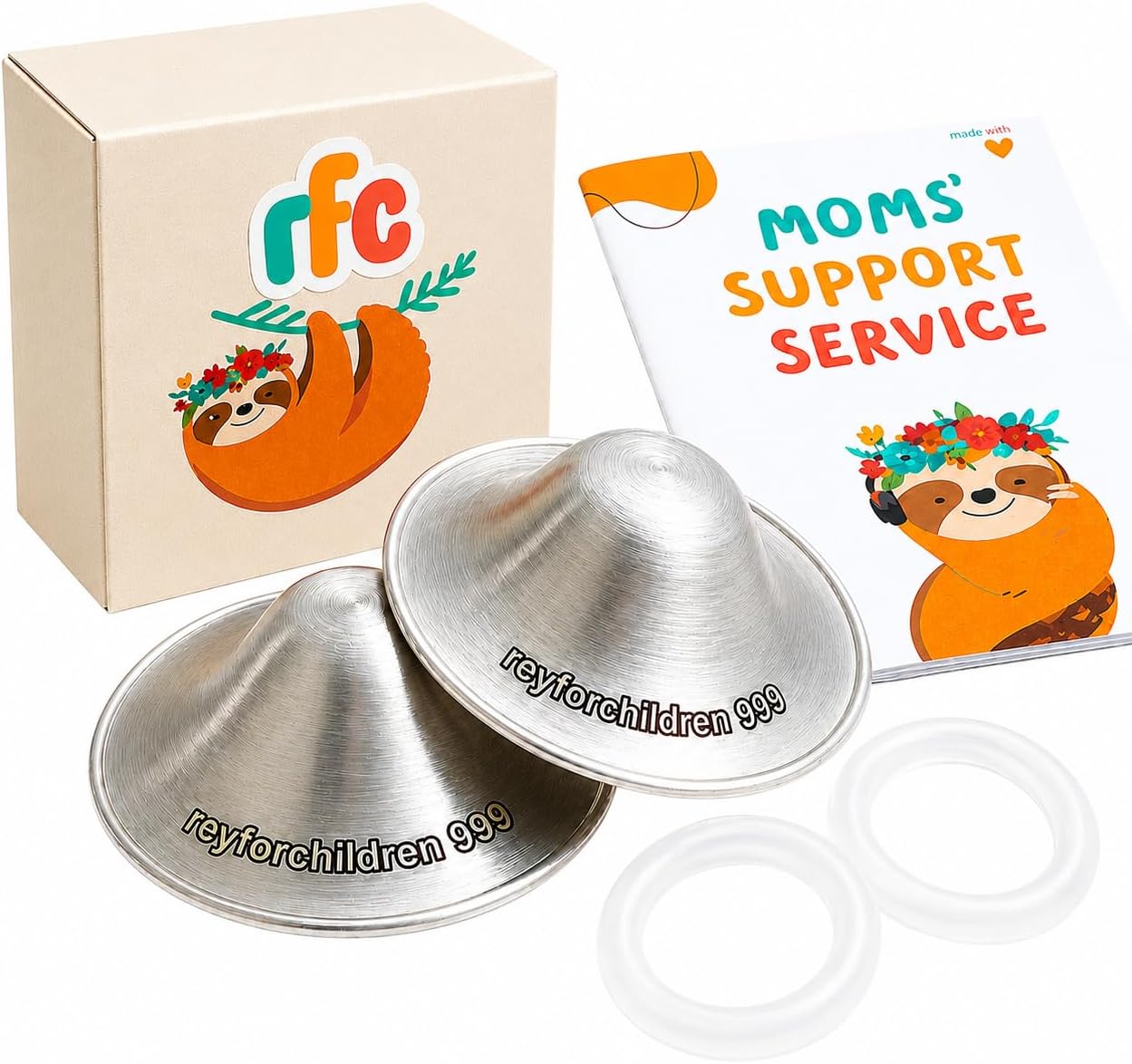
RFC Silver Nursing Cups
Pure 925 silver cups worn between feeds, no creams, no wiping before nursing, just quiet relief while your skin adjusts.
For most mothers, the sharpest tenderness peaks around day three to five, right as milk transitions from colostrum to a larger volume, then eases steadily over the following week as both you and your baby get more efficient at the mechanics of nursing. By two to three weeks, the vast majority of mothers report feeding without pain at latch-on.
By the end of the first two weeks, most soreness fades on its own as both of you get the hang of it. If it is getting worse instead of better, or you notice cracking, bleeding, or a fever, that is the point to call a lactation consultant rather than wait it out, since those signs can sometimes point to a latch problem or, less commonly, an infection that benefits from earlier treatment.
Ready to feel better between feeds?
RFC Silver Nursing Cups
A one-time purchase that lasts through every feeding stage, from the first sore week to weaning.
Does breastfeeding position change how much it hurts?
Yes, noticeably. The cradle hold is the most familiar starting point and works well once you and your baby have some practice, but it gives you less control over the latch in the very first days. The cross-cradle hold, where you support your baby's head with the hand opposite the breast you are feeding from, tends to give first-time mothers more precision over positioning and is often what a lactation consultant will show you first. The football or clutch hold, tucking your baby under your arm like a football, can also make it easier to see and guide the latch, and it is especially useful after a c-section since it keeps your baby's weight off your incision. Side-lying is worth learning too, since it lets you rest while feeding overnight, though most mothers find it takes a bit more practice to get a deep latch in that position.
Mistakes that quietly make soreness worse
A few habits that feel protective can actually slow healing down. Compression bras and tight nursing pads press friction into skin that needs a break, and swapping in a fresh pad before the old one is fully dry can trap moisture against already-irritated tissue in the wrong way. Wiping the nipple with a washcloth or soap before every feed, done with the best intentions, strips away the same protective oils your skin needs to repair itself between latches.
Nipple shields are sometimes reached for early as a shortcut around pain, and while they have a place, bridging a very shallow latch or helping a premature baby who is not yet coordinated enough to nurse directly, using one without guidance can mask a latch problem instead of fixing it, which means the underlying cause of the pain never actually gets addressed. If a shield feels necessary past the first week or two, that is worth bringing to a lactation consultant rather than treating it as the long-term plan.
Switching sides too early or too late in a feed plays a role too. Watching your baby's suck-swallow rhythm slow down, rather than watching the clock, is a more reliable signal that it is time to offer the other side. Pulling a baby off mid-suck to switch on a fixed schedule is one of the more common, and most fixable, sources of unnecessary friction in those early weeks.
What lactation consultants check first
When a mother comes in for a pain consult, most lactation consultants do not start with the nipple itself, they start by watching a full feed from beginning to end. That single observation catches things a mirror never will: how your baby is positioned against your body, whether their head can turn freely to swallow, whether the latch changes as your baby gets tired partway through a feed. A large share of "mystery" pain traces back to something visible only in motion, not in a snapshot.
They will typically also check for tongue and lip mobility, feel for tension in your baby's jaw, and ask about your own nipple shape and any prior breast surgery, since all three change what a workable latch looks like for your particular anatomy. Bring a list of when the pain is worst, at latch-on, throughout the feed, or after unlatching, since the timing itself narrows down the likely cause before the consultant even watches you nurse.
Preventing pain before it starts, with your next baby or right now
If you are earlier in this process, or preparing for a second baby, a few habits lower the odds of significant soreness taking hold in the first place. Getting a latch checked proactively in the first 24 to 48 hours, rather than waiting for pain to show up, catches positioning issues before repeated feeds have a chance to cause real damage. Alternating breasts and positions across the day, rather than always starting on the same side in the same hold, distributes friction more evenly while skin is still adjusting. And treating any tenderness on day one as information rather than something to push through quietly tends to lead to earlier fixes and less cumulative damage over the first week.
Frequently asked questions
How long does breastfeeding nipple pain usually last?
For most mothers, the sharpest pain is limited to the first one to two weeks, easing steadily as latch technique and skin both adjust.
Is it normal for breastfeeding to hurt every single time?
Occasional tenderness at the very start of a feed can be normal early on, but pain that happens at every single feed, especially past the first couple of weeks, usually means something correctable is going on with latch or positioning.
Is it normal for one side to hurt more than the other?
Yes. Babies often have a preferred side or a slightly different latch on each breast, and asymmetry in soreness is common in the first couple of weeks. If one side is consistently much more painful, it is worth having a lactation consultant check that side specifically.
Can flat or inverted nipples make this worse?
They can make achieving a deep latch a little more challenging at first, but the large majority of mothers with flat or inverted nipples go on to breastfeed successfully. Nipples of this shape often draw out more as a baby nurses over the first couple of weeks, and a lactation consultant can show you techniques, like briefly stimulating the nipple before latching, that help.
Could this actually be tongue-tie?
It is possible. Tongue-tie affects roughly four to eleven percent of newborns and can cause exactly this kind of persistent, sharp nipple pain along with clicking sounds and slow weight gain. If pain is not improving despite a latch that looks correct, ask your pediatrician or a lactation consultant to check for it specifically.
When does breastfeeding pain typically stop being an issue at all?
For most mothers, meaningful pain resolves within the first two to three weeks as both latch technique and nipple skin adjust. Occasional tenderness at the very start of a feed can linger a bit longer, but it should never be sharp or last through the whole session past that window.
This article shares general information and real-world experience — it isn't medical advice and doesn't replace guidance from your doctor, midwife, or a certified lactation consultant. If something feels off with you or your baby, please reach out to a professional who knows your situation.