
Somewhere around day three or four, a lot of new mothers wake up to breasts that feel nothing like they did the day before, hard, hot, heavy, and painful enough that even a T-shirt brushing against them is unwelcome. That is engorgement, and it catches a lot of people off guard because no one mentioned that milk actually "coming in" could feel like this. It is common, it is temporary, and there is a real difference between the things that genuinely help and the folk remedies that just feel like they are doing something.
What engorgement actually is, and why it happens
Engorgement happens when your breasts fill with milk faster than it is being removed, and blood flow and fluid in the surrounding tissue increase at the same time, which is what makes them feel swollen and firm rather than just full. It shows up most intensely in the first week, usually days three to five, when your milk transitions from colostrum to a much larger volume of mature milk, but it can also happen any time a feed is skipped, your baby suddenly sleeps through a stretch, or you start weaning and your body has not yet adjusted to less frequent removal.
Do cabbage leaves actually work?
This is one of the most searched engorgement remedies out there, and it deserves an honest answer rather than a myth or a dismissal. Chilled cabbage leaves, tucked inside your bra with a hole cut for the nipple, do genuinely feel soothing, but the research on why is thinner than the internet enthusiasm suggests. Studies comparing cabbage leaves to a plain cold compress have not found the cabbage itself to work meaningfully better, the relief seems to come mostly from the cold and the gentle, cool pressure, not from any compound unique to cabbage. That does not make it a bad option. It is cheap, it is easy, and plenty of mothers swear by it. Just do not expect a food-science miracle, and change the leaves once they wilt or warm, roughly every couple of hours.
Warm before, cold after — the order matters
Lactation guidance has shifted a bit on this in recent years. A little warmth right before a feed, a warm washcloth for a minute or two, or letting warm water run over your chest in the shower, can help milk start flowing and make latching onto a rock-hard breast easier. But leaning on heat for long stretches, or using it after a feed, tends to increase blood flow and swelling rather than calm it. Cold, on the other hand, is for afterward: a cold compress, a bag of frozen peas wrapped in a thin towel, or those chilled cabbage leaves, applied for 15 to 20 minutes after nursing or pumping, to bring the swelling and pain back down.
One technique worth knowing that most people never hear about is reverse pressure softening: using gentle fingertip pressure in a ring around the base of the nipple for a minute or so before a feed, which moves some of the fluid back away from the areola and makes it noticeably easier for your baby to get a deep latch on tissue that would otherwise be too tight and swollen to grip.
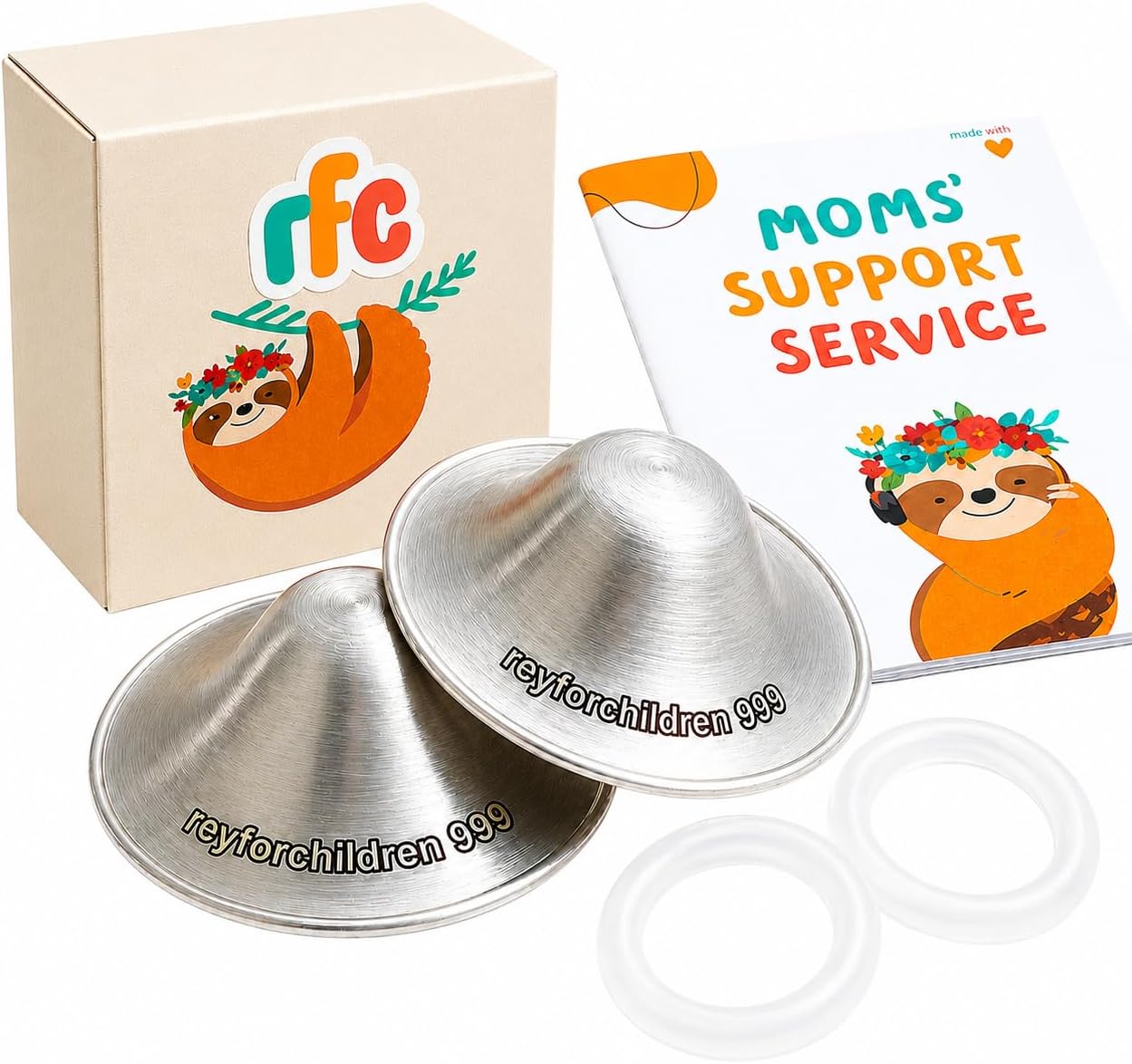
Engorged breasts mean a harder latch, and harder latches mean sorer nipples
RFC Silver Nursing Cups
When tissue is tight and swollen, a deep latch is harder to get right, and nipples often take the brunt of it in those first engorged days. Silver cups worn between feeds give skin a chance to recover while you focus on getting the swelling itself under control.
View on AmazonHand expression and pumping without making it worse
The instinct when you are this uncomfortable is to empty everything out, but fully draining an engorged breast by pump can actually signal your body to make even more milk, which sets up a rougher cycle over the next day or two. The better approach is to express or pump just enough to soften the areola and relieve the worst of the pressure, enough for your baby to latch comfortably or for the pain to ease, not until the breast feels completely empty. Hand expression is genuinely useful here too, it is gentler than a pump on tissue that is already tender, and it gives you more control over stopping right when the sharpest pressure has let up.
If engorgement shows up during weaning
Engorgement from weaning behaves a little differently than the day-three version, since your body has to gradually recalibrate to less demand rather than adjust to a sudden new supply. Dropping feeds slowly, one every few days rather than all at once, gives your body time to reduce production without the breasts filling up faster than they can be relieved. Cold compresses and cabbage leaves still help here, and expressing just a small amount for comfort, never a full pump, keeps the supply signal moving in the right direction. If you need to stop nursing quickly for a medical reason, talk to your doctor, there are safe ways to manage that are more controlled than white-knuckling through it.
When it is actually a clogged duct or something more
Plain engorgement is usually symmetric, both breasts feel full and firm, and it eases noticeably after a feed or pumping session. A firm, localized lump on one side that does not soften after nursing is more likely a clogged duct, and if that comes with a fever, spreading redness, or a sudden flu-like feeling, it has likely crossed into mastitis, which is a different problem that sometimes needs antibiotics. It is common for the two to overlap in the early days, engorgement itself can make you more prone to a clog simply because everything is fuller and under more pressure than usual.
When to call your doctor or a lactation consultant
Reach out if engorgement is so severe your baby cannot latch at all, even after reverse pressure softening and some hand expression, since a baby who cannot feed effectively needs support sooner rather than later. Also call if you develop a fever of 100.4°F (38°C) or higher, if one area becomes distinctly more painful or red than the rest, or if the swelling has not started improving after two full days of consistent home care. None of that means you are doing anything wrong, engorgement severity varies a lot between mothers and even between one baby and the next, and a lactation consultant can often solve a stubborn case in a single visit.
Frequently asked questions
How long does breast engorgement usually last?
With consistent feeding or pumping and the warm-before, cold-after routine, most uncomplicated engorgement noticeably improves within 24 to 48 hours. The initial postpartum engorgement around day three to five tends to be the most intense, easing as your supply and your baby's feeding pattern settle into a rhythm.
Do cabbage leaves really help with engorgement?
They can feel soothing, but research suggests the relief comes mainly from the cold itself rather than anything unique to cabbage. A plain cold compress works about as well. Cabbage leaves are still a cheap, easy option if you prefer them, just swap them out every couple of hours once they warm up.
Should I pump to relieve engorgement?
Express or pump just enough to soften the area and ease the pressure, not until the breast feels fully empty. Draining an engorged breast completely can signal your body to increase supply further, which tends to make the cycle worse rather than better.
Is heat or cold better for engorged breasts?
Both, but at different times. A little warmth right before a feed helps milk start flowing and softens tissue enough to latch. Cold afterward, for 15 to 20 minutes, brings swelling and pain back down. Relying on heat for long stretches or after feeds tends to increase swelling instead.
How is engorgement different from a clogged duct or mastitis?
Engorgement is usually symmetric across both breasts and eases after a feed. A clogged duct is a firm, localized lump on one side that does not soften with nursing. Mastitis adds fever, spreading redness, and flu-like symptoms on top of that. Engorgement can make you more prone to a clog since everything is under more pressure.
What if I get engorged while weaning?
Drop feeds gradually, one every few days rather than all at once, and use cold compresses plus small comfort-only expressing rather than a full pump. If you need to stop nursing quickly for a medical reason, talk to your doctor about a more controlled approach.


