
You did everything right — the latch looks good, a lactation consultant checked it twice, and the sharp first-week soreness was supposed to be over by now. But the pain hasn't budged, and it doesn't quite match what anyone described. If your nipples feel like they're burning well after your baby unlatches, or the ache reaches back into the breast itself, thrush might be the piece nobody mentioned.
What nipple thrush actually is
Nipple thrush is an overgrowth of candida, the same yeast behind oral thrush and diaper rash, on and sometimes just beneath the skin of the nipple and areola. It isn't caused by anything you did wrong. Candida lives on skin and in the body in small amounts all the time, and it tends to flare when the balance tips: after a course of antibiotics for you or your baby, when nipple skin is already cracked or broken from a rough start to breastfeeding, or when your baby has thrush in their mouth or a yeast diaper rash and passes it back to you at the next feed. It's also simply more common in warm, humid climates and on nipples that stay damp between feeds.
The pain pattern that sets it apart
Ordinary latch soreness usually eases within the first thirty seconds to a minute of a feed, and gets noticeably better week by week as your baby's latch matures. Thrush pain tends to behave differently. It often starts or worsens partway through a feed rather than right at latch-on, and — the detail most people don't expect — it can keep burning or stinging for thirty minutes to an hour after your baby is done nursing, sometimes described as a deep, radiating ache rather than surface soreness. Nipples can look shiny, flaky, or unusually pink, though some cases show almost no visible change at all, which is part of why thrush gets both over-diagnosed and missed.
It's easy to confuse with something else
Two other things get mistaken for thrush constantly. A cracked or damaged nipple that hasn't fully healed yet can burn in a similar way, which is part of why thrush often shows up as a second problem layered on top of a first one, a fissure was simply the way in for the yeast. And a nipple that turns white, then blue, then red after a feed, with pain that spikes as the color returns, usually points to vasospasm (sometimes discussed under the umbrella of Raynaud's phenomenon of the nipple), a blood-vessel response to cold or compression rather than an infection at all, and antifungal cream does nothing for it. Getting the two apart matters: treating vasospasm like thrush just delays the actual fix, and treating thrush like vasospasm leaves an active infection untreated in both of you.
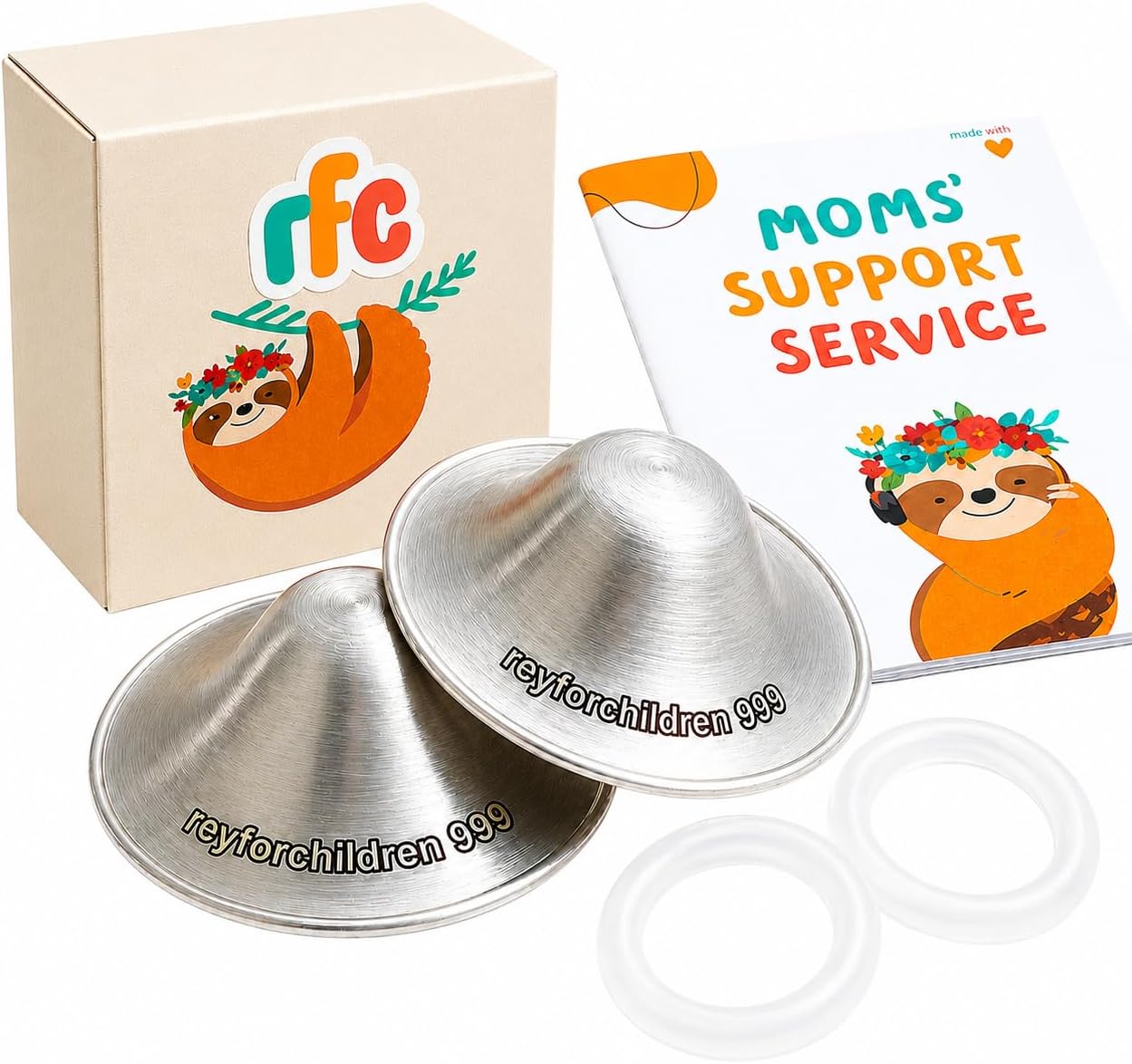
Damp skin is exactly what candida likes
RFC Silver Nursing Cups
Thrush thrives in warm, moist environments, which is part of why breast pads that trap dampness against already-irritated skin don't help. Silver cups keep air moving around healing nipples between feeds instead of holding wet fabric against them — they aren't a treatment for thrush itself, the antifungal your doctor prescribes is what actually clears the infection, but keeping skin dry in between is one less thing working against you while it heals.
View on AmazonCheck your baby too, and your own body
Thrush is a two-way problem almost by definition, so before you assume it's only about your nipples, look at your baby's mouth for white patches on the tongue, gums, or inside the cheeks that don't wipe away easily, unlike a normal milk-film coating, which does. Also check for a yeast diaper rash: a bright red rash with distinct edges and small satellite spots just outside the main area. Neither has to be present for it still to be thrush on your side, but if either shows up, it confirms the picture and means your baby needs treatment at the same time you do, not after.
Getting an actual diagnosis
There's no simple swab test that reliably confirms nipple thrush the way a strep test confirms strep, so diagnosis is mostly clinical: a doctor, midwife, or IBCLC weighing your symptoms, timeline, and risk factors (recent antibiotics, cracked skin, a baby with oral or diaper thrush) against the alternatives above. That's worth saying plainly, because it means self-diagnosing off a search result and starting antifungal cream on your own is a common way to either treat the wrong thing for two weeks or under-treat an infection that needed the oral medication a topical cream alone won't reach. If the pain fits the pattern above, it's worth a same-week appointment rather than waiting it out.
Treating it — for real, and for both of you
When it is thrush, the standard approach treats you and your baby at the same time, even if your baby shows no symptoms at all, because otherwise you simply pass it back and forth. That typically means a topical antifungal, miconazole or clotrimazole, applied thinly to the nipple and areola after every feed and wiped off before the next one, for you, and an oral antifungal gel or drops for your baby's mouth. More stubborn or deeper cases sometimes need an oral antifungal for you as well, which only a doctor can prescribe. Most cases clear within one to two weeks of consistent treatment on both sides; if a full course hasn't helped, that's a sign to go back rather than switch remedies on your own.
The reinfection loop nobody warns you about
Candida survives happily on anything that touches a wet mouth or a damp nipple, which is how a fully treated infection can reappear out of nowhere. During treatment, and for a couple of weeks after, boil pacifiers, bottle nipples, and any pump parts that touch milk for about twenty minutes daily, or run them through a sanitizing cycle, and swap out breast pads the moment they feel damp rather than leaving them in for hours. It's an unglamorous, easy-to-skip step, but it's the difference between clearing thrush once and treating it three times in a row.
When to call your doctor
Call sooner rather than later if the burning pain doesn't ease within a few days of starting treatment, if you notice a fever, spreading redness, or a hard lump alongside the nipple pain, which points more toward a clogged duct or mastitis than thrush alone, or if your baby is fussier at the breast, refusing to latch, or showing white patches that spread or bleed. None of this is a sign you're handling it wrong. Thrush is genuinely one of the trickier breastfeeding problems to pin down, and getting a professional set of eyes on it early usually shortens the whole ordeal.
Frequently asked questions
How do I know if it's thrush and not just a bad latch?
A bad latch usually hurts most right when your baby latches on and eases within the first minute of feeding. Thrush pain tends to start or worsen partway through a feed and often keeps burning for thirty minutes or more after your baby unlatches, sometimes reaching back into the breast rather than staying on the surface. If a lactation consultant has already confirmed a good latch and the pain still fits that second pattern, thrush is worth ruling out with your doctor.
Can I keep breastfeeding while treating thrush?
Yes, and you generally should. Stopping doesn't clear the infection any faster and can affect your supply, while antifungal creams and gels are applied after feeds and are considered safe to use while nursing. Your doctor or pharmacist can confirm the specific product is fine for your situation, but treatment is designed to work alongside continued breastfeeding, not instead of it.
Does thrush affect both nipples at once?
Often, yes, since the same feeding routine and moisture exposure applies to both sides, though it isn't universal and one side can be noticeably worse than the other. Treating both nipples even if only one hurts is still the standard approach, since the infection can be present without obvious pain.
How long does nipple thrush take to clear up?
Most cases improve within one to two weeks of consistent treatment on both mother and baby, including the topical or oral antifungal and the sterilizing steps for anything that touches your baby's mouth. If a full course hasn't helped, that usually means the diagnosis needs a second look or the treatment needs to be stepped up, not that you should wait longer on the same approach.
Can thrush come back after treatment?
It can, mostly through reinfection from pacifiers, bottle nipples, or pump parts that weren't sanitized during and after treatment, or if only one of you was treated. Sterilizing anything that touches your baby's mouth daily during treatment and for a couple of weeks after is the main way to keep it from returning.
Is nipple thrush the same as vasospasm or Raynaud's of the nipple?
No, and mixing them up is common because both cause burning nipple pain. Vasospasm shows up as the nipple turning white, then blue, then red after a feed, driven by blood vessels reacting to cold or compression rather than infection, and antifungal treatment won't touch it. Thrush doesn't typically involve that color-change pattern. A doctor or IBCLC can usually tell the two apart quickly based on your description.


