Breastfeeding & Nursing · June 12, 2026 · 6 min read
Written by The New Mom Journal Editorial Team · Updated July 20, 2026
How to Heal Cracked Nipples Fast, Without the Mess of Creams
Lanolin has been the default answer for cracked nipples for decades, but it is not the only option, and for a lot of mothers it is not even the most effective one. If the cream is sitting barely touched in a drawer because it is greasy, stains your bra, and has to be wiped off before every feed, you are not doing anything wrong.
What actually speeds healing has less to do with the specific product and more to do with the conditions you create between feeds. For years the standard advice was to let a crack air dry, on the theory that moisture invites bacteria. More recent research has actually reversed that thinking.
Why moist wound healing works better
Skin that stays slightly moist forms new cells faster and is measurably less likely to re-crack when your baby latches again, healing up to fifty percent faster than skin left to dry out between feeds. That is the same principle behind modern wound dressings used for other kinds of skin injuries, and it applies just as well to a cracked nipple.
Purified lanolin, often labeled HPA lanolin, remains one of the most studied options, and in clinical comparisons it has outperformed expressed breast milk alone for healing. Hydrogel pads work through a different mechanism, keeping the wound moist with a water and glycerin gel that also has a cooling effect, and some studies have found they relieve pain better than lanolin, though results across studies are mixed enough that neither is a guaranteed fix on its own.
48hrs
is roughly how long a minor crack takes to visibly close when it is properly protected between feeds, according to lactation consultants who track healing time.
What to try, and in what order
Get the latch checked first. Latch correction is consistently more effective than any cream or dressing applied afterward, since a crack that keeps getting re-injured at every feed will not heal no matter what you put on it between sessions.
Protect the skin between feeds. Whether that is lanolin, a hydrogel pad, or a silver cup, the goal is the same: keep the wound covered and undisturbed until it has time to close.
Avoid unnecessary wiping. Cleaning the nipple with a cloth before every latch removes the very moisture that helps it heal, and adds friction on top of it.
An alternative worth trying
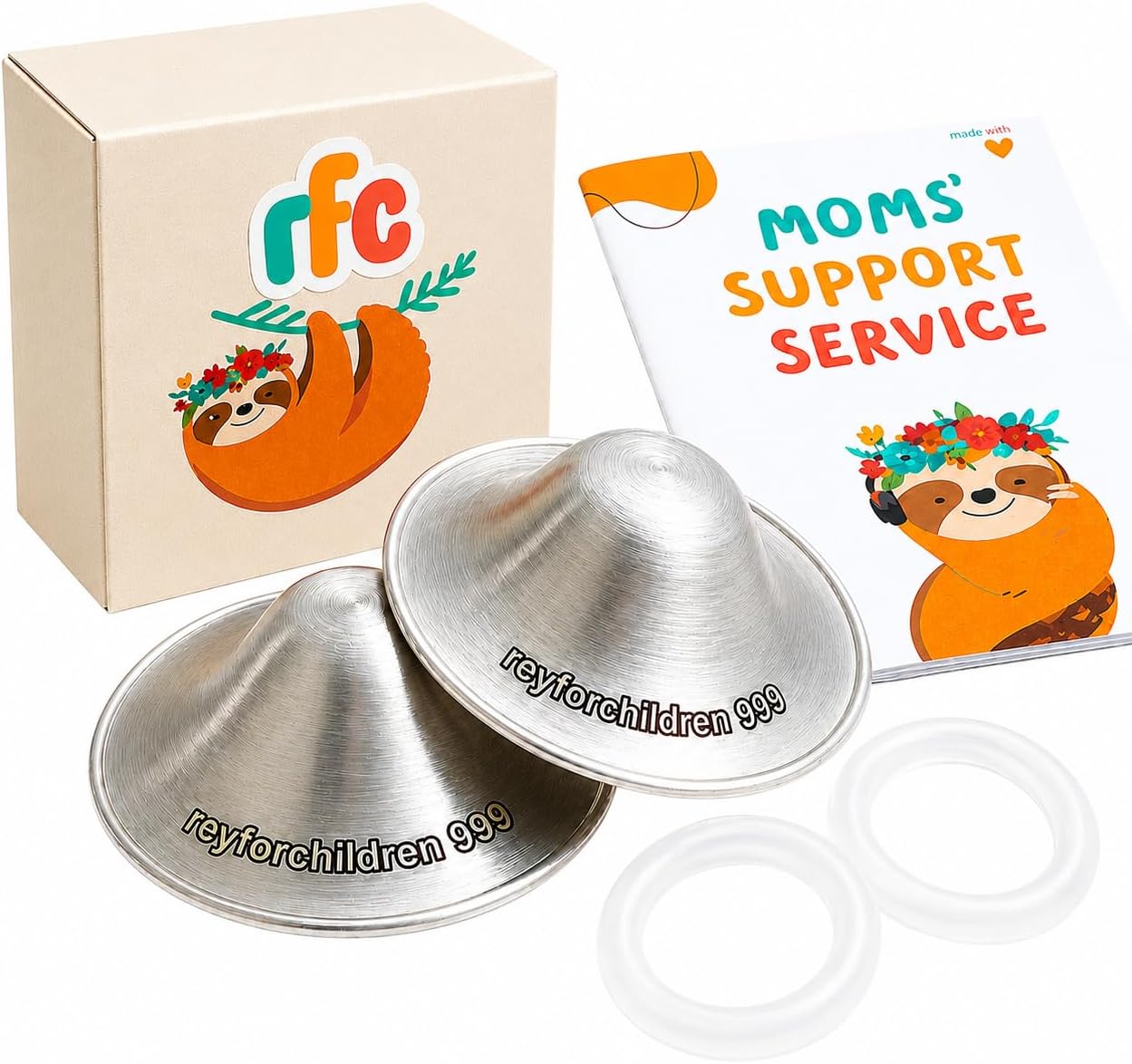
RFC Silver Nursing Cups
Silver nursing cups sit over the nipple between feeds, keeping the area protected without any residue to wipe off before the next latch. A small clinical trial even found them to outperform lanolin and dry care for healing outcomes.
If a crack is not improving within a few days, spreads rather than closes, or you notice a white coating, unusual redness, or a fever, that is the point to loop in a lactation consultant or your doctor, since deep or non-healing cracks can sometimes signal a latch issue or an infection that benefits from earlier treatment rather than more time.
Could it be something more than a normal crack?
Persistent cracking despite a good latch is sometimes traced back to tongue-tie, which affects roughly four to eleven percent of newborns and restricts tongue movement enough to compress the nipple with every suck. Flat or inverted nipples can also make deep latching harder, though most mothers with this nipple shape breastfeed successfully once positioning is adjusted. A nipple shield, a thin silicone cover worn during feeds, is sometimes recommended by a lactation consultant as a temporary bridge while a crack heals or while a baby learns to latch more deeply, since it protects the wound without stopping nursing altogether.
Positioning changes that reduce friction
A more upright cross-cradle hold often gives more control over exactly where the nipple sits in your baby's mouth than a reclined position does, which matters most while a crack is healing. The football hold can also help you see the latch clearly and adjust before damage occurs, rather than after.
A simple daily routine while a crack is healing
Consistency matters more than any single product here. After each feed, resist the urge to immediately cover up, letting the nipple air-dry for a couple of minutes before reapplying whatever barrier you are using gives the skin a brief chance to settle before it is sealed again. Change breast pads as soon as they feel damp rather than waiting for a full feed cycle, since damp fabric sitting against broken skin is one of the more common reasons healing stalls.
In the shower, let water run over the area rather than scrubbing with soap, which strips natural oils and can sting an open crack unnecessarily. Pat dry rather than rub. If you are using a cream or ointment, a thin layer is genuinely enough, more product does not speed healing and often just means more to wipe away before the next feed.
What not to do, even if it sounds logical
A few instincts backfire here. Blow-drying the area on a cool setting to "dry it out faster" undoes the moist-healing benefit described above. Taping a bandage directly over a crack traps friction against the wound in a way loose, breathable coverage does not. And switching products every day or two to find one that works faster rarely helps, most nipple care products need a few consistent days to show whether they are actually making a difference, so give one approach a real trial before swapping to the next.
Ingredients and products worth avoiding while healing
Not everything marketed for nipple care is a good fit for broken skin. Products containing alcohol, menthol, or added fragrance can sting significantly on an open crack and sometimes slow healing by irritating already-compromised tissue. Petroleum-based products create a barrier but do not actively support moist wound healing the way purified lanolin or a hydrogel pad does, so they are a reasonable stopgap rather than a first choice. And anything requiring vigorous wiping off before a feed, thick, waxy balms in particular, adds friction back into the exact routine you are trying to protect, which is part of why cream-free options have become popular with mothers dealing with a stubborn crack.
Frequently asked questions
Can I use regular nipple cream instead of lanolin?
Plain, fragrance-free options are generally fine, but anything with added ingredients, fragrances, or preservatives should be wiped off before nursing, which defeats some of the convenience. Purified lanolin or a silver cup avoid that extra step entirely.
Why do my nipples crack again after they just healed?
Re-cracking almost always points back to an unresolved latch issue rather than the skin itself being unusually fragile, so it is worth a fresh latch check even if a previous one seemed fine.
Should I stop nursing on the cracked side until it heals?
Usually not. Continuing to nurse, with attention to latch, tends to heal faster than resting the breast entirely, since regular removal of milk also prevents engorgement and clogged ducts on that side. If pain is severe, pumping that side for a feed or two while treating the crack is a reasonable bridge.
Is bleeding from a crack dangerous for my baby?
A small amount of blood in a feed from a cracked nipple is not harmful to your baby and is fairly common. It is a sign to address the crack more actively, not an emergency, though persistent or heavy bleeding is worth a call to your doctor.
How do I know if it has turned into an infection?
Watch for a white or yellow coating on the nipple, spreading redness, worsening rather than improving pain, or flu-like symptoms such as fever and chills, which can point to a yeast infection or the start of mastitis. Any of these warrants a call to your doctor rather than more time.
This article shares general information and real-world experience — it isn't medical advice and doesn't replace guidance from your doctor, midwife, or a certified lactation consultant. If something feels off with you or your baby, please reach out to a professional who knows your situation.