Written by The New Mom Journal Editorial Team · Updated July 20, 2026
The Emotional Whiplash of Week Two, and Why It's So Common
Nobody warns you that the hardest day is not day one. It is the day everyone stops checking in, the visitors slow down, the flowers start to wilt, and you are left alone with a new baby and a body that still feels unfamiliar.
Why week two hits so hard
The initial adrenaline of birth and homecoming has worn off by then, hormone levels are shifting sharply as estrogen and progesterone drop from their pregnancy peaks, and sleep debt has had time to genuinely accumulate. It is also the well-documented window for the baby blues to peak, typically appearing two to three days after birth and clearing within about two weeks, distinct from postpartum depression but still genuinely hard to move through.
~80%
of new mothers experience some baby blues, typically peaking around day four to five and easing within about two weeks.
Baby blues versus something that needs more support
Feeling weepy, overwhelmed, or unexpectedly flat in week two does not mean something is wrong with you, crying easily, irritability, restlessness, and trouble concentrating are all part of the typical baby blues picture, and importantly, they do not usually stop you from functioning or caring for your baby day to day.
One small thing that can help
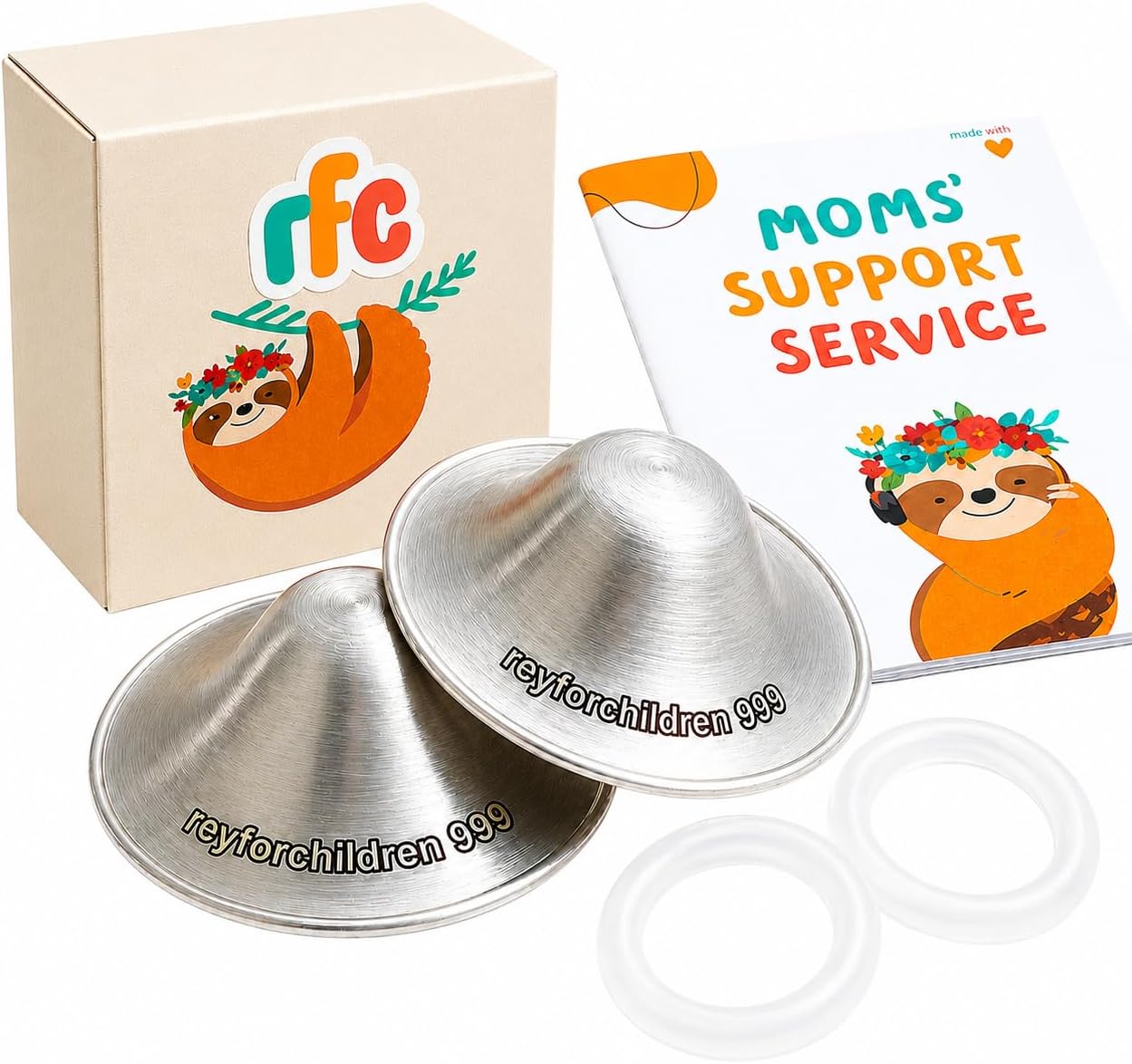
RFC Silver Nursing Cups
On the days everything feels like too much, sore nipples do not need to be one more thing to manage. Silver nursing cups quietly take that off the list.
If the low feeling stretches well past two weeks, deepens rather than lifts, comes with a sense of hopelessness or detachment from your baby, or comes with thoughts that frighten you, that is the point to talk to your doctor. Baby blues and postpartum depression are genuinely different conditions, separated mainly by severity and how long they last, and both deserve real support, not just waiting it out. The National Maternal Mental Health Hotline, 1-833-852-6262, is available around the clock if you need somewhere to start.
What your body is doing at the same time
Week two typically overlaps with real physical healing too, afterpains easing, a perineal tear or c-section incision still tender, and hormone levels dropping sharply from their pregnancy peak. Physical exhaustion and emotional turbulence tend to amplify each other during this window, which is part of why week two can feel so disproportionately hard compared to the relatively hopeful, adrenaline-filled first couple of days.
Small things that genuinely help during this week
Nothing fixes hormonal whiplash outright, but a few small habits soften it. Getting outside for even ten minutes of daylight, even just sitting on a porch, has a real, if modest, effect on mood regulation during this window. Eating something more substantial than snacks grabbed one-handed matters more than it sounds like it should, low blood sugar compounds emotional volatility. And naming the feeling out loud to one person, "today was a hard day," without needing to explain or justify it further, tends to lighten the weight of it more than pushing through silently does.
What actually helps from a partner or support person
The visitors who show up with a specific offer, taking the baby for twenty minutes so you can shower alone, doing a grocery run without being asked, tend to help far more than well-meaning check-ins that require you to articulate what you need while already depleted. If you have a partner, this is a good week for them to take over one full task entirely, all nighttime diaper changes, all meal planning, rather than vaguely "helping more," since a fully owned task requires no coordination from you at all. Simply being told "this is temporary and you are doing fine" by someone you trust, repeated as many times as it needs to be, is also a small thing that measurably helps many mothers get through this particular week.
Warning signs worth distinguishing from normal adjustment
Most of week two's emotional turbulence is baby blues, temporary, fluctuating, and still allowing you to function and care for your baby, even on a hard day. It is worth knowing the specific signs that point toward something needing more support: sadness or numbness that does not lift at all rather than coming and going, difficulty bonding with or feeling connected to your baby, thoughts of harming yourself or your baby, or a persistent sense that you cannot go on this way. Any of these, even just one, is worth an immediate call to your doctor or the National Maternal Mental Health Hotline at 1-833-852-6262, rather than waiting to see if the two-week window resolves it on its own.
Frequently asked questions
How long do baby blues last after birth?
Typically two to three days after birth through about two weeks, if low feelings persist well beyond that window, it is worth discussing with your doctor.
Is it normal to cry a lot in the second week postpartum?
Yes, this is one of the most common windows for baby blues to peak, driven by hormonal shifts, exhaustion, and the fading of early adrenaline.
Why did I feel fine on day two but fall apart on day ten?
Early adrenaline and excitement often mask exhaustion in the very first days, then fade right as hormone levels drop and visitor support tapers off, a combination that commonly produces a delayed low point rather than an immediate one.
Is it normal to cry for no clear reason?
Very much so, this is one of the hallmark features of baby blues, crying that seems to come from nowhere, unrelated to anything specific, and it typically resolves within about two weeks on its own.
Does having support at home change how hard week two feels?
It genuinely helps, but does not eliminate the hormonal and physical factors driving this window, even well-supported mothers commonly experience some version of this dip, it is not solely a function of how much help is available.
What is the actual difference between feeling sad and needing help?
Baby blues involve low moments that still allow you to function and care for your baby, easing within two weeks. If sadness is constant rather than intermittent, prevents you from caring for yourself or your baby, or extends well past two weeks, that crosses into territory worth discussing with your doctor.
This article shares general information and real-world experience — it isn't medical advice and doesn't replace guidance from your doctor, midwife, or a certified lactation consultant. If something feels off with you or your baby, please reach out to a professional who knows your situation.