Written by The New Mom Journal Editorial Team · Updated July 20, 2026
10 Things Nobody Tells You About Nursing a Newborn
Cluster feeding, cracked skin, and the 3am doubt spiral rarely make it into the pamphlets you are handed before you leave the hospital. Here is the honest version, the parts other lists tend to leave out.
The parts nobody mentions
Your baby will sometimes nurse for comfort, not hunger, and that is not a problem to fix, it is a normal part of how babies self-soothe and bond. Let-down can feel like a tingling rush, or nothing noticeable at all, and both are completely normal, the sensation varies enormously between mothers and even between feeds. Growth spurts arrive with almost no warning and can double how often your baby wants to feed for a few days, most commonly around two to three weeks, six weeks, and three months.
The exhausting parts and the tender parts often happen in the same five minutes.
More things worth knowing
Your supply will not run out from nursing too much, more removal signals more production, not less. Nipples can look different right after a feed, elongated or slightly compressed, and that alone is not a sign of a bad latch, it usually returns to a normal shape within a minute or two. Feeding cues appear long before crying, rooting, lip smacking, hands to mouth, and if you catch a feed at that stage rather than waiting for tears, it tends to go more smoothly for both of you.
And the doubt spiral at 3am, wondering if you are doing any of this right, is almost universal, not a sign something is uniquely wrong with you or your baby. Nearly every mother describes that exact feeling in the first weeks.
One honest addition to the list
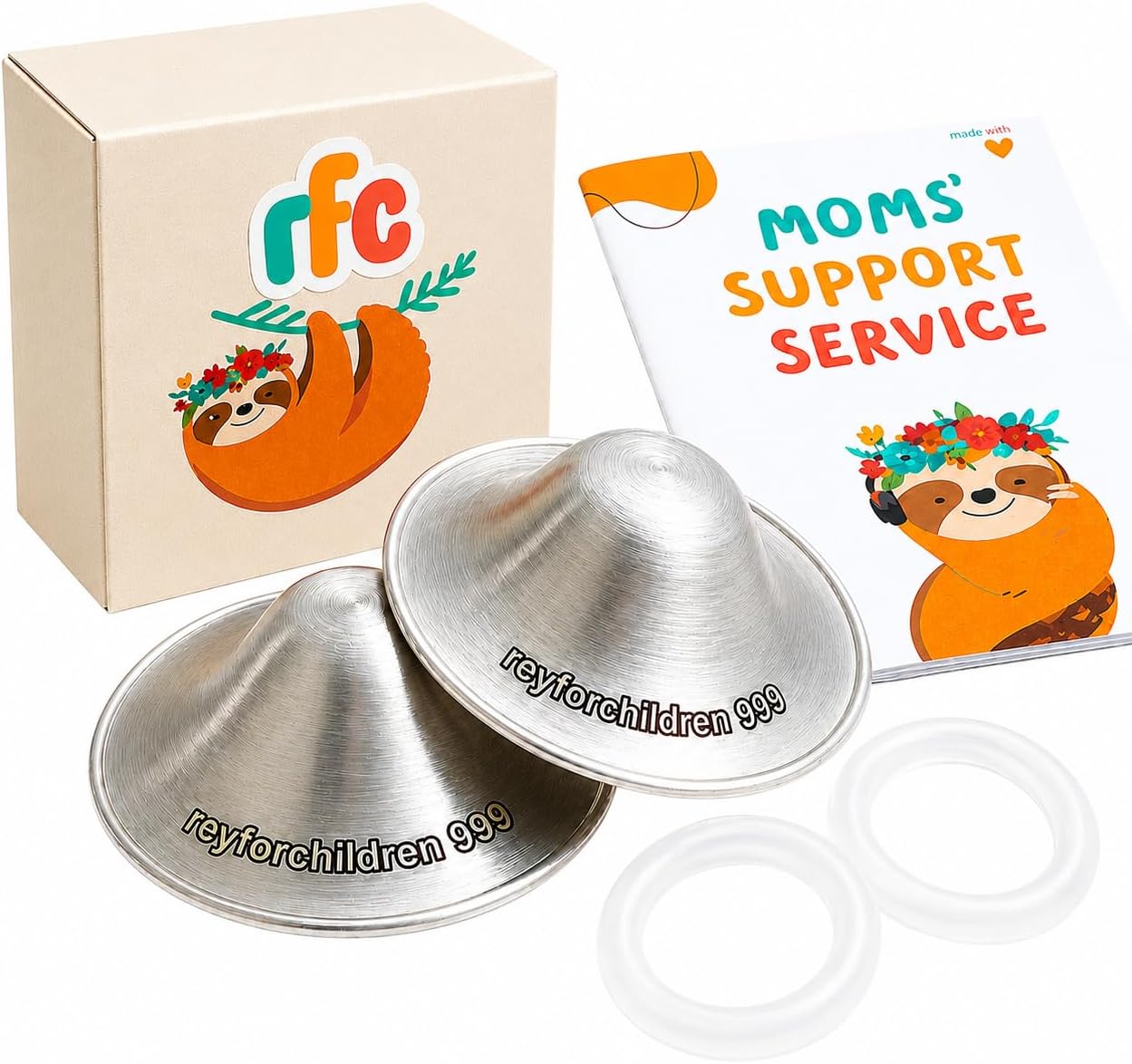
RFC Silver Nursing Cups
Nobody tells you how sore the first weeks can be either. Silver nursing cups are a quiet, low-effort way to give your skin a break between the feeds nobody warned you about.
The learning curve is real, and it is temporary. Almost everything on this list gets easier, or simply stops mattering, by the time your baby is a few months old. The version of nursing that feels overwhelming in week one rarely resembles what it looks like by week eight.
A few more that rarely make the list
Clogged ducts and mastitis are more common than most first-time mothers expect, a firm, sore, sometimes reddened lump that responds well to frequent nursing, warm compresses, and gentle massage, but that can escalate to fever and flu-like symptoms if ignored. Milk can also let down unexpectedly, at the sound of any baby crying, during a warm shower, or with no obvious trigger at all, which catches most mothers off guard the first time it happens. And breast size and shape genuinely can change during breastfeeding, sometimes larger, sometimes smaller than either pregnancy or pre-pregnancy, which is a normal, if rarely discussed, part of the process.
Things even second and third-time mothers still get surprised by
Experience with one baby does not always transfer cleanly to the next, and that catches a lot of mothers off guard. A second baby can have a completely different latch, appetite, and feeding rhythm than the first, meaning the routine you finally mastered does not necessarily apply again. Tandem nursing an older toddler alongside a newborn, if that is part of your plan, brings its own learning curve around scheduling and supply that first-time breastfeeding never prepared you for. And the emotional weight of splitting attention between children while still learning a new baby's cues is rarely mentioned, even though it is one of the more common sources of guilt among mothers nursing a second or third child.
What actually made a difference for mothers who got through it
Across the accounts lactation consultants hear most often, a few themes repeat: lowering the bar for what a "good" day looks like in the first month, accepting help with literally anything that is not feeding the baby, and finding even one other person, in person or online, who is in the same stage at the same time. Isolation tends to make every part of the early weeks feel harder than it actually is, and mothers who found even a small support circle consistently describe the adjustment as more manageable, not because the physical challenges were different, but because they were not facing them entirely alone.
Nursing while you yourself are sick
Nobody mentions this one enough: you will very likely catch a cold, stomach bug, or worse while nursing a newborn, and for the vast majority of common illnesses, continuing to breastfeed is not only safe but actively helpful, your body passes protective antibodies to your baby through your milk. Most over-the-counter cold and pain medications have breastfeeding-compatible options, though it is worth a quick check with your pharmacist or doctor for anything you have not used before. The main adjustments are practical: resting more aggressively than you might otherwise allow yourself, washing hands frequently, and asking for extra help so you are not simultaneously nursing around the clock and running on zero reserves while unwell.
Frequently asked questions
Why does my newborn cry every evening at the same time?
This is the witching hour, a predictable stretch of evening fussiness driven by an overloaded nervous system and natural evening cluster feeding, it typically fades by around twelve weeks.
Is it normal for a newborn to want to nurse constantly?
Yes, frequent nursing, including cluster feeding, is a normal and expected part of the newborn stage and is how supply gets established and matched to a baby's needs.
Is it normal for my baby to pull off and relatch repeatedly?
Yes, especially in the first weeks. Babies are still coordinating suck, swallow, and breathe all at once, and adjusting position mid-feed is common and not usually a sign of a problem.
Why does my baby sometimes seem to prefer one breast?
A slight difference in milk flow, nipple shape, or simply positioning comfort on one side often explains a preference, and it usually evens out over the following weeks as both you and your baby adjust.
Is it true that stress can affect let-down in the moment?
Yes, acute stress or anxiety can briefly delay let-down, which is part of why a calm environment, or at least a few slow breaths before starting a feed, genuinely helps some mothers nurse more comfortably.
How long before nursing starts to feel more natural?
Most mothers describe a real shift by six to eight weeks, where the constant conscious effort of the early days starts to feel more automatic. That does not mean challenges stop entirely, but the baseline difficulty tends to drop substantially by then.
This article shares general information and real-world experience — it isn't medical advice and doesn't replace guidance from your doctor, midwife, or a certified lactation consultant. If something feels off with you or your baby, please reach out to a professional who knows your situation.