Written by The New Mom Journal Editorial Team · Updated July 20, 2026
Decoding Your Newborn's Hunger Cues Before the Crying Starts
Crying is a late signal, not an early one. By the time your baby is crying, they have usually already moved through several quieter cues asking to be fed, and by that point they may be stressed enough that a proper latch takes more effort for both of you.
The signs that come first
Rooting, turning the head toward a hand or cheek stroke as an automatic reflex, is one of the earliest and most reliable hunger cues. Lip smacking, sucking on hands or fists, and soft sucking sounds typically follow shortly after. As hunger builds, babies often become more alert and active, moving more, opening their eyes wider, and generally seeming to search for something.
The quiet cues are easy to miss in the middle of a busy day.
Why responding early actually matters
Responding at these earlier stages tends to make feeds go more smoothly, since a baby who has not yet escalated to crying latches more easily and settles faster once feeding begins. A baby who is already crying from hunger has often moved past a calm, receptive state into one of mild distress, which can make achieving a comfortable, deep latch noticeably harder in the moment.
Catching cues, calmly
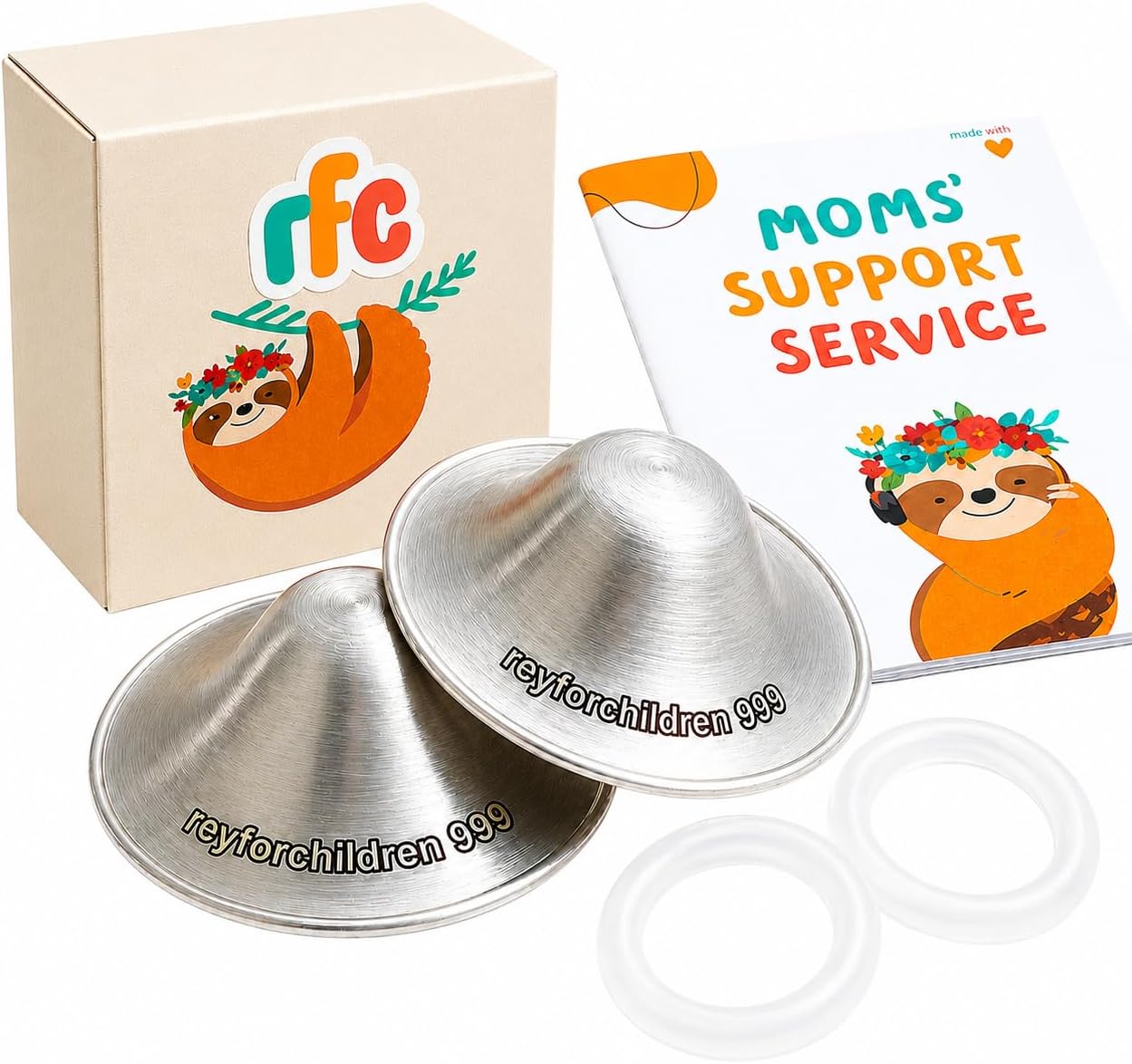
RFC Silver Nursing Cups
A comfortable latch starts with a calm baby. Healed, soothed nipples make it easier to respond quickly the moment those early cues appear.
Over the first few weeks, most parents get noticeably faster at spotting these signals, turning what once felt unpredictable into a much more readable pattern. What looks identical to an outside observer, a hand near the mouth, a small stir, starts to carry clear meaning once you have watched your own baby's particular version of it enough times.
Cues that mean the opposite: signs of fullness
Just as hunger has a language before crying, fullness has its own signals: slowing or stopping sucking, turning away from the breast or bottle, relaxed hands instead of clenched fists, and a generally calm, drowsy demeanor. Learning to recognize satisfaction cues alongside hunger cues helps you avoid both underfeeding and unnecessarily topping off a baby who has already had enough.
When cues are harder to read
Some babies genuinely give quieter or less typical signals, and it is not a sign you are missing something obvious. Premature or late-preterm babies often show more subtle, lower-energy cues and tire more easily before finishing a feed, sometimes needing gentle encouragement to stay engaged. Babies with tongue-tie or other latch difficulties may root and search normally but struggle once they actually attempt to feed, which can look confusing from the outside. And a baby recovering from jaundice or with low blood sugar can be unusually sleepy and show fewer active hunger cues even while genuinely needing to eat, which is one reason pediatricians pay close attention to feeding frequency specifically in babies being monitored for either condition.
Reading cues outside the quiet of your living room
Cues are easiest to catch in a calm, quiet setting, and noticeably harder in a carrier, a car seat, or a noisy family gathering. When you are out and about, checking in more proactively, offering a feed at a reasonable interval rather than waiting for a clear signal you might not catch in the noise, tends to work better than trying to spot subtle cues in a distracting environment. Babywearing has an advantage here: being close enough to feel small movements and hear soft sounds often makes cues easier to catch on the go than a stroller or car seat would.
Teaching other caregivers to read the same cues
A grandparent, partner, or daycare provider who has not spent as many hours studying your baby's specific signals may miss cues you catch instinctively, not from lack of care, but from lack of repetition. Walking a new caregiver through what to watch for in person, rooting, hands to mouth, that particular squirm your baby does, works far better than a verbal description alone, since these cues are genuinely easier to demonstrate than explain. It is also worth telling a new caregiver explicitly that crying is a late signal, not the first one, so they know to check for earlier cues rather than waiting for obvious distress before offering a feed.
Frequently asked questions
What are the first signs a baby is hungry?
Rooting, turning toward a hand or cheek touch, is typically the earliest cue, followed by lip smacking and hands moving to the mouth.
How long after hunger cues start will a baby cry?
This varies, but escalation to crying can happen within just a few minutes if early cues go unanswered, which is why responding promptly tends to make feeds go more smoothly.
Do hunger cues look different at night than during the day?
The signals themselves, rooting, hand-to-mouth, lip smacking, are the same, but grogginess can make them subtler at night, sometimes limited to soft stirring or slight fussing rather than more obvious daytime movement.
Can a pacifier mask real hunger cues?
It can, since sucking on a pacifier may temporarily quiet rooting or hand-to-mouth behavior without addressing actual hunger. Watching overall feeding frequency and weight gain alongside pacifier use helps make sure hunger is not being missed.
Is it possible to overfeed a newborn by responding to every cue?
Breastfed babies self-regulate intake quite well, making overfeeding uncommon. Bottle-fed babies are somewhat more prone to it since a bottle can be easier to keep taking past fullness, which is part of why paced bottle feeding, watching for fullness cues rather than finishing a set amount, is often recommended.
How quickly do these cues escalate to crying if missed?
It varies by baby and by how hungry they already are, but early cues can escalate within just a few minutes if not responded to, which is part of why catching them early makes such a practical difference for smoother feeds.
This article shares general information and real-world experience — it isn't medical advice and doesn't replace guidance from your doctor, midwife, or a certified lactation consultant. If something feels off with you or your baby, please reach out to a professional who knows your situation.