Written by The New Mom Journal Editorial Team · Updated July 20, 2026
The Signs of Postpartum Anxiety Nobody Talks About
The racing thoughts nobody warns you might come with the baby are more common than most people realize, and they look meaningfully different from the sadness usually associated with postpartum struggles.
What it can actually feel like
Postpartum anxiety often shows up as constant, hard-to-switch-off worry, a racing heart, a tight chest, or intrusive thoughts about something happening to the baby, thoughts that are distressing precisely because they are unwanted, not because they reflect any real desire. Hypervigilance, trouble handing the baby to someone else, or avoiding situations that once felt easy are common behavioral signs too.
1 in 2
mothers with postpartum depression also experience a co-occurring anxiety disorder, according to research on perinatal mental health.
Anxiety versus OCD versus something more serious
Postpartum anxiety involves worry and intrusive thoughts without compulsive behaviors, while postpartum OCD adds repetitive checking, reassurance-seeking, or mental rituals aimed at easing the distress those thoughts create. Both are different from postpartum psychosis, a rare condition affecting roughly one to two in a thousand births, marked by a genuine detachment from reality, delusions, or hallucinations, rather than distressing thoughts the person recognizes as irrational. Unlike depression, which tends to feel heavy, slow, and flat, anxiety feels fast, tense, and restless.
Support for the physical, while you address the rest
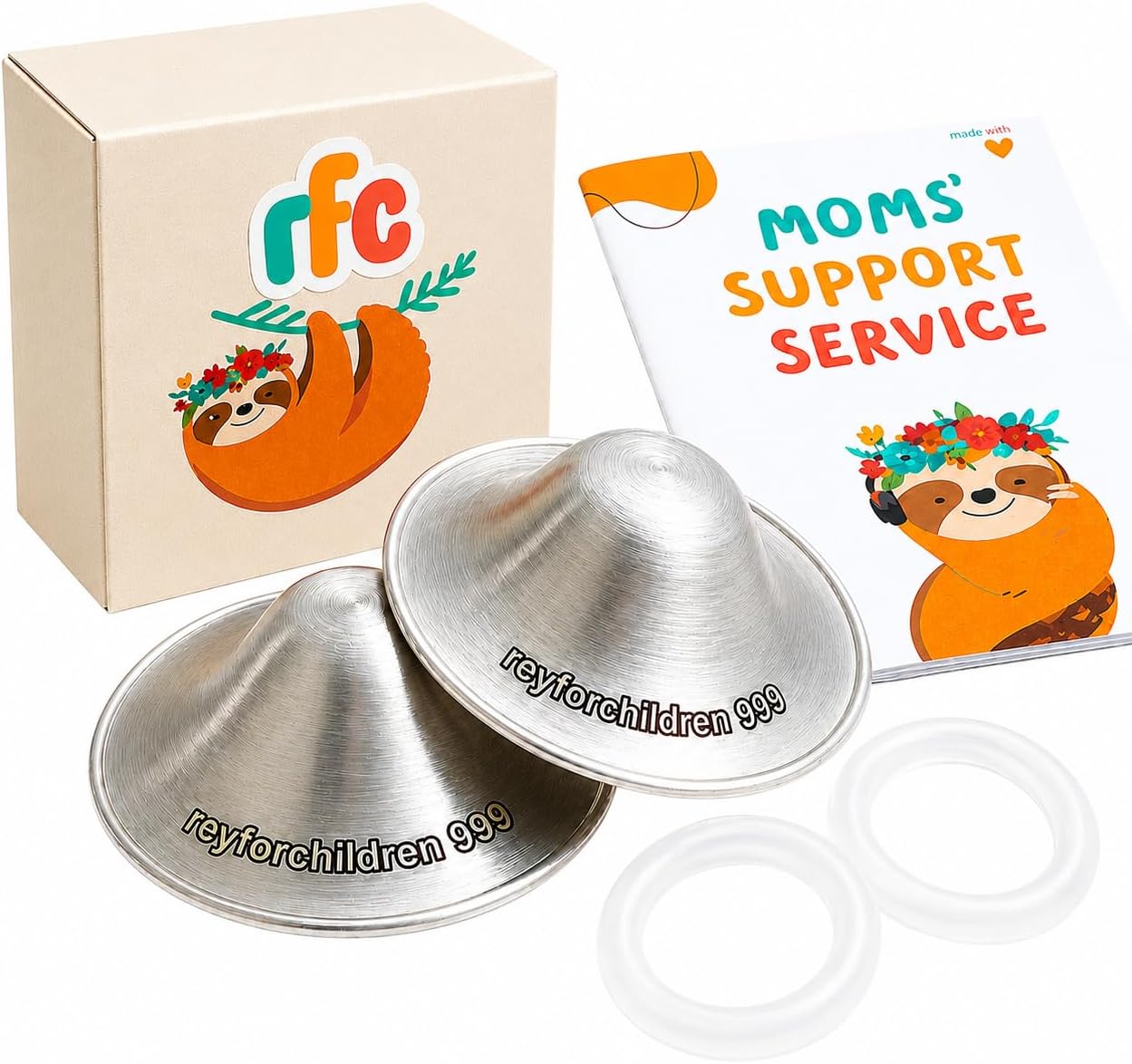
RFC Silver Nursing Cups
Physical relief will not fix anxiety, but it can remove one source of tension. Silver nursing cups quietly handle nipple soreness while you focus on getting the support you need.
These thoughts do not mean you want to harm your baby, and postpartum anxiety is genuinely treatable. If they are persistent, distressing, or interfering with daily life, telling your doctor is the fastest route to real relief, not a sign of failure for mentioning it. If you ever reach a mental health crisis or have thoughts of harming yourself, call or text 988 immediately.
What actually helps, beyond "just relax"
Effective treatment often combines short-term therapy, particularly approaches like cognitive behavioral therapy that address anxious thought patterns directly, with medication when needed, many of which are considered compatible with breastfeeding under a doctor's guidance. Practical grounding techniques, naming five things you can see or feel in the moment, slow controlled breathing, can help in an acute spike, though they work best alongside, not instead of, professional support for anything persistent.
Factors that raise the odds, without being anyone's fault
Certain circumstances are associated with a higher likelihood of postpartum anxiety: a personal or family history of anxiety or depression, a difficult or traumatic birth experience, a baby with health complications or a NICU stay, limited social support, and significant sleep deprivation. None of these cause anxiety in a simple, direct way, and plenty of mothers with several risk factors never develop it while others with none do. Knowing your own risk factors is useful mainly so you can watch for early symptoms with less confusion about where they are coming from, not as a way to predict or blame yourself in advance.
What to actually say to your doctor
Many mothers hesitate to bring this up because they are not sure how to describe it, or worry it will sound alarming. A simple, direct opening works well: "I've been having racing, hard-to-stop worry" or "I'm having thoughts about the baby that scare me and I can't turn them off" gives a doctor exactly what they need to start helping, without requiring you to have a diagnosis in mind first. Bringing a specific example, when it happens most, how long it has been going on, what it stops you from doing, helps your provider assess severity faster than a general "I've been anxious" alone.
When anxiety centers specifically on feeding
Some mothers experience anxiety that clusters tightly around breastfeeding itself, intrusive worry about milk supply even with clear evidence it is fine, dread before every single feed, or panic if a session does not go smoothly. This is a real, specific pattern some perinatal mental health specialists work with directly, and it is not something you are expected to reason your way out of alone, especially if physical discomfort like nipple pain is also part of what is feeding the dread. Naming feeding anxiety specifically to your doctor or a lactation consultant, rather than describing it only as general stress, helps direct you toward support that addresses both the emotional and physical sides of what is happening.
Frequently asked questions
Can postpartum anxiety start weeks or months after birth?
Yes, onset is not limited to the first days or weeks, new or worsening anxiety symptoms anytime in the first year still warrant the same attention as earlier onset.
Is postpartum anxiety treatable without medication?
Therapy, particularly cognitive behavioral approaches, helps many mothers significantly on its own, medication is an option alongside therapy when needed, not the only path to relief.
How is this different from just being a naturally anxious new parent?
Some worry is universal and adaptive for new parents. Postpartum anxiety crosses into a clinical concern when worry is constant, disproportionate to actual risk, physically distressing, or interferes with daily functioning, sleep, eating, or caring for yourself, rather than being an occasional, manageable concern.
Will this affect my baby if I do not get help?
Untreated anxiety can affect bonding and your own quality of life, which is exactly why getting support benefits both of you, not just you. Treatment tends to improve the parent-infant relationship rather than the reverse.
Can postpartum anxiety appear months after birth, not just right away?
Yes, onset can occur anytime within the first year, it is not limited strictly to the first weeks, so new or worsening symptoms later in the first year still warrant the same attention as earlier onset would.
What is the fastest way to get help if I recognize these symptoms in myself?
Start with your OB, midwife, or primary care doctor, who can refer you to specialized perinatal mental health support, or contact the National Maternal Mental Health Hotline at 1-833-852-6262 for immediate guidance and resources.
This article shares general information and real-world experience — it isn't medical advice and doesn't replace guidance from your doctor, midwife, or a certified lactation consultant. If something feels off with you or your baby, please reach out to a professional who knows your situation.