Written by The New Mom Journal Editorial Team · Updated July 20, 2026
Building Your Postpartum Support Team Before Baby Arrives
The help you will need after birth does not show up on its own, it has to be arranged in advance, ideally before you are too exhausted to make a single phone call. Most new parents underestimate how much logistical and emotional support the first weeks actually require.
Who actually belongs on the list
A postpartum support team is broader than most people plan for: a lactation consultant's number saved in your phone before you need it, one or two friends who have offered to bring meals on a rotating schedule, a partner or family member briefed on what help actually looks like day to day, and ideally, a postpartum doula or a pediatrician's after-hours line already programmed in.
The people who show up matter as much as the plan itself.
Why specificity matters more than good intentions
Specificity matters more than good intentions. "Let me know if you need anything" rarely gets used, because asking for help in the moment takes energy you will not have. "I will drop off dinner Tuesday" almost always gets used, because the decision has already been made for you. Setting up a simple meal train, a shared calendar for visitors, or even a group chat where people can volunteer for specific tasks takes the coordination burden off you entirely.
Part of the plan, not an afterthought
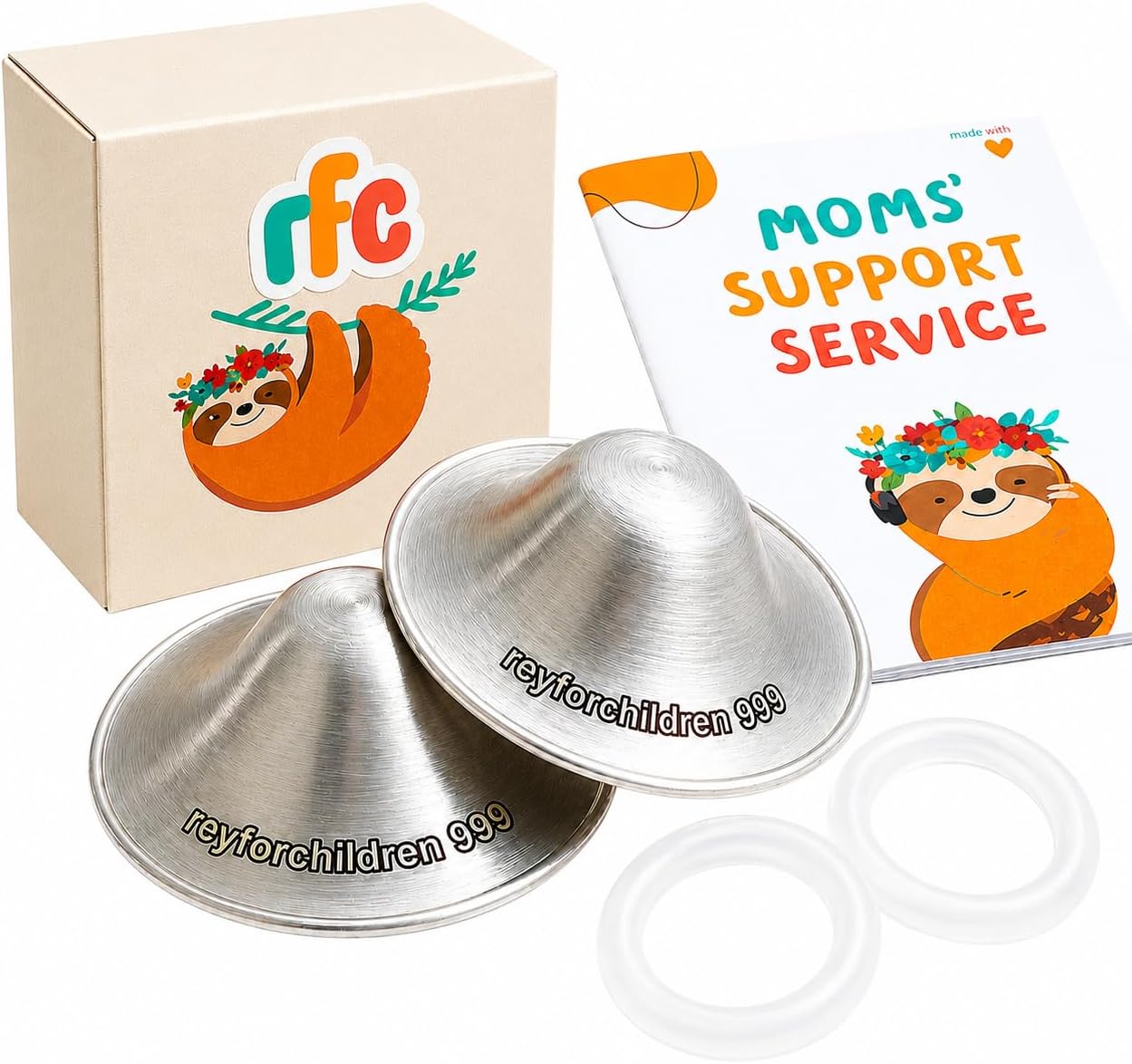
RFC Silver Nursing Cups
Add a small breastfeeding care kit, including silver nursing cups, to the list of things ready before baby arrives, so early nipple care isn't a last-minute scramble.
Build the list before your due date, not after. The version of you three weeks postpartum will not have the bandwidth to organize what the version of you today can put in place in a single afternoon. Even a short list, a lactation consultant, two people committed to meals, and one person who knows they are on call for a late-night text, makes a measurable difference in how supported the first month actually feels.
A simple framework for the first six weeks
Many postpartum doulas suggest thinking in terms of three layers of support: physical help, meals, cleaning, laundry, so you can rest; feeding help, a lactation consultant on call and a partner who understands positioning; and emotional support, at least one person you can be completely honest with about how hard a day was, without needing to perform being fine. Covering all three, rather than just the most obvious one, tends to matter more than the total number of people involved.
Setting up logistics so no one has to ask twice
A shared meal train sign-up, there are several free ones built specifically for this, removes the back-and-forth of texting to coordinate who is bringing what and when. Listing dietary restrictions and a rough drop-off window up front means fewer clarifying messages later, when answering texts is the last thing you have energy for. The same logic applies to a shared visitor calendar, so grandparents and friends are not all arriving on the same overwhelming afternoon, and to a simple group text or shared note where people can claim specific tasks, a grocery run, a dog walk, an hour of holding the baby, without needing you to assign them individually.
None of this needs to be elaborate. The goal is simply to move coordination off your plate before you need the help, so that accepting it later does not require any extra effort in the moment.
Talking to your partner before birth, not during
One of the most valuable conversations to have in the third trimester is also one of the easiest to skip: who is actually doing what in the first six weeks. Night wake-ups, diaper changes, who handles the pediatrician calls, who manages the meal train, and how chores get split all feel obvious in theory and turn into friction in practice when no one has said them out loud. Writing even a rough division down, and agreeing in advance that it will need to flex once the baby actually arrives, tends to prevent the low-grade resentment that builds when one partner assumes the other already knows the plan.
Finding a lactation consultant before you need one urgently
Searching for a lactation consultant for the first time while sore, exhausted, and worried is far harder than doing it calmly in advance. Ask your OB, midwife, or the hospital where you plan to deliver for a referral list before your due date, and check whether your insurance covers visits, since coverage requirements mean many plans do at no extra cost. International Board Certified Lactation Consultants, IBCLCs, hold the most rigorous credential in the field, though hospital-based lactation nurses and community-based consultants can also be excellent resources depending on availability in your area. Having a name and number saved before birth means one less search to do during the hardest week.
Frequently asked questions
What is a postpartum doula and do I need one?
A postpartum doula provides non-medical practical and emotional support after birth, meal help, light household tasks, feeding guidance, and is optional, valuable especially for families without nearby hands-on help.
How do I ask family for help without feeling like a burden?
Framing requests as specific, time-limited tasks, rather than open-ended asks, tends to feel less burdensome for everyone and is far more likely to actually get done.
What should I actually ask visitors to do?
Concrete, small tasks work best: bring a specific meal on a specific day, hold the baby while you shower, take a load of laundry home and return it folded. Open-ended offers rarely translate into action once you are living the exhausted reality of the first weeks.
Do I need a postpartum doula, or is that overkill?
It depends entirely on what other support you have. A postpartum doula can be especially valuable for families without nearby relatives, those recovering from a difficult birth, or parents managing multiples, but plenty of families build an equally solid support system from friends, family, and paid help like a cleaner or meal delivery.
How far in advance should I set this up?
Ideally by the third trimester. Meal trains, lactation consultant contacts, and conversations with your partner about division of labor are much easier to organize calmly before birth than to improvise afterward.
What if my support system is genuinely thin?
Paid help, a postpartum doula for even a few shifts, a meal delivery service, a cleaning service for the first month, can fill real gaps if friends and family are not nearby. It is also worth telling your OB or midwife about a thin support network in advance, since they may have local resources or programs to point you toward.
This article shares general information and real-world experience — it isn't medical advice and doesn't replace guidance from your doctor, midwife, or a certified lactation consultant. If something feels off with you or your baby, please reach out to a professional who knows your situation.