Written by The New Mom Journal Editorial Team · Updated July 20, 2026
Gentle Weaning: How to Know When You're Both Ready
There is no perfect time to stop, only the time that is right for the two of you, and that timeline looks completely different in every family. Some mothers plan a stopping point in advance, others let it happen gradually without ever picking a date.
Signs it might be time
A baby showing more interest in solid food, nursing more briefly before turning away, or skipping sessions on their own are all natural signs of readiness, often appearing anywhere between nine and eighteen months, though every baby's pace differs. The American Academy of Pediatrics notes that breastfeeding can continue as long as both mother and baby are comfortable continuing, there is no upper age limit that makes continuing wrong.
Weaning is an ending and a beginning, often at the same time.
Why gradual beats sudden
Gradual is almost always gentler than sudden, both for supply comfort and for the emotional adjustment on both sides. Dropping one session at a time, starting with the one your baby seems least attached to, and replacing it with a bottle, cup, snack, or simply a cuddle and a walk, tends to go more smoothly than stopping all at once. A "don't offer, don't refuse" approach, where you stop initiating a particular session but still nurse if your baby asks, works well for many families easing out of one feed at a time.
Comfort through the transition
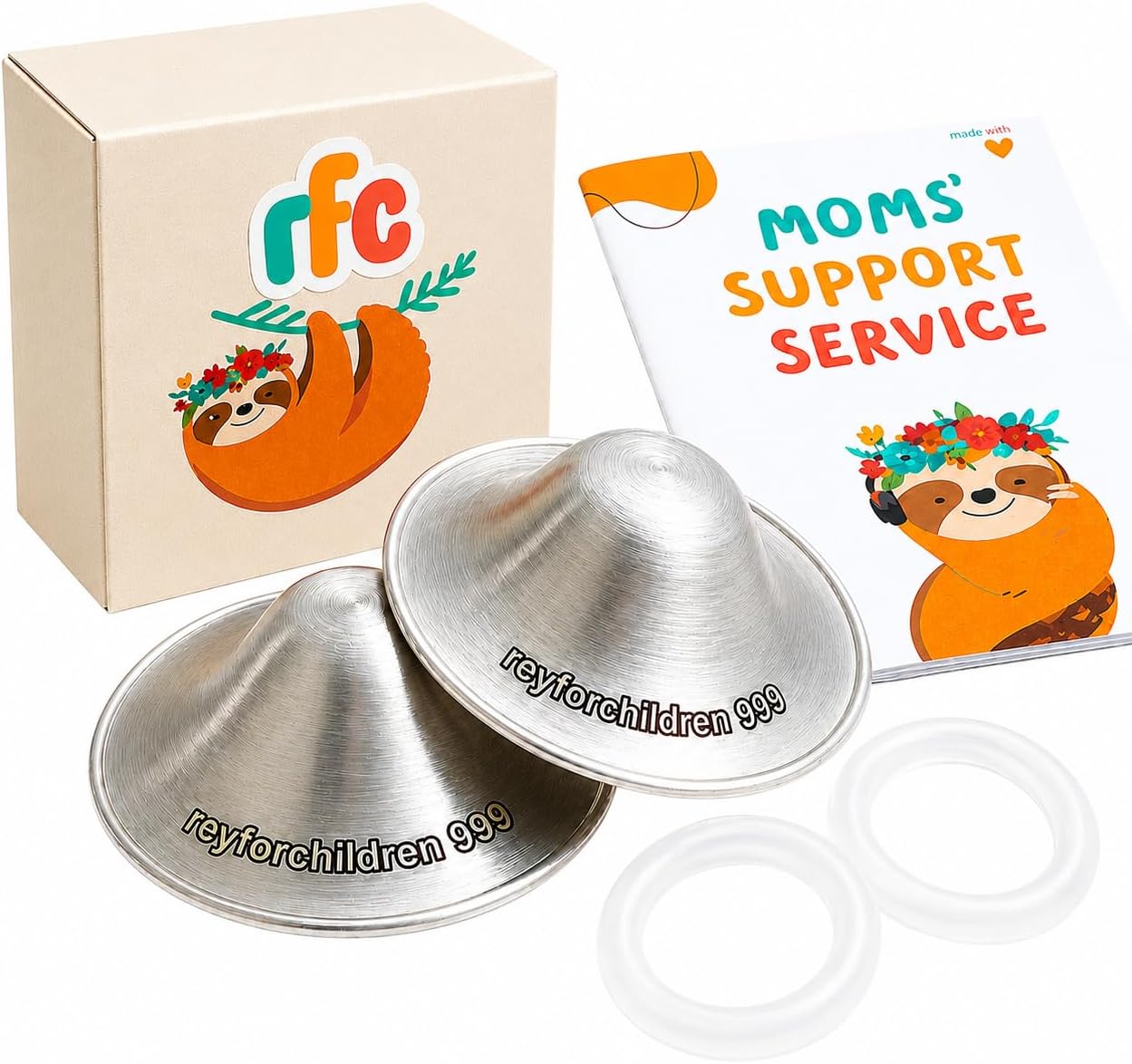
RFC Silver Nursing Cups
Fewer sessions can mean uneven supply and tender skin during weaning. Silver nursing cups help nipples adjust as feeds space out.
Try to avoid starting a full wean during another major transition, like a return to work or a big move, since stacking changes tends to make both harder than they need to be on their own. If you need or want to wean faster than your baby seems ready for, going slowly is still worth prioritizing, sudden weaning can be physically uncomfortable for you and emotionally difficult for your baby in ways that a more gradual approach avoids.
Managing the physical side of weaning
As sessions drop, breasts can feel fuller or slightly engorged for a few days until supply adjusts downward to match the new demand. Expressing just enough milk by hand or pump to relieve pressure, without fully emptying, helps ease this transitional discomfort without signaling your body to maintain full production. Cabbage leaves, cold compresses, and over-the-counter pain relief are commonly used comfort measures during this window as well.
What a gradual timeline can actually look like
A common approach spreads weaning over four to eight weeks: drop the session your baby seems least interested in first, usually a daytime feed rather than the first-thing-in-the-morning or before-bed sessions, which tend to be the most emotionally anchored for both of you. Wait three to five days before dropping the next one, giving your body time to adjust supply gradually and giving your baby time to adjust to the new routine without feeling several changes at once. Save the sessions your baby, or you, are most attached to for last, and know it is entirely reasonable to pause the process partway through and hold at a lower number of sessions for weeks or months before continuing, weaning does not have to be a straight line to zero on a fixed schedule.
The part of weaning nobody prepares you for emotionally
Even a wanted, well-timed wean can come with real grief, a sense of closing a chapter that was physically demanding but also deeply bonding, and it is common to feel both relief and sadness in the same week, sometimes the same day. This is not a sign you made the wrong choice. Marking the transition somehow, a specific last session you both know is the last, a small ritual, a new bedtime routine that replaces the old one, helps some mothers process the ending rather than having it fade out unnoticed and unacknowledged.
When weaning is medically necessary rather than a choice
Sometimes weaning is prompted by a needed medication that is not compatible with breastfeeding, a new pregnancy, or a health situation rather than a gradual, mutually-timed decision. This kind of weaning often has to move faster than the gradual approach described above, and it can carry its own particular grief precisely because the timing was not chosen. If you are in this situation, ask your doctor whether an even moderately paced taper is possible rather than an immediate full stop, since even a few extra days of gradual reduction generally still eases physical discomfort meaningfully, and be gentle with yourself about the emotional side, needing to stop for a real medical reason is not a smaller loss than choosing to stop on your own timeline.
Frequently asked questions
What is the best age to wean off breastfeeding?
There is no single best age, the American Academy of Pediatrics supports continuing as long as both mother and baby want to, with many families naturally weaning somewhere between nine and twenty-four months.
Does weaning suddenly hurt more than gradual weaning?
Yes, sudden weaning is more likely to cause engorgement, clogged ducts, and emotional difficulty for both mother and baby than a gradual, one-session-at-a-time approach.
Will weaning affect my mood?
Hormonal shifts during weaning can genuinely affect mood for some mothers, sometimes producing a temporary low period similar in feel to early postpartum hormone changes. This tends to ease as hormone levels stabilize over the following weeks.
Can I restart breastfeeding if I change my mind partway through?
In many cases yes, particularly if weaning was recent and partial rather than complete, through relactation, frequent nursing or pumping to rebuild supply, though success varies by how long weaning has progressed and individual response.
Is night weaning different from full weaning?
Yes, many families night wean, dropping overnight sessions specifically, well before fully weaning during the day, since night sessions are often the ones both parties are most ready to let go of first as a baby grows.
How do I handle a baby who protests a dropped session?
Offering extra comfort in another form right at that usual time, a cuddle, a walk, a favorite toy, at the moment nursing would have happened, tends to ease the transition better than simply removing the session with nothing to replace it.
This article shares general information and real-world experience — it isn't medical advice and doesn't replace guidance from your doctor, midwife, or a certified lactation consultant. If something feels off with you or your baby, please reach out to a professional who knows your situation.